 Finance & accounting
Business Electricity and Gas Rates in the UK (2026): What You Pay and Why
UK business electricity and gas rates in 2026: official average p/kWh, why there's no price cap, Climate Change Levy, 5% vs 20% VAT, contract rules and broker fees.
 Edited by Sumeet YadavFounder & editor, MSMETOOLS · fact-checked against official sources
Contents (11)
- 1. Why there's no price cap for business energy
- 2. What businesses actually pay: official average rates
- 3. What's in a business energy bill
- 4. How business energy contracts work
- 5. Ofgem protections for microbusinesses and small businesses
- 6. Climate Change Levy rates for 2026-27
- 7. VAT on business energy: 5%, 20% and the temporary 0%
- 8. Worked examples: what a year of electricity costs
- 9. Energy brokers and commission: what must be disclosed
- 10. Common mistakes that push up business energy bills
- 11. What to do next
Business energy works differently from household energy, and that catches out a lot of small firms. There's no price cap, contracts can lock you in for years, and a missed renewal letter can leave you on rates far higher than you'd agree to. This guide explains what UK businesses actually pay for electricity and gas in 2026, using the government's own price statistics rather than broker "from" prices. It covers what makes up your unit rate, how contracts, rollovers and deemed tariffs work, the protections Ofgem gives microbusinesses, the Climate Change Levy for 2026-27, when you pay 5% or 20% VAT (and the temporary 0% on some electricity), and the rules on broker commission.
Quick answer
There is no price cap for business energy: rates are set by each contract. Official DESNZ figures for April–June 2026 put average electricity at 38.4p per kWh for very small users and 28.6p per kWh for small users, and gas at 9.3p per kWh and 4.9p per kWh, including Climate Change Levy but excluding VAT. Most businesses pay 20% VAT plus CCL of 0.801p per kWh.
Small (de minimis) users pay 5% VAT and no CCL; de minimis electricity in Great Britain is 0% VAT from 1 October 2026 to 31 March 2027
Microbusinesses get extra Ofgem protections, including a 30-day maximum notice period and a 12-month back-billing limit
There's no cooling-off period: read the principal terms before you agree
Broker fees must be shown in the contract's principal terms
Why there's no price cap for business energy
The energy price cap that Ofgem sets each quarter applies to household default tariffs. Ofgem states plainly that you aren't protected by the cap if you have a business energy contract. Business energy is a competitive market: each supplier sets its own unit rates and standing charges, and the price you get depends on when you sign, how long you fix for, how much you use, your meter type and your credit position.
That cuts both ways. A business that fixes when wholesale prices dip can pay well below the average. One that drifts onto a deemed or out-of-contract tariff can pay far more than a household on the cap. The protections that do exist come from Ofgem's licence rules on how suppliers must behave, not from a ceiling on price. They're strongest for microbusinesses.
Ofgem treats you as a microbusiness if any of these apply:
- you have fewer than 10 employees (or full-time equivalents) and annual turnover or balance sheet of no more than €2 million, or
- you use no more than 100,000 kWh of electricity a year, or
- you use no more than 293,000 kWh of gas a year.
If you only pass the usage test for one fuel, you're a microbusiness for that fuel only. Most shops, cafés, offices and trades with a single site are microbusinesses. A wider small business definition (fewer than 50 employees and turnover up to £6.5 million or balance sheet up to £5 million, or up to 200,000 kWh of electricity or 500,000 kWh of gas a year) gives access to the Energy Ombudsman and certain broker protections.
What businesses actually pay: official average rates
The Department for Energy Security and Net Zero (DESNZ) surveys suppliers every quarter and publishes the average price non-domestic customers paid, by size of user. These are the most reliable public benchmark. The averages are calculated as total spend divided by total units, so they include standing charges spread across each kWh, and they're shown with and without the Climate Change Levy. They exclude VAT.
| Size of user (annual use) | Electricity, Q2 2026 | Electricity, 2025 average | Gas user band | Gas, Q2 2026 |
|---|---|---|---|---|
| Very small (elec 0–20 MWh; gas under 278 MWh) | 38.4p per kWh | 34.9p | Very small | 9.3p per kWh |
| Small (elec 20–499 MWh; gas 278–2,777 MWh) | 28.6p per kWh | 29.1p | Small | 4.9p per kWh |
| Small/medium electricity (500–1,999 MWh) | 27.7p | 28.2p | n/a | n/a |
Source: DESNZ Quarterly Energy Prices table 3.4.2, published 29 September 2026. Prices include CCL and standing charges, exclude VAT. 1 MWh = 1,000 kWh.
Three things stand out. First, the smallest users pay the most per unit, because the standing charge is spread over fewer kWh and suppliers price in the cost of serving small accounts. Second, gas is far cheaper per kWh than electricity, which is why heating choices matter for running costs. Third, these are averages across fixed contracts signed at different times. Someone who fixed in early 2023 near the peak may still be paying much more than someone who signed this year.
Use the figures to sense-check a quote, not as a target price. If you use around 15,000 kWh a year and you're offered an all-in rate well above the very-small average, ask why. Broker comparison sites often advertise "from" unit rates that leave out the standing charge, which makes them look lower than the DESNZ average even when they're not.
What's in a business energy bill
Every business electricity or gas bill has two main charges. The unit rate, in pence per kWh, is what you pay for each unit you use. The standing charge, in pence per day, covers the fixed cost of supplying your site whether you use anything or not. Some contracts have no standing charge and a higher unit rate. For a low-use site, that can work out cheaper.
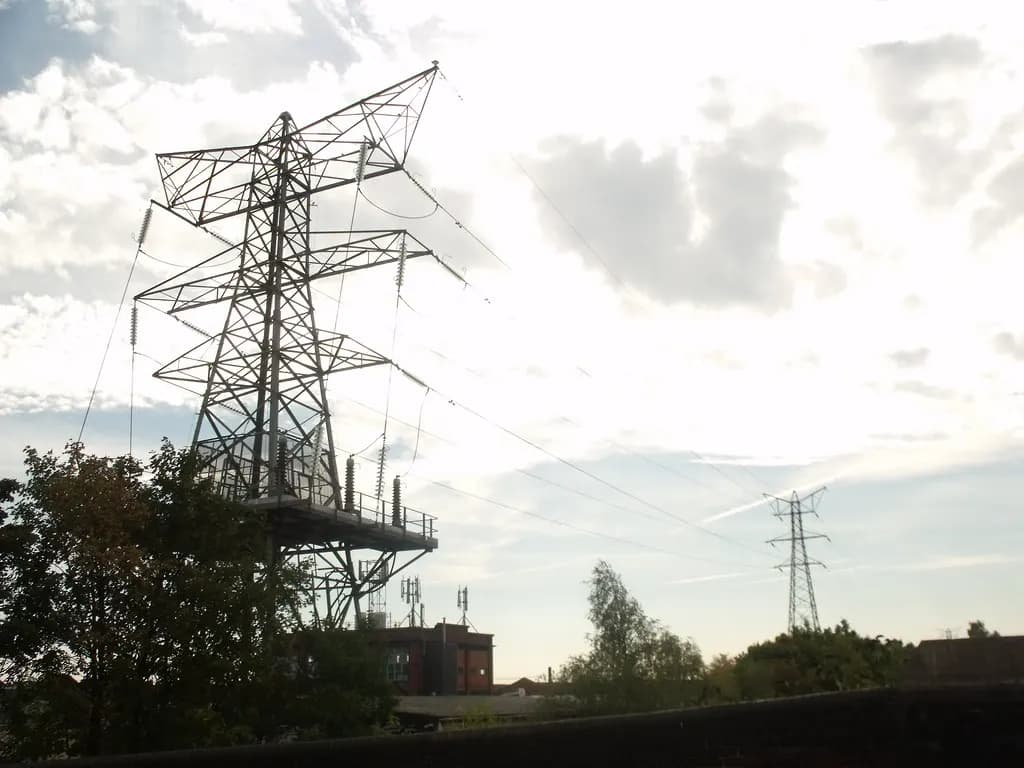
Inside those two numbers sit several costs the supplier passes on: the wholesale cost of the energy, charges for using the transmission and distribution networks, government policy costs, metering, the supplier's operating costs and margin, and any broker commission. On top come two taxes: the Climate Change Levy and VAT. Larger users on half-hourly meters may also see capacity or availability charges listed separately.
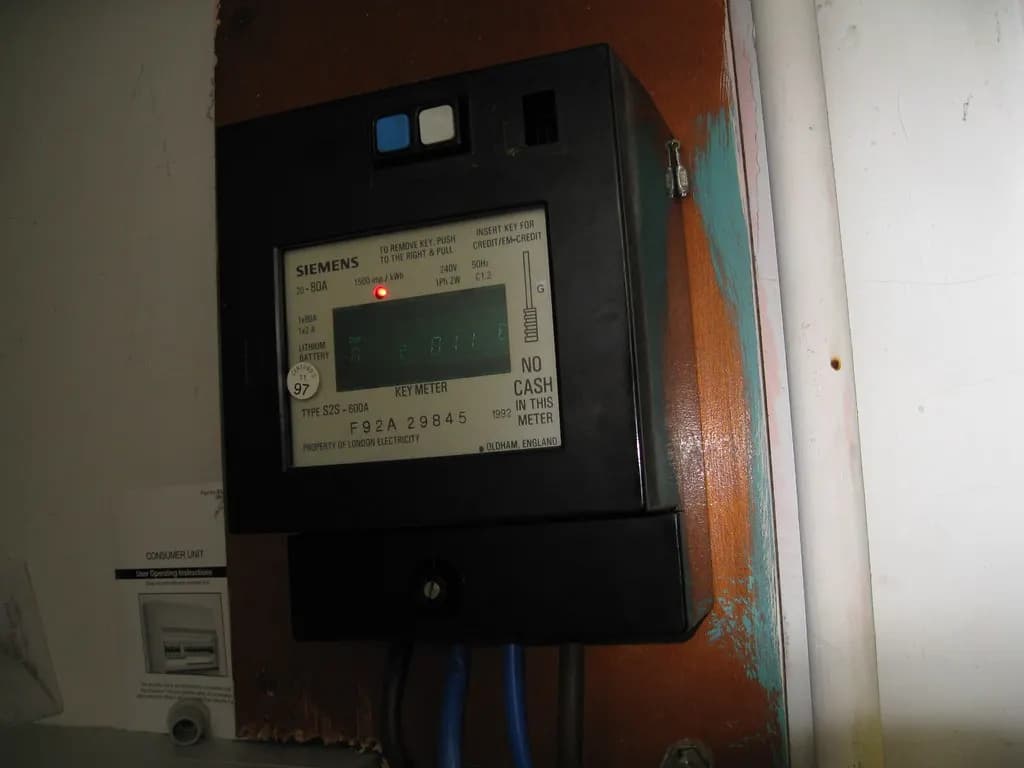
Your bill should show your meter number (the MPAN for electricity, MPRN for gas), the reading dates and whether each reading is actual or estimated. Estimated bills are where most disputes start. Submit readings regularly, or ask about a smart or advanced meter so the supplier can read it remotely.
How business energy contracts work
Unlike households, businesses can't usually switch freely mid-contract. The main types are:
- Fixed-rate contracts. Unit rate and standing charge are fixed for the term, commonly one to five years. You usually can't leave early without an exit fee. Suppliers often open a switching window near the end of the term.
- Variable or rolling contracts. Prices can change with notice. These include "evergreen" contracts with no end date. You can switch at any time, subject to any notice period.
- Rollover contracts. If you don't act when a fixed term ends, some contracts roll onto a new fixed term automatically. For a microbusiness, a rollover can't be longer than 12 months, and you can leave it without an exit fee.
- Out-of-contract tariffs. If your contract ends with no rollover, or the rollover ends, you move to the supplier's out-of-contract rates. These are typically expensive, but you can switch away without a fee or notice.
- Deemed contracts. If you move into premises and use energy without agreeing a contract, you're on the supplier's deemed rates, which Citizens Advice describes as often very expensive. Agree a contract as soon as you take over a site.
Business energy tariff types
| Tariff | Price | Can you leave? | Watch out for |
|---|---|---|---|
Fixed term | Fixed for 1–5 years | Only in the switching window or with an exit fee | Auto-rollover if you miss the renewal |
Variable / evergreen | Can change with notice | Yes, with notice (max 30 days for microbusinesses) | Price rises |
Rollover | New fixed term set by supplier | Yes, no exit fee | Up to 12 months for microbusinesses |
Out-of-contract | Supplier's standard rate, usually high | Yes, no fee or notice | Paying more than you need to |
Deemed | Supplier's deemed rate, usually highest | Yes, no fee or notice | Common after moving into premises |
Fixed term
- Price
Fixed for 1–5 years
- Can you leave?
Only in the switching window or with an exit fee
- Watch out for
Auto-rollover if you miss the renewal
Variable / evergreen
- Price
Can change with notice
- Can you leave?
Yes, with notice (max 30 days for microbusinesses)
- Watch out for
Price rises
Rollover
- Price
New fixed term set by supplier
- Can you leave?
Yes, no exit fee
- Watch out for
Up to 12 months for microbusinesses
Out-of-contract
- Price
Supplier's standard rate, usually high
- Can you leave?
Yes, no fee or notice
- Watch out for
Paying more than you need to
Deemed
- Price
Supplier's deemed rate, usually highest
- Can you leave?
Yes, no fee or notice
- Watch out for
Common after moving into premises
Renewal and notice. Your supplier should contact you about three months before a fixed contract ends. For microbusinesses, Ofgem requires the renewal letter to show your current prices, the new prices and your annual consumption, so you can compare. You can give notice at any time before the end of the fixed term, and a microbusiness's notice period can't be more than 30 days. The supplier must take reasonable steps to acknowledge your notice within five working days. Once you've agreed a new contract, the switch itself should happen within five working days.
No cooling-off. Business energy contracts don't come with a 14-day cooling-off period. A contract agreed on a recorded phone call is binding. If you change your mind later, you may face a termination fee.
Debt and moving. Your current supplier can object to a switch if you owe it money. Clear or agree a plan for any debt before you try to move. When you move premises, you're responsible for energy used before your new contract starts, so take meter readings on the day you get the keys.
Ofgem protections for microbusinesses and small businesses
On top of the contract rules above, microbusinesses have these extra protections:
- Principal terms (price, length, notice, fees) shown before you agree and in writing afterwards
- Renewal letter showing current prices, new prices and annual consumption
- Maximum 30-day notice period to end a contract
- Rollovers limited to 12 months, with no exit fee to leave
- Back-billing limited to energy used in the last 12 months (unless you obstructed billing)
- Total broker costs shown in pounds and pence in the principal terms
- Signposting to Citizens Advice for help
- Right to take an unresolved complaint to the Energy Ombudsman
The back-billing limit is the one that saves the most money. If your supplier hasn't billed you accurately, it can't charge a microbusiness for energy used more than 12 months ago. That applies to catch-up bills after years of estimates, for example. It doesn't apply if you blocked meter readings or otherwise behaved unreasonably.
From 1 July 2024 Ofgem extended its Standards of Conduct, the rules on treating customers fairly, to all business customers. Since December 2024, small businesses as well as microbusinesses can take a complaint to the Energy Ombudsman if the supplier doesn't resolve it, and suppliers can only accept small business contracts from brokers who belong to a redress scheme. If you're not happy with a broker, you can complain through that scheme.
Climate Change Levy rates for 2026-27
The Climate Change Levy (CCL) is a tax on energy used by businesses and the public sector. Your supplier adds it to your bill and pays it to HMRC. You don't register for it yourself.
| Commodity | From 1 April 2025 | From 1 April 2026 | From 1 April 2027 |
|---|---|---|---|
| Electricity | 0.775p per kWh | 0.801p per kWh | 0.827p per kWh |
| Gas | 0.775p per kWh | 0.801p per kWh | 0.827p per kWh |
| LPG | 2.175p per kg | 2.175p per kg | 2.175p per kg |
CCL doesn't apply to domestic use, a charity's non-business use, or small de minimis supplies: electricity below 1,000 kWh a month (33 kWh a day) and gas below 4,397 kWh a month (145 kWh a day). If at least 60% of a supply is for qualifying (domestic or charity non-business) use, the whole supply is excluded. A flat above a shop on the same meter is the classic case. You give your supplier a certificate to claim this, and you're liable for a penalty if the certificate is wrong.
Energy-intensive businesses in eligible sectors can join a climate change agreement, committing to efficiency targets in return for a discount on CCL: currently 92% on electricity and 89% on gas. Most small businesses won't qualify, but manufacturers, food processors and some agricultural businesses should check.
VAT on business energy: 5%, 20% and the temporary 0%
Most business energy is charged 20% VAT. Lower rates apply in two situations set out in HMRC's VAT Notice 701/19:
- De minimis supplies. If a site uses on average no more than 1,000 kWh a month (33 kWh a day) of electricity, or 4,397 kWh a month (145 kWh a day) of gas, HMRC treats the supply as domestic even though you're a business. It's charged at the reduced rate of 5%, with no certificate needed. This is worked out per supply, per site, so a small office might qualify for gas but not electricity.
- Qualifying use. Supplies for domestic use or a charity's non-business use also get the reduced rate, using the same 60% rule for mixed use. You need to give the supplier a certificate.
Which VAT rate applies to your business energy?
| Supply | Great Britain | Northern Ireland |
|---|---|---|
Electricity within de minimis (1,000 kWh a month (33 kWh a day)) | 0% from 1 Oct 2026 to 31 Mar 2027, then 5% | 5% |
Gas within de minimis (4,397 kWh a month (145 kWh a day)) | 5% | 5% |
Qualifying use (domestic or charity non-business), with certificate | Electricity 0% for the same period; gas 5% | 5% |
Business use above de minimis | 20% | 20% |
Electricity within de minimis (1,000 kWh a month (33 kWh a day))
- Great Britain
0% from 1 Oct 2026 to 31 Mar 2027, then 5%
- Northern Ireland
5%
Gas within de minimis (4,397 kWh a month (145 kWh a day))
- Great Britain
5%
- Northern Ireland
5%
Qualifying use (domestic or charity non-business), with certificate
- Great Britain
Electricity 0% for the same period; gas 5%
- Northern Ireland
5%
Business use above de minimis
- Great Britain
20%
- Northern Ireland
20%
The temporary 0% on electricity. The government announced on 21 July 2026 that qualifying electricity in Great Britain is zero-rated from 1 October 2026 to 31 March 2027. Because de minimis supplies count as domestic use, a business site within the electricity de minimis limit pays 0% instead of 5% for that period. Gas isn't affected and stays at 5% within de minimis. Northern Ireland stays at 5% for electricity. Where a bill straddles 1 October 2026, suppliers can split it by when the energy was used, so send a meter reading for that date. Business electricity above de minimis stays at 20%.
How much does the VAT rate matter? If you're VAT-registered, you normally reclaim VAT on business energy as input tax, so the rate affects cash flow more than cost. For a business that isn't VAT-registered, the difference between 20% and 0% or 5% is a real saving. Check that your supplier has applied the right rate: suppliers sometimes default to 20% for every business account. If you think you've been overcharged, ask the supplier to review your consumption against the limits. Our VAT calculator shows the VAT on any bill, and the VAT registration guide explains when you must register.
Worked examples: what a year of electricity costs
These examples use illustrative contract prices, not a quote or a market average: a unit rate of 26p per kWh and a standing charge of 60p a day. Compare your own contract's figures.
Take two sites: a small office using 9,000 kWh a year (750 kWh a month, within the electricity de minimis limit) and a café using 30,000 kWh a year (2,500 kWh a month, above it).
| Small office (£) | Café (£) | |
|---|---|---|
| Units at 26p per kWh | 2,340.00 | 7,800.00 |
| Standing charge: 365 × 60p | 219.00 | 219.00 |
| Climate Change Levy at 0.801p per kWh | 0.00 (de minimis) | 240.30 |
| Net cost | 2,559.00 | 8,259.30 |
| VAT | 127.95 (5%; 0% in Great Britain from 1 October 2026 to 31 March 2027) | 1,651.86 (20%) |
| Total for a year | 2,686.95 | 9,911.16 |
For the café, the CCL adds about 0.8p to every unit and VAT adds a fifth. If the café is VAT-registered it reclaims the £1,651.86, so its real cost is £8,259.30. If its fixed contract ended and it slipped onto an out-of-contract rate of, say, 40p per kWh, the units alone would cost £12,000 a year, an extra £4,200 before VAT. That's why the renewal date matters more than almost anything else on the bill. Use the break-even calculator to see how energy costs affect your margins.
Energy brokers and commission: what must be disclosed
Many small businesses buy energy through a broker or comparison service. Brokers are usually paid by the supplier, and that commission is built into your unit rate or standing charge. That isn't wrong in itself, but it was often hidden. In one case Ofgem highlighted, broker fees made up half the cost of a contract without the customer knowing.
The current rules:
- Microbusinesses must be shown broker costs in the contract's principal terms as a total cost in pounds and pence over the life of the contract. Citizens Advice says the supplier or broker should send the terms within 10 days of agreeing a contract, including any broker fee.
- All business customers, for contracts signed from 1 October 2024, must have any broker fee set out in the principal terms. Larger customers may see it as an amount per unit and per day rather than a total.
- Since December 2024, suppliers can only take small business contracts from brokers who belong to a redress scheme, so you have somewhere independent to complain.
Before you sign through a broker
- 1
Ask how they're paid
Is the commission a fixed fee or an uplift per kWh and per day? Ask for the total in pounds over the contract.
- 2
Ask how many suppliers they compared
A broker working with a handful of suppliers may not find the best rate. Ask for the full list of quotes.
- 3
Compare like for like
Same contract length and start date, unit rate and standing charge, and whether prices include CCL.
- 4
Read the principal terms
Check the end date, notice period, exit fees and broker cost before you agree. There's no cooling-off period.
- 5
Check the complaints route
For small business contracts the broker must belong to a redress scheme. Note which one.
You can also go directly to suppliers yourself and compare the same way. Going direct doesn't guarantee a lower price, but it removes the commission from the equation and shows you what a broker would need to beat.
Common mistakes that push up business energy bills
- Missing the renewal window. Put your contract end date in the diary and start comparing three to four months before it.
- Staying on deemed rates after moving. Agree a contract the day you take over premises, and record opening meter readings.
- Comparing unit rates only. A low unit rate with a high standing charge can cost more for a small site. Compare total annual cost at your real usage.
- Paying 20% VAT and CCL when you're de minimis. Check your monthly average against the limits, especially for small offices and shops.
- Signing on a call without reading the principal terms. There's no cooling-off period, so get the terms in writing first.
- Ignoring estimated bills. Send readings regularly so you're never hit with a large catch-up bill. If you're a microbusiness, remember the 12-month back-billing limit.
Official links
- DESNZ non-domestic energy pricesQuarterly average prices by size of user
- Climate Change Levy ratesMain rates and CCA discounts
- VAT on fuel and power (Notice 701/19)De minimis limits and qualifying use
- Temporary 0% VAT on electricity (Brief 10/2026)1 October 2026 to 31 March 2027, Great Britain
- Ofgem: switch your business energy supplierContracts, switching and deemed rates
- Energy OmbudsmanComplaints for micro and small businesses
What to do next
Find your latest bill and note your annual consumption, unit rate, standing charge, VAT rate and contract end date. Compare the all-in cost per kWh with the DESNZ average for your band, and check you're on the right VAT and CCL treatment. If your contract ends in the next four months, start comparing now. Energy is often a business's second-biggest overhead after premises, so look at your business rates and small business rate relief at the same time, and plan both in the budget planner.
This is general information, not legal or tax advice — confirm on the official source or with a professional.
Frequently asked questions
Government statistics for April to June 2026 put the average at 38.4p per kWh for very small business users (up to 20,000 kWh a year) and 28.6p per kWh for small users (20,000 to 499,000 kWh). Both include the Climate Change Levy and standing charges but exclude VAT. Your own rate depends on your contract, meter and when you signed.
No. Ofgem's energy price cap covers household default tariffs only. Business contracts aren't capped, so suppliers set their own unit rates and standing charges. Instead, Ofgem rules give microbusinesses specific protections: clear principal terms, limits on rollovers and notice periods, broker fee disclosure and a 12-month back-billing limit.
Most pay 20%. The reduced 5% rate applies to small (de minimis) supplies: on average no more than 1,000 kWh a month (33 kWh a day) of electricity or 4,397 kWh a month (145 kWh a day) of gas. In Great Britain, qualifying electricity, including de minimis business supplies, is zero-rated from 1 October 2026 to 31 March 2027. VAT-registered businesses can usually reclaim the VAT anyway.
From 1 April 2026 the main rate is 0.801p per kWh for electricity and 0.801p per kWh for gas, rising to 0.827p per kWh from 1 April 2027. It's added to business bills above the de minimis limits. Businesses with a climate change agreement get a 92% discount on electricity and 89% on gas.
Not usually during a fixed term without paying an exit fee, and there's no cooling-off period for business energy. You can leave deemed, out-of-contract and rollover tariffs without an exit fee. Microbusinesses can give notice at any time before the fixed term ends, and the notice period can't be longer than 30 days.
Yes. For contracts signed from 1 October 2024, any broker fee must be set out in the contract's principal terms for all business customers. Microbusinesses must be told the total broker cost in pounds over the contract. Brokers are paid through your unit rate or standing charge, so a higher commission means you pay more.
Sources & verification
Figures on this page were checked against the sources below when it was last reviewed on 8 October 2026. Each rate and limit is stored once with its own official source and review date, and official update channels are monitored daily so changes are picked up. How we verify
- 1.Gas and electricity prices in the non-domestic sector (QEP tables 3.4.1 and 3.4.2) — Department for Energy Security and Net Zero · accessed 8 October 2026
- 2.Climate Change Levy rates — HMRC / GOV.UK · accessed 8 October 2026
- 3.Exemptions from Climate Change Levy — HMRC / GOV.UK · accessed 8 October 2026
- 4.VAT on fuel and power (VAT Notice 701/19) — HMRC / GOV.UK · accessed 8 October 2026
- 5.Revenue and Customs Brief 10 (2026): temporary zero rate of VAT for domestic electricity in Great Britain — HMRC / GOV.UK · accessed 8 October 2026
- 6.Energy price cap and standing charges explained — Ofgem · accessed 8 October 2026
- 7.Ofgem confirms greater protection for businesses — Ofgem · accessed 8 October 2026
- 8.Micro-business factsheet: easier to review options at the end of a contract — Ofgem · accessed 8 October 2026
- 9.Switch your business energy supplier — Ofgem · accessed 8 October 2026
- 10.Switching your small business to a new energy supplier — Citizens Advice · accessed 8 October 2026
- 11.Dealing with your business energy bills — Citizens Advice · accessed 8 October 2026
MSMETOOLS is an independent platform and is not affiliated with any government agency, ministry or department.
Tools for this
Budget Planner
Plan and track your business budget easily.
Break Even Calculator
Find your break even point and units.
VAT Calculator (UK)
Add or remove VAT at 20%, 5% or 0%.
Related guides
 Business Bank Account UK 2026: Rules, ID, FSCS & FeesRead guide
 R&D Tax Credits 2026: Merged Scheme, ERIS & How to ClaimRead guide
 How Long to Keep Business Records UK 2026: Full GuideRead guide
 Buy-to-Let Limited Company Mortgages 2026: Tax, SDLT & SPVsRead guide
Official links open the government site in a new tab.