 Business registration & legal
Utah Business License in 2026: State Registration, Sales Tax, DOPL and City Licenses
Utah business license 2026: no state general license, the new Business Registration System, TC-69 sales tax license, DOPL and Salt Lake City and Provo fees.
 Edited by Sumeet YadavFounder & editor, MSMETOOLS · fact-checked against official sources
Contents (10)
- 1. Is there a state business license in Utah?
- 2. OneStop Business Registration is gone: the new systems
- 3. Division of Corporations: entities, DBAs and annual renewals
- 4. Sales tax license and other Tax Commission accounts
- 5. Professional and trade licenses from DOPL
- 6. Salt Lake City business licenses
- 7. Provo business licenses
- 8. Worked examples
- 9. Common mistakes and how to fix them
- 10. What to do next
Searching for a "Utah business license" usually leads to the same surprise: the state does not issue one. Utah has no general statewide license. Instead, a new business assembles a few separate registrations with the Division of Corporations, the State Tax Commission and, for licensed trades, the Division of Professional Licensing, and then gets a license from the city or county where it operates. This guide walks through each piece, the current fees, the online systems that replaced OneStop Business Registration, and how licensing works in Salt Lake City and Provo. Fees and rules were checked against state and city sources in October 2026.
Quick answer
Utah has no state general business license. Most businesses need: an entity or DBA registration with the Division of Corporations (LLC $59, DBA $22); a sales tax license and other tax accounts from the State Tax Commission via form TC-69 in TAP; any DOPL professional license; and a city or county business license.
OneStop Business Registration closed in September 2024; use businessregistration.utah.gov and TAP
LLCs and corporations renew every year for $18; DBAs every three years
Salt Lake City charges a $198 commercial base fee plus employee and regulatory fees
Many home-based businesses need no city license unless they affect the neighbourhood
Is there a state business license in Utah?
No. Utah is one of the states that leaves general business licensing to local government. There is no state form called a "business license", and no state fee you pay simply for being in business. What the state does require depends on who you are and what you do. If you form an LLC, corporation or partnership, or trade under a name that is not your own legal name, you register with the Division of Corporations and Commercial Code. If you sell taxable goods or services, employ people, or owe other state taxes, you open accounts with the Utah State Tax Commission. If your occupation is regulated, from contractors to cosmetologists to accountants, you need a license from the Division of Professional Licensing, known as DOPL.
The license most people mean when they search for a "Utah business license" is the city or county license. Almost every Utah city requires one for businesses located or operating within its limits, and counties license businesses in unincorporated areas. Each sets its own fees, inspections and exemptions, so the cost of being licensed in Salt Lake City is quite different from Provo, St. George or an unincorporated part of Utah County.
Before you apply anywhere, a city will want to see that the state registrations are in place. Salt Lake City, for example, asks for your Department of Commerce registration, your state sales tax number if you need one, and your federal EIN if you have one. So the practical order is state first, city second.
Licensing a new Utah business, in order
Step 1
Choose structure and name
Step 2
Division of Corporations
entity or DBA
Step 3
Tax Commission TC-69
sales, withholding
Step 4
DOPL
if your trade is licensed
Step 5
City or county license
zoning and inspections
OneStop Business Registration is gone: the new systems
For years, Utah guides sent new owners to OneStop Business Registration, or OSBR, which let you register an entity and open tax accounts in one session. That system was shut down in September 2024. Many websites, and some filing services, still link to it.
Today the work is split between two state systems. Entity and DBA filings, annual renewals and most amendments are made in the Division of Corporations' Business Registration System at businessregistration.utah.gov, which you log in to with a UtahID. The Division describes a linear, step-by-step filing flow and warns that its renewal process has changed significantly, so read its visual guides before you start. Most filings are processed immediately, but the Division says to allow five to seven business days for filings that need manual review, such as paper filings, filings with attachments, name conflict checks or those needing a Tax Commission review, and its renewal page currently quotes seven to ten business days.
Tax accounts are opened separately with the Utah State Tax Commission through its Taxpayer Access Point, or TAP, using the Utah State Business and Tax Registration, form TC-69. Once your license information arrives by email, you create a TAP login to file and pay. The Commission notes you may also need to register with the Department of Commerce, which is the Division of Corporations step above.
Division of Corporations: entities, DBAs and annual renewals
Every LLC, corporation, limited partnership and limited liability partnership formed in Utah, and every out-of-state entity registering to do business here, files with the Division of Corporations. Sole proprietors and general partnerships do not form an entity, but if they trade under any name other than the owners' legal names they must register that name as a DBA, also called an assumed name. An LLC or corporation that wants to trade under a second name registers a DBA too.
Utah Division of Corporations fees (FY 2026 schedule, in force since July 1, 2025)
| Filing | Fee | How often |
|---|---|---|
LLC certificate of organization | $59 | Once |
Business corporation articles | $59 | Once |
Foreign LLC or corporation registration | $59 | Once |
DBA (assumed name) registration | $22 | Once, then renew every 3 years |
Annual report/renewal (LLC, corporation, LP, LLP) | $18 | Every year |
DBA renewal | $18 | Every 3 years |
Late renewal fee | $10 | If renewed late |
LLC or corporation reinstatement | $54 | Plus $18 per missed year and the $10 delinquency fee |
LLC certificate of organization
- Fee
$59
- How often
Once
Business corporation articles
- Fee
$59
- How often
Once
Foreign LLC or corporation registration
- Fee
$59
- How often
Once
DBA (assumed name) registration
- Fee
$22
- How often
Once, then renew every 3 years
Annual report/renewal (LLC, corporation, LP, LLP)
- Fee
$18
- How often
Every year
DBA renewal
- Fee
$18
- How often
Every 3 years
Late renewal fee
- Fee
$10
- How often
If renewed late
LLC or corporation reinstatement
- Fee
$54
- How often
Plus $18 per missed year and the $10 delinquency fee
The renewal fee includes a $5 surcharge for the state's single sign-on portal, and all fees are non-refundable. Renewals are tied to the anniversary of your registration. One year after that date, or three years for a DBA, the Division mails a renewal postcard to your registered agent. If you do not renew in time, a delinquency postcard follows, and if that is ignored the Division sends an expiration notice to the registered agent, the principal business address and one of the principals. An expired entity has to be reinstated, which costs $54 plus $18 for each missed year and the $10 delinquency fee, and the Division advises checking that you are in good standing with the Tax Commission first, because tax problems delay reinstatement.
Every entity also needs a registered agent with a Utah address who can accept legal papers. Salt Lake City asks for your registered agent's name, address and phone number on its license application, so make sure the information on file with the Division is current before you apply.

Sales tax license and other Tax Commission accounts
If you sell tangible goods, or services that Utah taxes, you need a sales tax license from the Utah State Tax Commission before your first taxable sale. You apply through TAP with form TC-69, the Utah State Business and Tax Registration, which also covers withholding for employers and several special taxes. Businesses with more than one selling location list the extra sites on a TC-69B schedule.
When you apply, you estimate your yearly sales tax liability, and the Commission uses that estimate to assign a filing schedule — Publication 25 sets monthly filing at $50,000 or more of tax a year and quarterly below that; see our Utah sales tax guide. It reviews accounts every year and writes to you if your schedule changes. Returns are due on the last day of the month after the filing period, so a fourth-quarter return is due January 31, and returns must be filed electronically through TAP. Every license holder must file on time even when there were no sales; if you collected nothing, file a zero return rather than skipping the period, or you will receive a billing notice.
Tax licenses are not transferable. If you buy an existing business, you apply for your own licenses, ask the seller for a Letter of Good Standing showing no sales or special fuel taxes are owed, and hold back any unpaid tax from the purchase price to pay the Commission within 30 days. If you skip those steps, you can be held liable for the previous owner's unpaid sales tax. Local sales tax rates vary by location, so use the Commission's rate lookup for each address you sell from or deliver to.
Professional and trade licenses from DOPL
Many occupations need a state license regardless of where you work. DOPL, the Division of Professional Licensing within the Department of Commerce, licenses construction trades and contractors, health professions, cosmetology and barbering, accountants, engineers, architects and dozens of others. You apply, renew and print licenses through DOPL's online services, and customers can check any license with the state's license verification search.
A DOPL license is about your personal or company qualifications; it does not replace the city license, and the city will often ask to see it. Salt Lake City's application requires documentation of any professional licenses or certifications needed to run the business. Contractors should also know about the State Construction Registry and the Residence Lien Recovery Fund, both administered through DOPL, which affect how liens and preliminary notices work on residential jobs.
How to get licensed to do business in Utah
- 1
Pick a structure and check the name
LLC registration guideSearch the name in the Business Registration System. Sole proprietors using their own name file nothing with the Division; anyone using a trade name files a DBA.
- 2
Register with the Division of Corporations
File the LLC certificate ($59), corporation articles ($59) or DBA ($22) at businessregistration.utah.gov with a UtahID.
- 3
Get an EIN
EIN guideFree from the IRS. Needed for employees, most entities and many bank accounts.
- 4
Open Tax Commission accounts with TC-69
Apply in TAP for a sales tax license, withholding account and any special taxes. Estimate your yearly sales tax to set your filing schedule.
- 5
Get any DOPL license
Contractors, salons, health professionals and other regulated trades apply to DOPL before opening.
- 6
Apply for the city or county license
Apply where the business is located. Expect zoning, building and fire review for commercial premises.
Salt Lake City business licenses
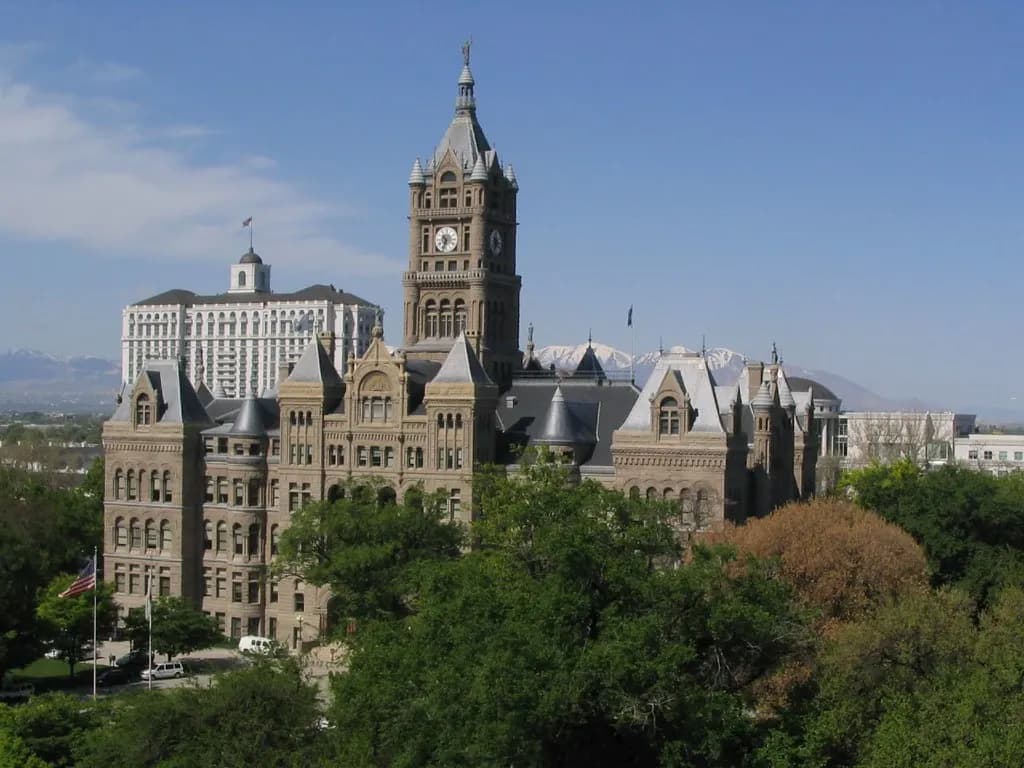
Salt Lake City requires every business engaged in business within its corporate limits, permanently or temporarily, to hold a valid business license. The city defines business broadly, covering retail and wholesale sales, manufacturing and services provided for payment. Residential rental properties need a license for each location too. The city accepts applications online only, though you can book an appointment to use a kiosk at the licensing office at City Hall.
Commercial licenses are reviewed for zoning, building compliance and fire safety before they are issued. Food businesses also need approval from the county health department, and state-regulated businesses must show they comply with the relevant state agency. With the application you upload a government-issued photo ID (for a company, of at least one officer or partner), your registered agent details and any required professional licenses.
From September 2026, under the city's consolidated fee schedule as amended by Ordinance 2026-29, every licensed business pays a base license fee and, if it has more than one employee, an employee fee for each full- or part-time worker. Many business types then add a regulatory fee on top.
| Salt Lake City license fee (from Sept 2026) | Amount | Notes |
|---|---|---|
| Base fee — commercial location | $198 | Was $193 before September 2026 |
| Base fee — home occupation | $157 | Issued on request only |
| Employee fee | $29 per employee | Annual, per employee, only if more than one employee |
| Retail or wholesale sales | $60 | Annual regulatory fee on top of the base fee |
| Information change (non-regulated business) | $23 | For example, a new officer or address detail |
Home businesses get special treatment. The city says that, following state law, it does not require a license for a business run from your home unless the business has an impact on the neighbourhood, and it invites owners to email the licensing office to confirm. If you want a license anyway, perhaps because a client or lender asks for one, you can apply for a home occupation license and upload the city's signed home occupation form.
Provo business licenses
Provo City requires a business license for anyone who owns or operates a business in the city, including retail and wholesale sellers, mobile home parks, and service providers such as restaurants, daycares, trades, professionals, contractors, banks and real estate firms. The annual license fee is set in the city's Consolidated Fee Schedule adopted by the Municipal Council, and Provo charges separately for location and name changes. Processing usually takes about two weeks, and longer if your business needs inspections or approval from another city department, so check zoning with Development Services before you sign a lease.
Provo splits home businesses into minor and major home occupations under its city code. Thanks to Utah's 2017 Senate Bill 81, which limited municipal fees on home-based businesses, there is no cost for a minor home occupation permit, while a major home occupation permit carries fees. A Provo license is not transferable: a new owner needs a new license, and a move to a new address needs a location change form. Businesses dealing in firearms need federal ATF approval before they apply.
Worked examples
A two-owner LLC opening a coffee shop in Salt Lake City with four employees. State: $59 to form the LLC, a TC-69 sales tax and withholding registration in TAP, and $18 a year to renew the LLC. City: the $198 commercial base fee plus four employee fees of $29, or $116, for $314 before any food-related regulatory fee, plus a county health department food permit and building and fire inspections. Budget for the health permit and inspections separately.
A freelance graphic designer working from her apartment in Provo, trading as "North Peak Studio". She files a DBA for $22, renewable every three years for $18. Because clients rarely visit and she has no employees, her business is likely a minor home occupation in Provo, which costs nothing. She checks with the Tax Commission whether any of her services are taxable before deciding whether she needs a sales tax license.
An online seller shipping handmade candles from home in Salt Lake City. With no customer visits or employees, the city does not require a license, although she can request a home occupation license for $157 if a wholesale buyer insists. She does need a sales tax license through TAP, because she sells tangible goods, and she must file returns on schedule, including zero returns for quiet periods.
Total your Utah licensing costs
Common mistakes and how to fix them
The first mistake is looking for a state business license that does not exist, or paying a website that claims to sell one. The state's role is registration and tax accounts; the license itself comes from your city or county. If a service offers a "Utah state business license" for a fee, check exactly which government filings it is making for you.
The second is following an old OneStop guide. OSBR has been closed since September 2024. Use the Business Registration System for entity and DBA filings, and TAP with form TC-69 for tax accounts.
The third is letting a renewal lapse. LLCs and corporations renew every year, DBAs every three years, and postcards go to the registered agent, not necessarily to you. If you use a commercial registered agent, make sure it forwards notices. If your entity has expired, file a reinstatement and pay the back renewals rather than forming a new entity, so you keep your name and history.
The fourth is skipping zero sales tax returns. A sales tax license creates a filing duty for every period, and missed returns generate bills and penalties even when no tax was due. If you have stopped selling, close the account in TAP.
The fifth is assuming a home business needs nothing. The city license may be optional, but state tax accounts, DOPL licenses for regulated trades and DBA registration still apply.
Official Utah links
- Business Registration System (entities, DBAs, renewals)Log in with UtahID
- Division of Corporations fee schedule
- Tax Commission — Tax information for businesses (TC-69)
- Taxpayer Access Point (TAP)Apply for a tax account or license
- Division of Professional Licensing (DOPL)
- Salt Lake City — Business licensing
- Provo City — Home-based business permit and licensing FAQs
What to do next
Decide on your structure with our LLC registration guide or, for a trade name, our DBA guide. Get an EIN, open your tax accounts in TAP, and then apply to your city. If you sell goods, the sales tax calculator helps you price at your local rate, and our business licenses overview compares Utah with states that do have a statewide license.
This is general information, not legal or tax advice — confirm on the official source or with a professional.
Frequently asked questions
No. Utah does not issue a general statewide business license. Instead you register your entity or DBA with the Division of Corporations, open tax accounts such as a sales tax license with the State Tax Commission, get any professional license from DOPL, and apply for a business license from the city or county where you operate.
From September 2026, Salt Lake City charges a base license fee of $198 for a commercial location, plus $29 per employee if the business has more than one employee, plus any regulatory fee for its business type, such as $60 for retail or wholesale sales. A home occupation license, issued on request, has a $157 base fee.
No. The OneStop Business Registration website was shut down in September 2024. Entity, DBA and renewal filings now go through the Division of Corporations' Business Registration System at businessregistration.utah.gov using a UtahID, and tax accounts are opened through the Tax Commission's Taxpayer Access Point (TAP) with the TC-69 application.
Often not. Utah law limits when cities can license or charge home-based businesses, and Salt Lake City says it does not require a license for a home business unless the business affects the neighbourhood, for example through customer traffic or employees. Provo charges nothing for a minor home occupation permit. You still need any state tax accounts and professional licenses.
A DBA, or assumed name, costs $22 to register with the Division of Corporations and $18 to renew. Unlike LLCs and corporations, which renew every year, a DBA renews every three years. Sole proprietors and general partnerships that trade under any name other than the owners' legal names must register one.
Apply online through the Utah State Tax Commission's Taxpayer Access Point using the Utah State Business and Tax Registration, form TC-69. You estimate your yearly sales tax when applying, and the Commission assigns your filing schedule from that estimate (see our Utah sales tax guide for the current thresholds). Every license holder must file returns on time, even for periods with no sales.
Sources & verification
Figures on this page were checked against the sources below when it was last reviewed on 9 October 2026. Each rate and limit is stored once with its own official source and review date, and official update channels are monitored daily so changes are picked up. How we verify
- 1.Fiscal Year 2026 Fee Schedule (effective July 1, 2025) — Utah Division of Corporations and Commercial Code · accessed 9 October 2026
- 2.Division of Corporations and Commercial Code — home page and Annual Report/Renewal Guide — Utah Division of Corporations and Commercial Code · accessed 9 October 2026
- 3.I Received a Postcard in the Mail, What Does it Mean? — Utah Department of Commerce · accessed 9 October 2026
- 4.Doing Business As (DBA) — Utah Division of Corporations and Commercial Code · accessed 9 October 2026
- 5.Tax Information for Businesses and Create & Manage a Tax Account — Utah State Tax Commission · accessed 9 October 2026
- 6.Sales and Use Tax FAQ — Utah State Tax Commission · accessed 9 October 2026
- 7.Division of Professional Licensing — Utah Department of Commerce · accessed 9 October 2026
- 8.Business Licensing and Application Process — Salt Lake City Corporation · accessed 9 October 2026
- 9.Consolidated Fee Schedule — Business Licensing Fees — Salt Lake City Corporation · accessed 9 October 2026
- 10.Home-Based Business Permit — Provo City · accessed 9 October 2026
MSMETOOLS is an independent platform and is not affiliated with any government agency, ministry or department.
Tools for this
Startup Cost Calculator
Estimate how much capital you need to launch.
LLC Name Checker (US)
Check business name availability in your state.
Sales Tax Calculator (US)
Calculate sales tax for all US states and cities.
Related guides
 How to Get a Business License in 2026: Steps, Costs & StatesRead guide
 Utah Sales Tax Rate 2026: 4.85% State, Salt Lake City 8.45%Read guide
 Tennessee Business License 2026: Fees, Tax & TNTAPRead guide
 How to Start an LLC in Utah (2026): $59 Filing GuideRead guide
Official links open the government site in a new tab.