 Business registration & legal
Sole Proprietorship in Ontario (2026): Registration, HST, Taxes and Toronto Licences
Start a sole proprietorship in Ontario in 2026: when to register a business name (C$60 for 5 years), HST at C$30,000, T2125, CPP, Toronto licences and real costs.
 Edited by Sumeet YadavFounder & editor, MSMETOOLS · fact-checked against official sources
Contents (11)
- 1. What a sole proprietorship is in Ontario
- 2. Do you have to register? The Business Names Act test
- 3. How to register in the Ontario Business Registry
- 4. Business number and HST
- 5. How an Ontario sole proprietor is taxed
- 6. Toronto and other municipal licences
- 7. WSIB and hiring
- 8. Worked example: a home-based graphic designer in Toronto
- 9. Sole proprietorship or corporation?
- 10. Common mistakes
- 11. What to do next
A sole proprietorship is the default way to start a business in Ontario. You don't form a company; you simply start selling, and the business is you. It's how most freelancers, trades, cleaners, tutors, photographers and online sellers begin. This guide is for anyone running one in Ontario in 2026. It explains exactly when the Business Names Act makes you register and what happens if you don't, how to register and renew in the Ontario Business Registry, when HST kicks in, how you're taxed on T2125 and CPP, whether you need a Toronto licence or WSIB, and what a realistic first year costs. If you're comparing structures, our Ontario registration guide covers partnerships and corporations.
Quick answer
You only need to register an Ontario sole proprietorship if you trade under a name other than your own. Registration in the Ontario Business Registry costs C$60, is instant online and lasts 5 years. Register for HST once sales pass C$30,000, report profit on T2125, and check whether your activity needs a city licence.
Trading as your own name only? No provincial registration
Report changes within 15 days; renew every 5 years for C$60
Unregistered names: fines up to C$2,000 and no lawsuits without court leave
Ontario HST is 13%; self-employed CPP is 11.9%
What a sole proprietorship is in Ontario
A sole proprietorship isn't a legal entity. In law there's just you: you sign contracts personally, you own the equipment, the profit is your income and the debts are your debts. If a client sues the business, they sue you, and your savings, car and share of your home are exposed. That unlimited liability is the price of the simplicity.
A business name registration doesn't change any of that. It doesn't create a company, doesn't limit liability, and — unlike a federal trademark or a corporate name — doesn't stop someone else in Ontario registering the same name. Section 6 of the Business Names Act does let a person who suffers damages because someone else registered a deceptively similar name recover compensation, but that's a remedy, not exclusivity.
You can hire employees, use a trade name, operate from home or a storefront, and run more than one line of business under different registered names. If you share profits with a partner, though, you're a partnership and register differently. If you want limited liability or to leave profits in a business taxed at the small business rate, you're looking at incorporation — our incorporation guide compares Ontario and federal routes.
What happened to the Master Business Licence? Ontario replaced its old registration system with the Ontario Business Registry on 19 October 2021. The document you now receive is a Business Name Registration. It serves the same purpose as the old Master Business Licence and banks accept it the same way.
Do you have to register? The Business Names Act test
Section 2(2) of the Business Names Act says an individual must not carry on business, or identify the business to the public, under a name other than their own unless that name is registered. In practice:
| How you trade | Register? |
|---|---|
| "Amara Okafor" | No |
| "Amara Okafor Photography" | Yes — words added to your name make it a business name |
| "Okafor Design" | Yes |
| "Northern Lights Photography" | Yes |
| "Amara Okafor & Associates" | Yes |
Even when you don't strictly have to, registering can be practical: most banks want a registration before opening an account in a business name, payment platforms and corporate clients often ask for it, and it puts your name on the public record so customers can see who is behind it.
What happens if you don't. Section 10 makes it an offence to carry on business under an unregistered name without reasonable cause, with a fine of up to C$2,000 for an individual (C$25,000 for a corporation). The bigger risk is section 7: a business operating in breach of the Act can't maintain a court proceeding in Ontario about that business without the court's permission. The court must give leave if you show the failure was inadvertent, the public wasn't misled and you've since registered. Contracts you signed while unregistered stay valid.
Your name must appear on paperwork. Section 2(6) requires people carrying on business under a registered name to set out both the registered name and their own name on contracts, invoices and orders — "Amara Okafor, operating as Northern Lights Photography". Our invoice generator has a field for both.

How to register in the Ontario Business Registry
Registration is online through the Ontario Business Registry (OBR). You'll create an Ontario.ca Login and an Ontario Business Account during the process, and need a working email address and a debit or credit card. Online registrations are processed immediately; mailed forms take 15 business days.
Registering a sole proprietorship name in Ontario
- 1
Search the name
Search the Ontario Business Registry free to see whether the name is already registered. Duplicates aren't blocked, but a clash invites confusion and possible claims.
Tip: Also search the Canadian trademarks database before you print signs.
- 2
Start a sole proprietorship registration
In the OBR choose Register a business name → Sole Proprietorship. Create your Ontario.ca Login and Ontario Business Account when prompted.
- 3
Enter the details
Business name, your legal name and residential address, business address, a short description of the activity and the start date.
- 4
Pay C$60
Ontario — Register your business onlineBy debit or credit card. The registration is accepted immediately.
- 5
Save your Business Name Registration and BIN
Download the registration. It shows your 9-digit Ontario Business Identification Number (BIN) and expiry date.
- 6
Set up CRA accounts if you need them
A CRA business number for HST or payroll is separate from the BIN — see below.
Your company key. Once registered, the OBR issues a 9-digit company key for the business. You need it to file changes, renew or link the business to another account; you can request it free by email or mail if you lose it.
Keep it current and renew. If anything in the registration changes — your address, the business address, the activity — you must register an amendment within 15 days (section 4(4)); amendments are free. The registration lasts 5 years from the date it's accepted, and a renewal costs C$60 and takes effect the day after the old one expires. When you stop trading, file a free cancellation.
BIN is not a BN. The Ontario Business Identification Number is Ontario's identifier; the CRA can't accept it on federal forms. Our business number guide explains the difference, and our Ontario business search guide shows how to look up registrations.
Business number and HST
Do you need a BN? As a sole proprietor, only when you open a CRA program account — usually HST once you pass the small supplier limit, or payroll once you hire. Your income tax stays under your social insurance number. The CRA lists Ontario among the provinces where registering a business can produce a BN; if you need one and don't have it, register through the CRA's Business Registration Online, which is free and instant.
HST. Ontario harmonizes its sales tax with GST, so you charge a single 13% HST to Ontario customers once registered. You're a small supplier — and don't have to register — while your worldwide taxable sales stay at or under C$30,000 in any single calendar quarter and over the last four consecutive quarters. Go over in a single quarter and HST applies to the sale that took you over; go over across four quarters and you must register by the end of the following month. Our GST/HST registration guide walks through both tests.
Try it — add Ontario HST to an invoice
Registering voluntarily. If your clients are businesses, they get the HST back, so charging it costs them nothing — and you can claim input tax credits for the HST on your laptop, software, phone and vehicle costs. If you sell mainly to consumers, staying under the threshold keeps your prices 13% lower. Service businesses with modest expenses often save money with the HST Quick Method, which lets you remit a fixed percentage of sales instead of tracking every input tax credit.
How an Ontario sole proprietor is taxed
Income tax. Business profit goes on form T2125, Statement of Business or Professional Activities, filed with your T1 return. You pay federal and Ontario personal tax on the net profit together with any other income. Self-employed people have until June 15 to file, but any balance owing is due April 30, and interest runs from then. Once your tax owing passes C$3,000 in the current year and one of the two previous years, the CRA will ask for quarterly instalments on 15 March, 15 June, 15 September and 15 December.
CPP. You pay both the employee and employer share of Canada Pension Plan contributions: 11.9% on net self-employment earnings between the C$3,500 basic exemption and the C$74,600 ceiling in 2026, up to C$8,460.90, plus the second-tier CPP2 contribution on earnings above the ceiling. Half is deductible and the other half becomes a credit. Employment Insurance is optional for the self-employed.
Ontario sole proprietor — key numbers for 2026
C$60
Business name registration
valid 5 years
C$30,000
HST registration threshold
13%
Ontario HST
11.9%
Self-employed CPP rate
Deductible expenses. You can deduct reasonable costs of earning business income: supplies, software, advertising, phone and internet (business share), professional fees, insurance, vehicle costs by business-use percentage, capital cost allowance on equipment, and a share of home costs if your home office is your main place of business or you regularly meet clients there. Keep receipts and records for six years.
No separate provincial business tax. Ontario doesn't charge sole proprietors a separate business tax; the Ontario Employer Health Tax only matters once you have a payroll above its exemption.
Toronto and other municipal licences
Provincial registration doesn't license you to operate. In Ontario, municipalities license specific types of business.
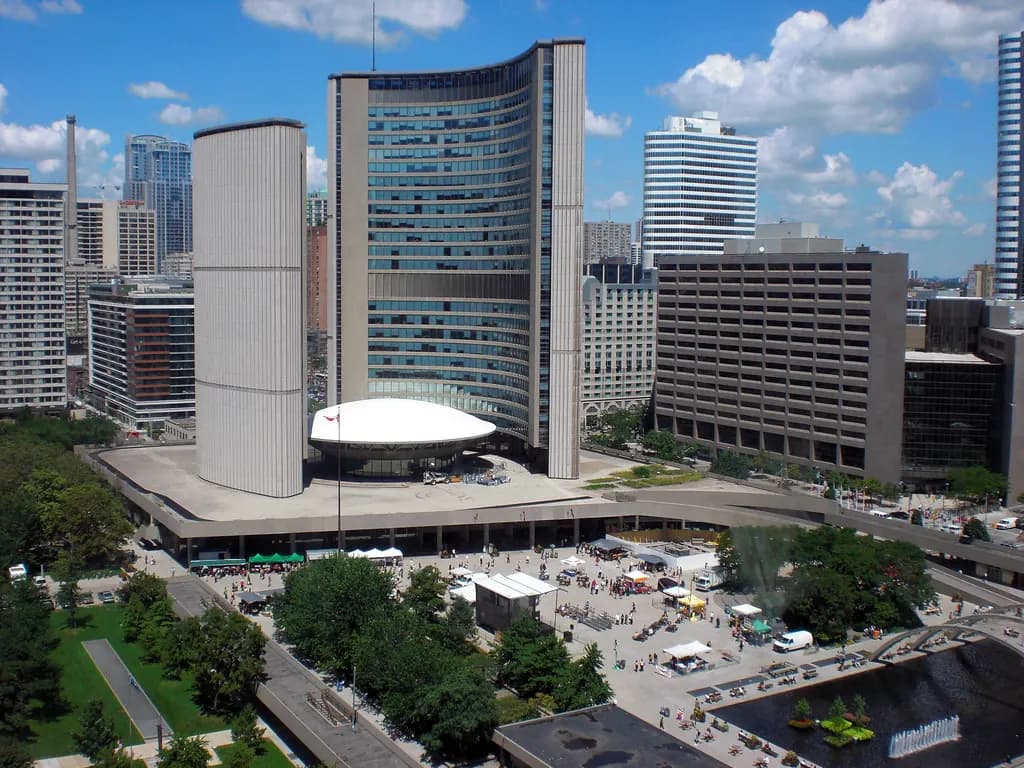
Toronto. The City regulates more than 50 types of businesses and trades under Toronto Municipal Code Chapter 545, Licensing — examples include eating and drinking establishments, building renovators, motorized refreshment vehicles, and a range of personal service and trade categories. If your activity is on the list, you need a City licence before you start, and most new licence applications also need zoning approval for the location. If it isn't — as is the case for many consultants, designers, writers and other office-type freelancers — you don't need a City licence, although Toronto's zoning rules on home occupations still apply. Toronto is part-way through a 2025–2029 action plan to simplify licence applications and has launched a revamped renewal system; check the City's licensing pages for your category and the current fee before you open.
Elsewhere in Ontario. Mississauga, Ottawa, Hamilton and other municipalities have their own licensing bylaws and lists, often covering similar categories such as food premises, contractors and personal services. BizPaL lists the permits and licences for your activity and postal code.
Other permits. Depending on the work you may also need a public health inspection for food, a provincial trade certificate, a professional licence, or a sign permit.
WSIB and hiring
You don't automatically have WSIB coverage for yourself as a sole proprietor in most industries, and you can buy optional coverage; construction has wider compulsory rules, including for many independent operators. Once you hire your first worker in an industry where coverage is mandatory, you must register with WSIB within 10 calendar days. You'll also need a CRA payroll account and must pay at least Ontario's minimum wage of C$17.95 an hour. Our WSIB guide and payroll deductions guide cover the details.
Worked example: a home-based graphic designer in Toronto
Amara works from home in Toronto as "Northern Lights Design". In her first year she bills C$48,000 to small-business clients and spends C$8,000 on software, a new computer, a share of her home costs and advertising, for a net profit of C$40,000.
Registration. "Northern Lights Design" isn't her own name, so she registers it in the OBR for C$60, valid 5 years. Graphic design isn't a Chapter 545 category, so she doesn't need a City licence, though she checks the home-occupation zoning rules.
HST. Her sales pass C$30,000 part-way through the year, so she registers with the CRA (free, instant online), gets a BN with an RT0001 account, and charges 13% HST from then on. Because her clients are businesses, they claim it back. She claims input tax credits on the HST she pays for her computer and software.
CPP. On C$40,000 of net self-employment earnings: (40,000 − 3,500) × 11.9% = C$4,343.50. Half is deducted from income and half claimed as a credit.
Deadlines. She files her 2026 T1 with T2125 by June 15 of the following year and pays any tax and CPP owing by April 30. In year two the CRA will likely send instalment reminders.
| First-year item | Cost |
|---|---|
| Business name registration (5 years) | C$60 |
| CRA business number and HST account | Free |
| City of Toronto licence | Not required for graphic design |
| Accounting software (estimate) | C$240–C$400 |
| Professional liability insurance (estimate) | C$400–C$900 |
| Self-employed CPP on C$40,000 | C$4,343.50 |
Items marked "estimate" are MSMETOOLS estimates based on typical 2026 prices, not official figures. As with most sole proprietors, the registration is the smallest cost; CPP and income tax on profit are the big ones. Set aside 25–30% of each payment you receive until you know your real bill. Our hourly rate calculator builds those costs into your rates.
Sole proprietorship or corporation?
| Sole proprietorship | Ontario corporation | |
|---|---|---|
| Set-up cost | C$60 name registration (if needed) | C$300 plus a NUANS report |
| Liability | Unlimited | Limited to the company (personal guarantees aside) |
| Tax on profit | Personal rates on all profit | 9% federal + 2.2% Ontario on active business income up to C$500,000 |
| Annual filings | T1 with T2125 | T2 return, Ontario annual return, financial statements |
| Renewal | Every 5 years | Annual return each year |
Many Ontario owners start as sole proprietors and incorporate once profit consistently exceeds what they spend personally, because profit left in a corporation is taxed at the much lower small business rate until it's paid out. Incorporating earlier makes sense if your work carries real liability risk or clients insist on dealing with a company.
Common mistakes
Adding words to your own name and not registering. "Amara Okafor Photography" needs registration; "Amara Okafor" doesn't.
Letting the registration expire. Five years passes quickly. Put the expiry date in your calendar and renew online for C$60.
Not updating an address. Changes must be registered within 15 days; it's free.
Using "Inc." or "Ltd." Those are for corporations only.
Missing the single-quarter HST rule. One big contract in a quarter can push you over C$30,000 and make HST due on that sale.
Forgetting CPP when budgeting. At 11.9% of net earnings, it surprises many first-year freelancers more than income tax does.
What to do next
Decide on your name, search the OBR and register it if it isn't simply your own name. Then open a separate business bank account, check whether your activity needs a municipal licence, and register for HST when you approach C$30,000. Our Ontario small business grants guide lists funding for new owners, and our startup cost calculator helps you plan the first year.
Official links
- Ontario — Register your business onlineOntario Business Registry
- Ontario — Registry fees and processing timesC$60 registration and renewal
- Business Names Act (e-Laws)Sections 2, 4, 7 and 10
- CRA — Do you need a business number?BN and program accounts
- CRA — GST/HST registrants (RC4022)Small supplier rules
- City of Toronto — Updating the Licensing BylawChapter 545 licensing
- BizPaLPermits and licences by location
This is general information, not legal or tax advice — confirm on the official source or with a professional.
Frequently asked questions
Only if you use a name other than your own. Section 2(2) of Ontario's Business Names Act says an individual can't carry on business under a name other than their own unless it is registered. Trading as 'Amara Okafor' needs no registration; 'Okafor Design' or 'Amara Okafor Consulting Services' does. Registering costs C$60 online and lasts 5 years.
The Ontario Business Registry charges C$60 to register a business name for a sole proprietorship, online or by mail, and the same C$60 to renew it every 5 years. Amending or cancelling is free. The CRA business number and HST account are free too. Optional extras are a NUANS search or paid filing services.
5 years from the date it's accepted, under section 4 of the Business Names Act. You renew online in the Ontario Business Registry for C$60, and the renewal runs from the day after the old registration expires. If it lapses, you're trading under an unregistered name until you register again.
When your worldwide taxable sales exceed C$30,000 in a single calendar quarter or over the last four consecutive quarters. Then you register with the CRA and charge 13% HST to Ontario customers. You can register voluntarily below the threshold to claim input tax credits on business costs.
It's an offence under section 10 of the Business Names Act, with a fine of up to C$2,000 for an individual. More practically, section 7 stops you suing a customer over that business without the court's permission, which you only get by showing the failure was inadvertent and has been fixed. Your contracts remain valid.
Only if your activity is one the City licenses. Toronto regulates more than 50 types of businesses and trades under Municipal Code Chapter 545 — for example eating establishments, building renovators and refreshment vehicles. Many home-based consultants, designers and freelancers don't need a City licence, but zoning rules for home occupations still apply.
Your profit is personal income. You report it on form T2125 with your T1 return, due June 15 for self-employed people, though any balance owing is due April 30. You also pay both halves of CPP — 11.9% on net earnings between C$3,500 and C$74,600 in 2026.
Sources & verification
Figures on this page were checked against the sources below when it was last reviewed on 11 October 2026. Each rate and limit is stored once with its own official source and review date, and official update channels are monitored daily so changes are picked up. How we verify
- 1.Business Names Act, R.S.O. 1990, c. B.17 — Government of Ontario (e-Laws) · accessed 11 October 2026
- 2.Cost and time required to register, change or search for a business name, corporation or not-for-profit — Government of Ontario · accessed 11 October 2026
- 3.4. Register your business online — Government of Ontario · accessed 11 October 2026
- 4.Registering your business name — Government of Ontario · accessed 11 October 2026
- 5.You need a business number or a program account — Canada Revenue Agency · accessed 11 October 2026
- 6.RC4022 General Information for GST/HST Registrants — Canada Revenue Agency · accessed 11 October 2026
- 7.CPP contribution rates, maximums and exemptions — Canada Revenue Agency · accessed 11 October 2026
- 8.2026 tax deadlines for Canadian businesses and self-employed individuals — Government of Canada · accessed 11 October 2026
- 9.Updating the Licensing Bylaw — City of Toronto · accessed 11 October 2026
MSMETOOLS is an independent platform and is not affiliated with any government agency, ministry or department.
Tools for this
GST/HST Calculator (Canada)
Calculate GST, HST and PST by province.
Invoice Generator
Create professional invoices with tax, logo and custom details.
Startup Cost Calculator
Estimate how much capital you need to launch.
Freelance Hourly Rate Calculator
Work out the hourly rate you need to charge.
Related guides
 Sole Proprietorship in BC (2026): Register, Taxes & CostsRead guide
 Ontario Business Registration Search 2026: Free & PaidRead guide
 Register a Business in Ontario 2026: Costs & ChecklistRead guide
 Business Number Canada (2026): Get, Find & Use Your BNRead guide
Official links open the government site in a new tab.