 HR, payroll & employment
WSIB Ontario in 2026: Who Registers, Premium Rates by Class and Clearance Certificates
WSIB Ontario in 2026: who must register, every 2026 class rate, the C$121,700 earnings cap, reporting deadlines, clearance certificates and independent operators.
 Edited by Sumeet YadavFounder & editor, MSMETOOLS · fact-checked against official sources
Contents (11)
- 1. What WSIB is and who it covers
- 2. Who must register — and the 10-day rule
- 3. 2026 WSIB premium rates by class
- 4. How premiums are calculated
- 5. Reporting and paying: frequency and due dates
- 6. Clearance certificates
- 7. Construction: mandatory coverage for owners and independent operators
- 8. Independent operators outside construction
- 9. Injuries, surplus rebates and other 2026 changes
- 10. Common mistakes and how they get fixed
- 11. What to do next
The Workplace Safety and Insurance Board — WSIB — is Ontario's no-fault workplace insurer. If someone you employ is hurt at work, WSIB pays their benefits and health care, and in return your business can't be sued over the injury. For most employers it isn't optional. This guide covers who must register and how fast, every 2026 premium rate by class, the maximum insurable earnings, how often you report and pay, clearance certificates, the special construction rules for owners and independent operators, and the mistakes that lead to back-premiums — with worked examples in Canadian dollars.
Quick answer
Most Ontario businesses with employees must register with WSIB within 10 calendar days of hiring their first worker. You pay premiums on each person's insurable earnings up to C$121,700 in 2026, at your class rate — the average is C$1.23 per C$100 of payroll.
Premium = insurable earnings × rate ÷ 100; class rates run from C$0.18 to C$3.55
Report and pay monthly if payroll is C$1,000,000+, quarterly from C$20,000, otherwise once a year
Clearance certificates last up to 90 days and protect whoever hires you
Construction owners and independent operators usually need their own coverage
Report a lost-time injury on Form 7 within three business days
What WSIB is and who it covers
WSIB administers the Workplace Safety and Insurance Act, 1997. It insures more than 300,000 businesses across 16 industry groups. Most private employers are Schedule 1 employers: they pay premiums into a collective fund, and WSIB pays the claims. A smaller group of Schedule 2 employers, mostly public-sector and other large organisations named in the regulations, pay the actual cost of their own claims instead. This guide is about Schedule 1, which covers nearly every small and medium business.
Coverage is for workers: anyone you employ, whether full-time, part-time, seasonal, temporary, a student or an apprentice, and including family members on the payroll. It also covers unregistered people doing construction work for you. The owner is a different story. Outside construction, sole proprietors, partners and executive officers aren't covered automatically, though they can buy optional insurance. Inside construction, the rules flip and most owners must be covered, as explained below.
WSIB sits alongside your federal payroll deductions — CPP, EI and income tax, which we cover in our payroll deductions guide — and Ontario's Employer Health Tax. Unlike CPP and EI, WSIB premiums are paid entirely by the employer. You can't deduct them from employees' pay.
Who must register — and the 10-day rule
You have 10 calendar days from the day you hire your first employee to register. Registration is online and WSIB says it takes about ten minutes once you have your business details and know your business activity.
Mandatory industries include most sales and service businesses, agriculture, manufacturing, trucking and transportation, and construction. A homeowner who hires a domestic worker — a nanny, housekeeper, cook, gardener or handyperson — is also caught. A few industries are not required to register but can choose to: banks, trust and insurance companies, barber shops and many hair salons, and funeral or embalming establishments. If your business isn't on any list, WSIB's online registration asks a few questions and tells you whether you must register.
Registering with WSIB
- 1
Check whether you must register
WSIB — How to register your businessAnswer WSIB's online questions about your business activity. They match you to a NAICS-based classification in the Employer Classification Manual.
- 2
Gather your details
Legal and operating names, CRA Business Number, ownership, start date, first hire date, business activities and estimated annual insurable earnings.
- 3
Register within 10 calendar days of the first hire
You'll receive a seven-digit WSIB account number and your reporting frequency.
Tip: Start the clock from the first worker's first day, not your first payday.
- 4
Sign up for online services
Use it to report payroll, pay premiums, download clearances and get due-date reminders.
- 5
Post the 'In case of injury' poster (Form 82)
By law it must be displayed prominently (or made available electronically) in every covered workplace. WSIB mails a copy when you first register.
If you're not sure whether people working for you are employees or independent operators, sort that out before registering, because it changes your payroll figure. WSIB makes its own status decision — the CRA's view or the fact that someone has incorporated doesn't settle it.
2026 WSIB premium rates by class
WSIB's rate framework sorts businesses into classes and subclasses based on what they do, using the North American Industry Classification System. Each class has a class rate reflecting the shared risk of everyone doing that kind of work. Established businesses then get an individual rate that moves up or down from the class rate according to their own claims history, by at most three risk bands (about 15%) a year until they reach their projected rate. New businesses start at the class rate for their class or subclass.
The 2026 average premium rate is C$1.23 per C$100 of insurable payroll, down from C$1.25 in 2025 — the seventh cut in ten years and the lowest average in more than 50 years. WSIB expected the cut to save businesses about C$60 million compared with 2025. These are the 2026 class rates per C$100 of insurable earnings:
| Class | Industry | 2026 class rate |
|---|---|---|
| A | Agriculture | C$1.90 |
| B | Mining, quarrying, oil and gas extraction | C$2.01 |
| C | Utilities | C$0.56 |
| D1 | Educational services | C$0.33 |
| D2 | Public administration | C$3.49 |
| D3 | Hospitals | C$1.09 |
| E1 | Food, textiles and related manufacturing | C$1.31 |
| E2 | Non-metallic and mineral manufacturing | C$1.94 |
| E3 | Printing, petroleum and chemical manufacturing | C$1.02 |
| E4 | Metal, transportation equipment and furniture manufacturing | C$1.74 |
| E5 | Machinery, electrical equipment and misc. manufacturing | C$1.21 |
| E6 | Computer and electronic manufacturing | C$0.31 |
| F1 | Rail, water, truck transportation and postal service | C$3.41 |
| F2 | Air, transit, ground passenger, recreational, pipeline, courier, warehousing | C$1.43 |
| G1 | Residential building construction | C$2.18 |
| G2 | Infrastructure construction | C$1.72 |
| G3 | Foundation, structure and building exterior construction | C$3.55 |
| G4 | Building equipment construction | C$1.54 |
| G5 | Specialty trades construction | C$2.15 |
| G6 | Non-residential building construction | C$1.61 |
| H1 | Petroleum, food, motor vehicle and misc. wholesale | C$1.52 |
| H2 | Household goods, building materials, machinery wholesale | C$0.76 |
| I1 | Motor vehicles, building materials, food and beverage retail | C$1.23 |
| I2 | Furniture, home furnishings, clothing retail | C$0.87 |
| I3 | Electronics, appliances, health and personal care retail | C$0.33 |
| I4 | Specialized retail and department stores | C$0.95 |
| J | Information and culture | C$0.41 |
| K | Finance, management and leasing | C$0.72 |
| L | Professional, scientific and technical | C$0.18 |
| M | Administration, services to buildings, dwellings and open spaces | C$1.43 |
| N1 | Ambulatory health care | C$1.59 |
| N2 | Nursing and residential care facilities | C$2.10 |
| N3 | Social assistance | C$1.38 |
| O | Leisure and hospitality | C$0.90 |
| P | Other services | C$1.28 |
Non-exempt partners and executive officers in construction — previously rate group 755 — get a separate low rate of C$0.20 in 2026, reflecting that their work is mostly management rather than on the tools. The biggest class decrease for 2026 was Utilities (down 13%); the biggest increase was Computer and Electronic Manufacturing (up 7%). Your individual 2026 rate appears on your premium rate statement, which WSIB now issues only online, from November each year. The statement also shows a projected rate, telling you which way your rate is heading if your claims experience stays the same.
How premiums are calculated
The formula is simple: premium = insurable earnings × premium rate ÷ 100. The work is in getting insurable earnings right.
Insurable earnings start with each person's gross earnings — wages, salary, vacation pay, piecework, room and board that forms part of pay, and the taxable benefits that go in box 14 of the T4 slip. If you pay contractors who WSIB doesn't consider independent operators, you also include the labour portion of what you paid them. Then you take out non-insurable amounts: maternity top-ups paid on top of EI benefits, certain severance where a Record of Employment has been issued, executive officers' earnings that aren't covered, and anything above each person's annual maximum.
The 2026 maximum insurable earnings is C$121,700 per person, up from C$117,000 in 2025. It's set from Ontario average earnings data. Once an employee's earnings for the year reach that ceiling, you stop reporting and paying premiums on what's above it.
If your business has more than one NAICS code — say, a manufacturer that also runs a retail shop — you calculate each code separately. Earnings that clearly belong to one activity are direct earnings. Shared staff such as office, HR and accounting are common earnings and must be spread across the codes in proportion to each code's share of direct earnings.
Worked example: a Hamilton restaurant
A restaurant in Hamilton has 14 employees and is classified in class O, Leisure and Hospitality, at the 2026 class rate of C$0.90. Its gross payroll for the year is C$512,000, including a general manager paid C$136,000.
The manager's earnings above the cap aren't insurable: C$136,000 − C$121,700 = C$14,300. The restaurant's insurable earnings are therefore C$512,000 − C$14,300 = C$497,700. The annual premium is C$497,700 × 0.90 ÷ 100 = C$4,479.30.
Because annual payroll is between C$20,000 and C$999,999.99, the restaurant reports and pays quarterly: roughly C$1,120 each quarter, adjusted for actual payroll each time. If it hires enough staff that annual payroll is heading past C$1,000,000, it must tell WSIB within 10 calendar days and switch to monthly reporting.
Worked example: a small engineering consultancy
A Toronto engineering consultancy in class L (Professional, Scientific and Technical) at C$0.18 has three employees earning C$95,000, C$110,000 and C$128,000. Insurable earnings are C$95,000 + C$110,000 + C$121,700 = C$326,700, and the premium is C$326,700 × 0.18 ÷ 100 = C$588.06 for the year. The two owner-directors aren't covered unless they buy optional insurance — they're outside construction, so it's their choice.
Reporting and paying: frequency and due dates
Reporting and paying are two separate steps. First you report your payroll (insurable earnings) for the period; WSIB uses it to calculate the premium. Then you pay. You must report even if payroll is zero or you have a credit, and late reports and late payments each attract a fee.
| Annual payroll | How often you report and pay | Due date |
|---|---|---|
| C$1,000,000 or more | Monthly | Last day of the following month (January's payroll by 28 February, and so on; December's by 31 January) |
| C$20,000 to C$999,999.99 | Quarterly | 30 April, 31 July, 31 October and 31 January |
| Less than C$20,000 | Annually | 30 April for the previous calendar year |
You can report and pay through WSIB online services, through online banking for businesses at most major Canadian banks, or — since July 2023 — alongside your federal remittances in the CRA's My Business Account, where payment is by pre-authorized debit. Credit cards are accepted through WSIB's payment provider, with a 2.25% service charge (1.75% for Visa Debit and Debit Mastercard) that goes to the provider, not WSIB. Cheques still work but take three to five business days to process.
Clearance certificates
A clearance is a number WSIB issues to show that a business is registered and up to date with its reporting and payments. Only registered businesses in good standing can get one. It's generated automatically while you stay current, it covers all your contracts, and it's valid for up to 90 days, renewing as you keep paying. You can download it instantly from online services or have WSIB email it to you each time it renews. Most newly registered businesses that need a clearance at registration make an advance payment of C$250, which is credited against future premiums.
Clearances matter most to the business doing the hiring. In construction, a principal — anyone who directly hires a contractor — must get a clearance for that contractor before construction work begins and keep a valid one for the whole time the contractor is working. Starting construction work without one is an offence for both parties. More importantly for your wallet, if you hire a contractor without a clearance and that contractor owes WSIB, you can be held liable for its unpaid premiums up to the value of the labour portion of your contract. Because clearances last at most 90 days, long jobs need the clearance checked again during the project.
Outside construction, clearances aren't legally required in the same way, but many larger customers ask for them as a condition of contract. Homeowners who hire a contractor directly for exempt home renovation work on their own home don't need one.
Construction: mandatory coverage for owners and independent operators
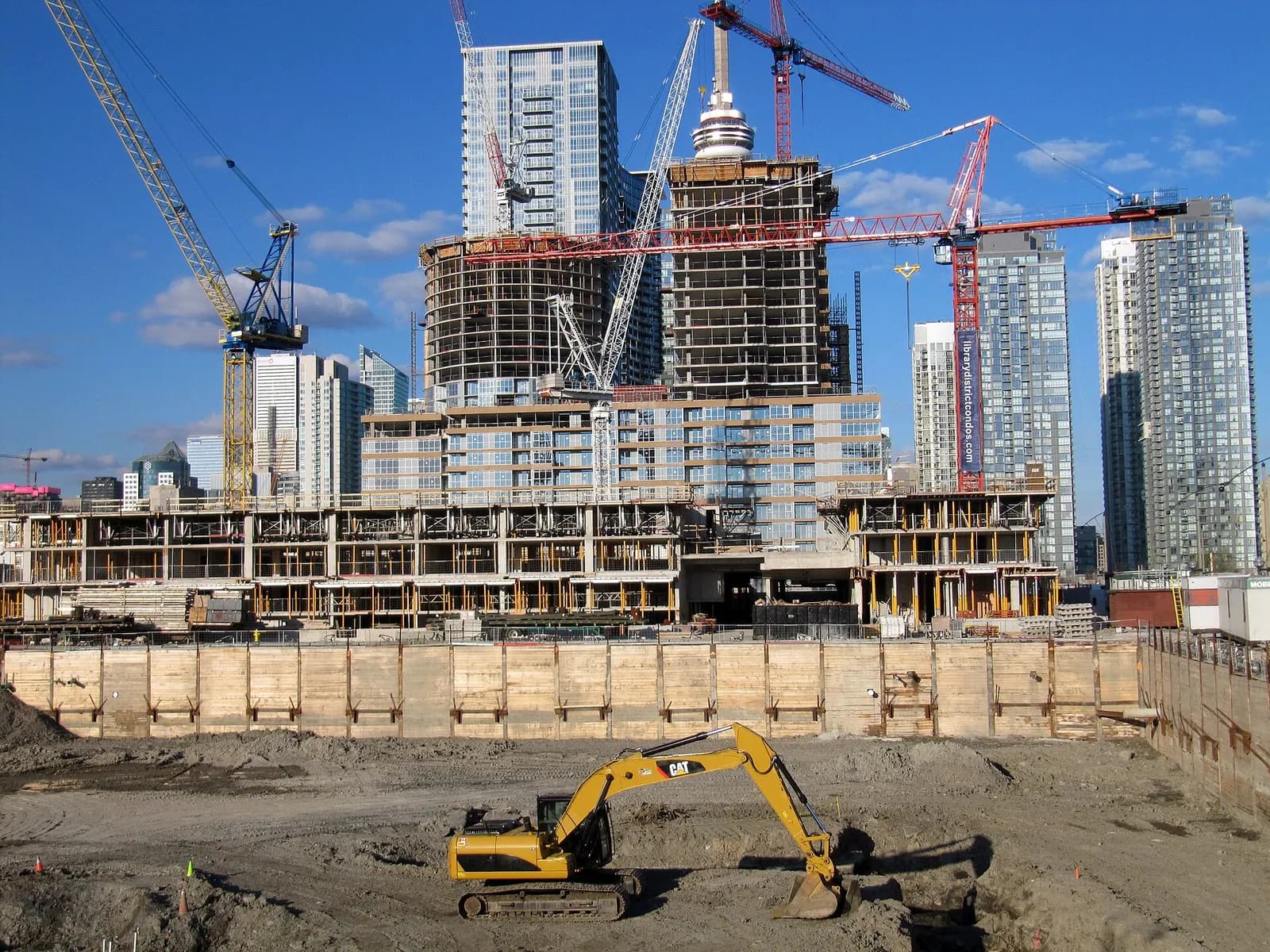
Ontario has had expanded compulsory coverage in construction since 2013. Under the current WSIB policy (applying to decisions from 5 December 2024), independent operators, sole proprietors, partners and executive officers carrying on business in construction are deemed workers and must be covered, with or without employees. Their business is the deemed employer and must register, report and pay.
An independent operator in construction is someone who reports as self-employed and is hired as a contractor or subcontractor by more than one person in an 18-month period. It also includes an executive officer of a corporation that has no workers other than that person and works for more than one client in 18 months. Incorporating doesn't get you out of coverage.
There are two main exemptions:
- Exempt home renovation work. If your business works only on existing private homes — a house, condo, apartment or cottage, plus garages, sheds, fences or pools on the same site — and you're hired directly by the person who lives there or a family member, the owner doesn't need coverage. Any workers you hire still do. Subcontractors on those jobs aren't exempt, because the homeowner didn't hire them directly.
- One partner or executive officer. A partnership or corporation can elect one partner or executive officer as exempt if that person does no construction work — no manual work, no operating equipment, no direct on-site supervision. Site visits are allowed. The exemption takes effect when WSIB receives the declaration and ends the day the person starts doing construction work.
Who needs WSIB coverage — construction vs other industries
| Person | Construction (Class G) | Most other industries |
|---|---|---|
Employees, incl. family | Must be covered | Must be covered (in mandatory industries) |
Sole proprietor | Must be covered unless exempt home renovation only | Optional insurance |
Partners / executive officers | Must be covered; one non-working partner or officer can be exempt | Optional insurance |
Independent operator (no employees) | Must be covered (deemed worker) | No need to register; optional insurance |
Clearance before work starts | Required for each contractor | Not required by law; often a contract term |
Employees, incl. family
- Construction (Class G)
Must be covered
- Most other industries
Must be covered (in mandatory industries)
Sole proprietor
- Construction (Class G)
Must be covered unless exempt home renovation only
- Most other industries
Optional insurance
Partners / executive officers
- Construction (Class G)
Must be covered; one non-working partner or officer can be exempt
- Most other industries
Optional insurance
Independent operator (no employees)
- Construction (Class G)
Must be covered (deemed worker)
- Most other industries
No need to register; optional insurance
Clearance before work starts
- Construction (Class G)
Required for each contractor
- Most other industries
Not required by law; often a contract term
Non-exempt partners and executive officers in construction pay the separate C$0.20 rate. WSIB's Insurable Earnings – Construction policy sets out how their earnings are counted, so check it before you report them.
Independent operators outside construction
Outside construction, an independent operator — an owner-operator with no employees — doesn't have to register and isn't automatically covered by the businesses that hire them. The question for both sides is whether the person really is independent, or is in substance a worker. If WSIB later decides they were a worker, the business that hired them owes premiums back to the start of the relationship.
WSIB settles this with a status questionnaire, filed by the operator or the hiring business for each industry, ideally before work starts. The key question is who controls where, when and how the work is done, and whether the person genuinely works for several businesses; depending on the industry, WSIB asks for supporting documents such as three to five recent invoices or contracts with different companies. Until a ruling exists, a hiring business may hold back part of a payment because it could be liable for premiums on the labour portion.
Transportation is handled differently. In trucking, courier, third-party food delivery and rideshare, the principal and owner-operator complete a transportation questionnaire, and the resulting status letter is tied to the vehicle identification number. The operator can show that letter to new principals for later contracts as long as they use the same vehicle; a new vehicle means a new questionnaire.
An independent operator who wants protection — or needs a clearance to win work — can apply for optional insurance. Once covered and up to date, they can get a clearance like any other registered business.
Getting an independent operator status ruling
Step 1
Hiring business asks for proof of coverage
Step 2
Operator or business files WSIB questionnaire
Step 3
Supporting documents
e.g. invoices to other clients
Step 4
WSIB rules: worker or independent operator
Step 5
Letter to both parties
transport: tied to the VIN
Injuries, surplus rebates and other 2026 changes
When a worker is injured and needs health care beyond first aid, misses time, earns less, or needs modified work at regular pay for more than seven calendar days, you must report it on the Employer's Report of Injury (Form 7) within three business days of learning about it, and give the worker a copy. Telling an injured worker to use sick days instead of reporting is not allowed.
Safe employers have also had money back. WSIB returned surplus funds twice in 2025; the fall 2025 rebate distributed C$2 billion, which for the average business was about 61% of the premiums it paid in 2024, credited to accounts by 31 October 2025. From January 2026, WSIB also offers construction businesses up to C$2,500 towards an automated external defibrillator for qualifying projects. WSIB normally announces the next year's average rate in late September; at the time of writing it had not yet published 2027 class rates, so check its premium rates page in November for your 2027 statement.
Common mistakes and how they get fixed
Registering late. The 10-day clock runs from the first hire. Fix: register online the same week; if you're already late, register now and report back-payroll — voluntary correction is treated better than an audit finding.
Treating contractors as independent by default. A contract that says "independent contractor" doesn't decide it. Fix: get a WSIB status ruling for regular contractors, and include the labour portion for anyone WSIB would consider a worker.
Paying premiums above the cap. Payroll software sometimes keeps calculating WSIB on high earners all year. Fix: stop insurable earnings at C$121,700 per person and request a credit for overpayments.
Forgetting zero reports. A quarter with no payroll still needs a report. Fix: file a nil report so your account — and your clearance — stays in good standing.
Hiring construction subcontractors without a clearance. You inherit their unpaid premiums. Fix: check the clearance before the first day on site and again before it expires on longer jobs.
WSIB compliance checklist
0/7Official links
- WSIB — 2026 premium ratesAverage rate, class rates, maximum insurable earnings
- WSIB — How to register your businessWho must register; online registration
- WSIB — How to calculate your premiumInsurable earnings rules
- WSIB — How to report and payFrequency thresholds and due dates
- WSIB — ClearancesGet or check a clearance
- WSIB — Expanded compulsory coverage in constructionOwners and independent operators in construction
- WSIB — Independent operatorsStatus questionnaires
What to do next
If you've just hired in Ontario, register with WSIB this week, then set up your payroll deductions and check whether your total payroll means Employer Health Tax applies. Our salary slip generator helps keep gross earnings records consistent, which makes WSIB reporting and year-end T4s much easier. Still setting up the business itself? Start with registering a business in Ontario.
This is general information, not legal or tax advice — confirm on the official source or with a professional.
Frequently asked questions
Most Ontario businesses that hire employees — including family members — must register with WSIB within 10 calendar days of hiring the first one. Some industries, such as banks, insurers and many hair salons, are not required to register but can opt in. In construction, owners, sole proprietors, partners and independent operators usually need coverage even with no employees.
The average WSIB premium rate for 2026 is C$1.23 per C$100 of insurable payroll, down from C$1.25 in 2025. Your own rate depends on your class and your claims history. Class rates range from C$0.18 for professional, scientific and technical services to C$3.55 for foundation, structure and building exterior construction.
For 2026 the annual maximum insurable earnings is C$121,700 per person, up from C$117,000 in 2025. Once someone's earnings reach that ceiling during the year, you stop reporting and paying premiums on the excess. The cap follows Ontario average earnings data and is reset each January.
A WSIB clearance is valid for up to 90 days and renews automatically while your account stays up to date with reporting and payments. In construction, the principal must have a valid clearance for each contractor before work starts and throughout the job, or it may become liable for the contractor's unpaid premiums up to the labour portion of the contract.
Outside construction, sole proprietors, partners and executive officers aren't automatically covered and can buy optional insurance. Inside construction, a sole proprietor or independent operator is generally a deemed worker and must have coverage, unless they work only on exempt home renovations hired directly by the homeowner. One partner or executive officer who does no construction work can elect an exemption.
Multiply your insurable earnings by your premium rate and divide by 100. For example, a café with C$300,000 of insurable payroll in class O (Leisure and Hospitality) at C$0.90 pays C$2,700 for the year. Exclude each person's earnings above C$121,700, and calculate separately for each NAICS code if you have more than one.
Sources & verification
Figures on this page were checked against the sources below when it was last reviewed on 9 October 2026. Each rate and limit is stored once with its own official source and review date, and official update channels are monitored daily so changes are picked up. How we verify
- 1.2026 premium rates — Workplace Safety and Insurance Board (WSIB) · accessed 9 October 2026
- 2.How to register your business — WSIB · accessed 9 October 2026
- 3.How to calculate your premium and insurable earnings — WSIB · accessed 9 October 2026
- 4.How to report your payroll and pay your premiums — WSIB · accessed 9 October 2026
- 5.Clearances — WSIB · accessed 9 October 2026
- 6.Clearance Certificate in Construction (policy 14-02-19) — WSIB · accessed 9 October 2026
- 7.Expanded Compulsory Coverage in Construction (policy) — WSIB · accessed 9 October 2026
- 8.Independent operators — WSIB · accessed 9 October 2026
- 9.Report an injury or illness — WSIB · accessed 9 October 2026
- 10.In Case of Injury poster (Form 82) — WSIB · accessed 9 October 2026
- 11.WSIB returns another $2 billion in surplus funds to eligible safe Ontario businesses — WSIB · accessed 9 October 2026
- 12.The Canada Revenue Agency and the WSIB partner to give Ontario businesses another way to pay their WSIB premiums — Canada Revenue Agency · accessed 9 October 2026
- 13.Posters required in the workplace — Government of Ontario · accessed 9 October 2026
- 14.WSIB cuts average premium rate for Ontario businesses in 2026 — Insurance Business Canada · accessed 9 October 2026
MSMETOOLS is an independent platform and is not affiliated with any government agency, ministry or department.
Tools for this
Salary Slip Generator
Create professional salary slips in seconds.
Startup Cost Calculator
Estimate how much capital you need to launch.
Related guides
 Payroll Deductions in Canada (2026): CPP, CPP2, EI & TaxRead guide
 Employer Health Tax Ontario 2026: Rates, Exemption & Due DatesRead guide
 Minimum Wage in Canada (2026): Federal & Provincial RatesRead guide
 Overtime Pay in Canada (2026): Rules by ProvinceRead guide
Official links open the government site in a new tab.