 Income tax
TPAR in 2026: The Taxable Payments Annual Report Explained
TPAR explained for 2026: the six industries that must lodge, the 10% and 50% tests, contractor details, online-only lodgment, the 28 August due date and penalties.
 Edited by Sumeet YadavFounder & editor, MSMETOOLS · fact-checked against official sources

Contents (11)
- 1. What the TPAR is and why the ATO collects it
- 2. Which industries must lodge a TPAR
- 3. Which payments to report — and which to leave out
- 4. Contractor details each line needs
- 5. Worked example: a Brisbane building business
- 6. How to lodge your TPAR
- 7. The 28 August deadline and the TPAR year
- 8. Penalties for late or missing TPARs
- 9. Common mistakes and how they get fixed
- 10. Related obligations to line up with your TPAR
- 11. What to do next
If you run a building firm, a cleaning company, a courier or freight operation, an IT consultancy or a security business and you pay contractors to do work for your clients, the ATO wants to know who you paid and how much. That report is the taxable payments annual report, or TPAR. This guide explains which businesses must lodge, the two different industry tests, the payments to include and leave out, what each contractor line needs, how to lodge now that paper forms are gone, and what happens if you miss the 28 August deadline — with a worked example in Australian dollars.
Quick answer
A TPAR reports what your business paid contractors during the financial year (1 July – 30 June) for six kinds of services. It's due by 28 August each year and must be lodged online — paper TPARs haven't been accepted since 28 August 2025.
Industries: building and construction, cleaning, courier, road freight, IT, and security, investigation or surveillance
Building firms lodge if 50% or more of income or activity is construction; the others if those services are 10% or more of business income
For each contractor: ABN, name, address, gross paid (incl. GST), GST, and any no-ABN tax withheld
Late lodgment: one penalty unit (A$364) per 28 days, up to A$1,820 for small businesses
Nothing to report this year? Lodge a non-lodgment advice by the same date
A note on sources: the ATO website blocks automated readers, so the ATO pages cited here were read through Internet Archive copies captured between November 2025 and October 2026. Each matches the ATO's 2026 newsroom messaging. Check the live ATO page before you lodge if anything looks different.
What the TPAR is and why the ATO collects it
The TPAR is part of the taxable payments reporting system (TPRS). It's a third-party report: you, the payer, tell the ATO what you paid each contractor, and the ATO compares that with what the contractor declares in their own tax return and business activity statements. Contractors can be sole traders, companies, partnerships or trusts — the structure doesn't matter. What matters is that they're not your employees and that they provided one of the covered services on your behalf.
The ATO is open about its purpose. It uses the data to find contractors who under-report income and to protect businesses that compete against operators who don't declare everything. Since Tax Time 2026, TPAR amounts are also pre-filled into the tax returns of individual contractors who provide these services. That has a practical consequence for you as a payer: if you report the wrong amount, or report a payment against the wrong ABN, your contractor will see a figure in their return that doesn't match their records and will probably ring you.
The system started with building and construction from 1 July 2012. Cleaning and courier services were added from 1 July 2018, and road freight, IT, and security, investigation or surveillance services from 1 July 2019. The six-industry list has been stable since then.
Which industries must lodge a TPAR
There are six covered services. You may need to lodge if your business provides one of them and pays contractors or subcontractors to deliver it on your behalf. You must also have an ABN. Paying a contractor for something unrelated to your service — a plumber to fix the office tap in an IT firm, for example — doesn't create a reporting obligation for that payment.
| Service | Examples of reportable contractor work | Test that decides whether you lodge |
|---|---|---|
| Building and construction | Subcontracted trades, demolition, excavation, installation, finishing, design work on a structure | Business is primarily in building and construction (50% test) |
| Cleaning | Contract cleaners sent to clients' offices, homes or sites | Cleaning income is 10% or more of business income |
| Courier | Owner-drivers delivering parcels and documents for you | Courier + road freight income combined is 10% or more |
| Road freight | Subcontracted truck operators hauling goods for your clients | Combined with courier, 10% or more |
| Information technology | Contract developers, network designers, IT support, web design | IT income is 10% or more |
| Security, investigation or surveillance | Contract guards, crowd controllers, investigators, monitoring | Security income is 10% or more |
The building and construction test
A business is primarily in building and construction if any one of three things is true: in the current financial year 50% or more of its business income comes from building and construction services; in the current year 50% or more of its business activity relates to those services; or in the year immediately before, 50% or more of its income came from them. The prior-year rule means a builder that diversifies doesn't drop out straight away — one more TPAR is still needed for the year after income falls below half.
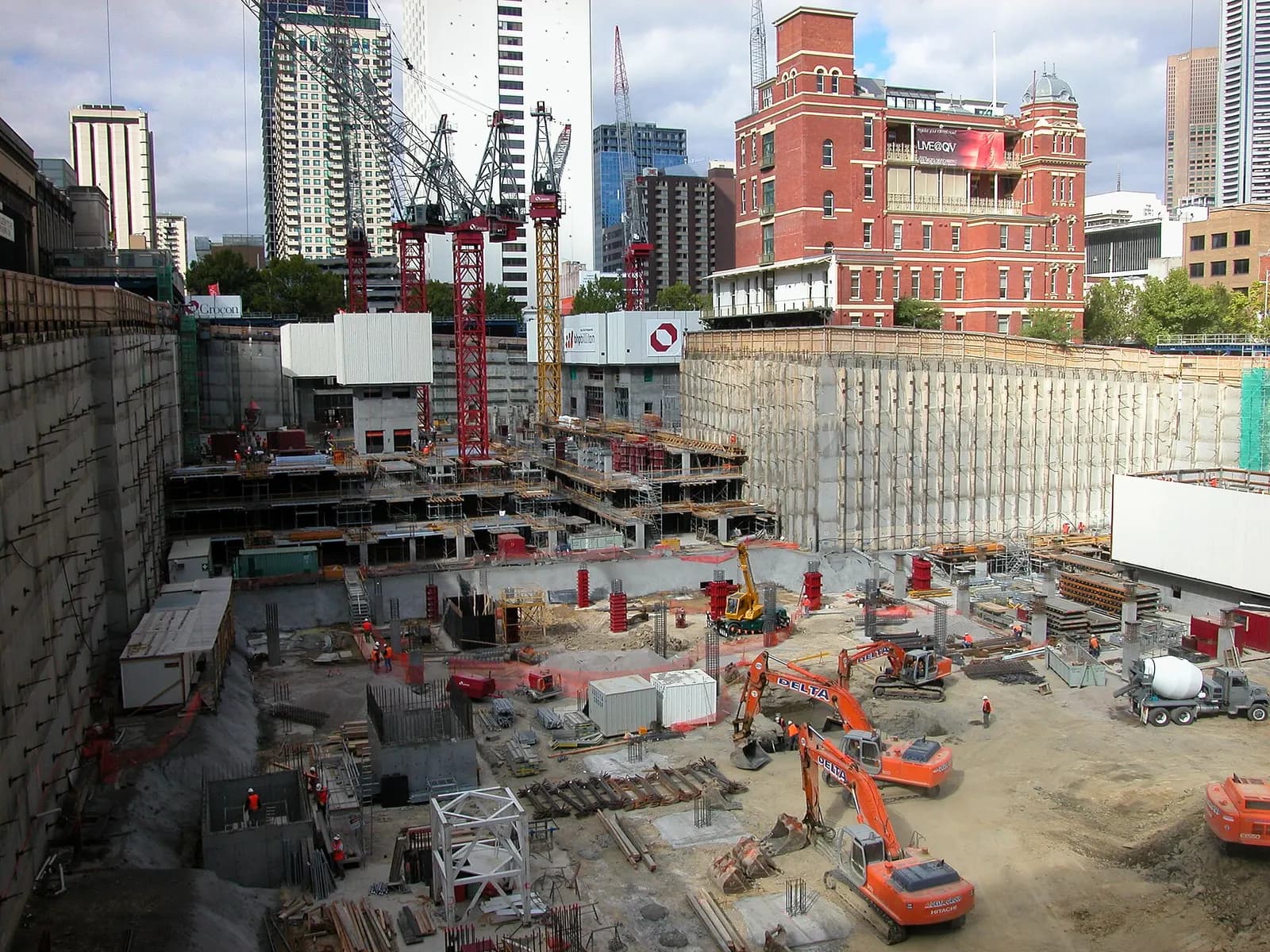
The definition of building and construction services is broad. It covers alteration, assembly, construction, demolition, design, dismantling, erection, excavation, finishing, improvement and installation work on any part of a building, structure, works, surface or sub-surface. A kitchen cabinet maker who installs is in; a hardware store that occasionally arranges installation is not, because its business is primarily retail.
The 10% test for the other five services
For cleaning, courier, road freight, IT and security, the question is what share of your business income comes from the service. You lodge if payments you receive for that service are 10% or more of your business income for the financial year and you paid contractors to provide it. Count income earned through employees as well as contractors when you work out the percentage. If you provide both courier and road freight services, add them together before you test.
The ATO's three steps are simple. First, add up what your customers paid you for the relevant service during the year. Second, work out your total business income for the year — or, if you started part-way through the year, your projected income for a full year. Third, divide the first number by the second and multiply by 100. At 10% or more you must lodge. Below it you don't have to, although the ATO allows you to lodge voluntarily if you're close to the line or unsure.
Government entities
Federal, state, territory and local government entities have their own TPAR obligation. They report payments to contractors for services generally, and some must also report grants paid to people or organisations with an ABN, including the date paid and the grant program's name. This guide focuses on private businesses; government payers should follow the ATO's government-entity guidance.
Which payments to report — and which to leave out
Once you know you must lodge, report every payment made during the financial year to contractors for the relevant service. TPAR works on a cash basis: you report what you actually paid between 1 July and 30 June, not what you were invoiced. An invoice dated 20 June and paid on 5 July belongs in next year's report.
If a contractor's invoice combines labour and materials — a tiler who supplies tiles and lays them — report the total amount. Don't split out the materials. The exception is when the labour is only incidental to a supply of goods, such as a supplier who fits one tap to show you how and adds a small labour charge to the invoice for the taps. That payment isn't reportable.
The ATO lists payments that don't go on a TPAR:
| Leave out | What it means in practice |
|---|---|
| Materials only | Buying timber, cleaning chemicals or computer hardware with no service component |
| Incidental labour | Labour that is minor and attached to a sale of goods |
| Unpaid invoices at 30 June | They go in the report for the year you pay them |
| Labour hire and on-hire | Workers supplied to you through a labour hire firm |
| Employees | Wages are reported through Single Touch Payroll instead |
| Foreign residents | Payments subject to foreign resident withholding, and work performed overseas |
| Consolidated groups | Payments between members of the same income tax consolidated group |
| Private and domestic | A builder renovating their own home, or an owner paying a cleaner privately |
IT is a partial exception on the foreign-resident point: if an overseas contractor delivers an IT service on your behalf, the payment is still reportable, because there's no exclusion based on where that contractor is located or resident.
One more category needs care: contractors who don't quote an ABN. If a contractor doesn't give you an ABN, you generally must withhold tax at the top marginal rate under the PAYG "no ABN" rules — our PAYG withholding guide covers how. You report those amounts either in the TPAR or in the separate PAYG payment summary – withholding where ABN not quoted annual report, but not both.
Contractor details each line needs
For every contractor you paid, the TPAR needs:
- ABN, if known — and every ABN they used during the year;
- name — business name or individual's name;
- address;
- gross amount paid for the year, including GST and any tax withheld;
- total GST included in those payments; and
- total tax withheld where the contractor didn't quote an ABN.
The ATO may also ask for phone numbers, email addresses and bank account details where you paid by electronic transfer, so it's worth capturing them in your supplier records from the start. The ATO publishes a taxable payments reporting worksheet you can use to keep a running record during the year; it's for your files only.
You don't have to tell contractors what you reported. If you want to — and it can head off disputes once pre-fill shows them a number — the ATO has an optional Payee information statement you can give each contractor. It shows whole dollars without cents. If you correct one, mark the new statement "amendment".
Worked example: a Brisbane building business
Rivergum Renovations Pty Ltd fits out commercial offices in Brisbane. In 2025-26 all its income came from building work, so it is primarily in building and construction and must lodge a TPAR for the year. During the year it paid five outside parties:
| Payee | What for | Paid 1 Jul 2025 – 30 Jun 2026 (incl. GST) | Report? |
|---|---|---|---|
| Sparkline Electrical (company, GST-registered) | Electrical fit-out, labour and cable | A$88,000 | Yes — A$88,000 gross, A$8,000 GST |
| Mia Tran (sole trader, not GST-registered) | Plastering | A$36,500 | Yes — A$36,500 gross, A$0 GST |
| Coastal Timber Supplies | Timber and fixings only | A$41,800 | No — materials only |
| Hireforce Labour | Two labourers on labour hire | A$27,500 | No — labour hire arrangement |
| Ben Cole (no ABN quoted) | Demolition, A$6,000 invoiced | A$3,180 paid, A$2,820 withheld | Yes in TPAR or the no-ABN report, not both |
The electrician's invoice included cable and fittings, but because it combined labour and materials the whole A$88,000 is reported. Sparkline's GST is one-eleventh of the GST-inclusive price, so A$8,000. Mia Tran isn't registered for GST, so her GST figure is nil. Rivergum also had an unpaid A$9,900 invoice from Sparkline dated 25 June 2026; it was paid on 10 July 2026 and goes in the 2026-27 report, not this one.
For Ben Cole, Rivergum withheld at the no-ABN rate of 47% (A$2,820 of A$6,000) and paid him A$3,180. If it reports him in the TPAR, the gross amount is A$6,000 (including the tax withheld) and the tax withheld is A$2,820. Rivergum's TPAR therefore shows three lines and a total gross of A$130,500. It lodges through its SBR-enabled accounting software on 12 August 2026, well before the 28 August deadline.
A mixed-services example
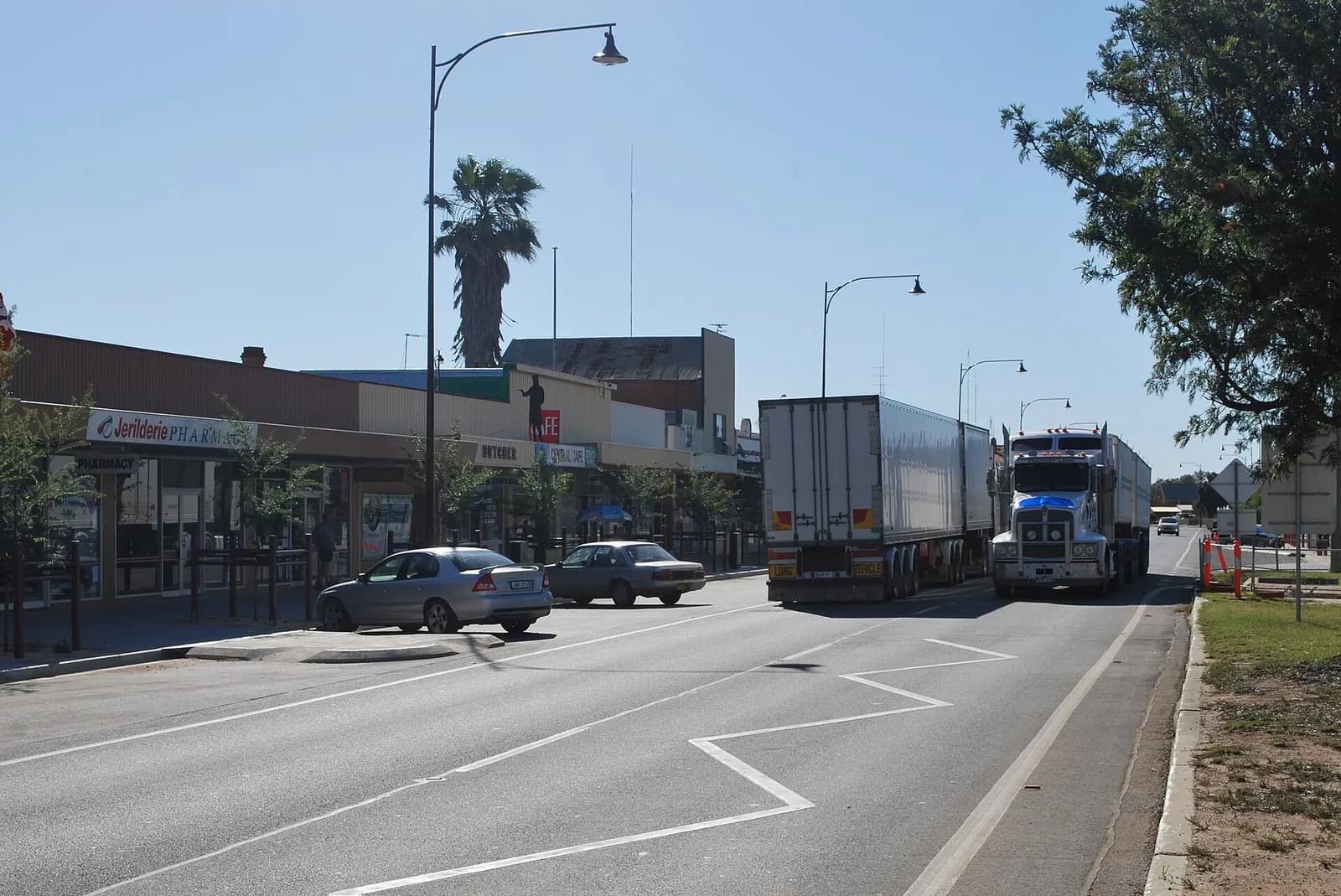
Now take a logistics business near Dubbo that earns A$2.4 million in 2025-26: A$1.9 million from warehousing and A$500,000 from courier and road freight deliveries, some done by its own drivers and some by owner-drivers it subcontracts. Courier and road freight are combined, giving A$500,000 ÷ A$2,400,000 × 100 = 20.8%. That's above 10%, so it must lodge and report every payment to the owner-drivers. If the deliveries had brought in only A$200,000 (8.3%), it would not have to lodge for that year — but it would have to retest the next year.
How to lodge your TPAR
Paper TPARs stopped being accepted after 28 August 2025, so every report now goes in electronically. You have four routes:
Lodging a TPAR online
- 1
Tag contractor bills during the year
In your accounting software, mark each contractor supplier as a TPAR payee and record their ABN, name and address. Most packages then build the report from bills you've paid.
Tip: Do the tagging when you set up the supplier, not in August.
- 2
Run and review the report after 30 June
Check totals against your bank payments, remove materials-only suppliers and labour hire, and confirm unpaid invoices at 30 June are excluded.
- 3
Lodge through one channel
ATO — Lodge your TPARUse SBR-enabled software, Online services for business (Lodgments → Taxable payments annual reporting), Online services for individuals and sole traders (Tax → Lodgments), or ask your registered tax or BAS agent.
- 4
Keep the receipt ID
The online services keep a history of lodgment dates and receipt IDs. Save them with your year-end records.
- 5
Lodge a non-lodgment advice if nothing to report
If you've lodged before but had no reportable payments this year, send a TPAR non-lodgment advice by 28 August.
Online services for business needs your ABN, a Digital ID and authorisation through the Relationship Authorisation Manager (RAM). The online form lets you save a draft and come back to it, which helps if you're keying in a long contractor list by hand. Businesses with very large contractor lists can also generate a data file to the ATO's TPAR specification and upload it through the file transfer function.
Correcting a lodged TPAR
If you find a mistake — a wrong ABN, a payment against the wrong contractor, a duplicated line — lodge an amended TPAR rather than waiting for next year. Because the data now flows into contractors' pre-filled returns, a correction made early is far less disruptive than one made after they've lodged. If you've given the contractor a Payee information statement, give them an updated one marked "amendment".
The 28 August deadline and the TPAR year
The TPAR follows the Australian financial year. The report for 2025-26 (payments from 1 July 2025 to 30 June 2026) was due on 28 August 2026; the report for 2026-27 is due on 28 August 2027. The date is the same whether you lodge yourself or through a tax or BAS agent.
The ATO notes that most TPAR data only becomes available in contractors' pre-fill after 28 August. If you're a contractor yourself and lodge your own return in July, you may not see the amount yet; the ATO suggests waiting until after 28 August or checking your records carefully.
Penalties for late or missing TPARs
A TPAR is one of the documents the ATO can apply a failure to lodge (FTL) penalty to. The base penalty is one penalty unit for every 28 days, or part of 28 days, that the report is overdue, up to 5 penalty units. A penalty unit is A$364 for failures on or after 1 July 2026, so a small business that is more than 112 days late faces up to A$1,820. The base amount is doubled for medium withholders — broadly businesses withholding between A$25,000 and A$1 million a year, or with assessable income or GST turnover between A$1 million and A$20 million — and multiplied by five for large withholders.
TPAR failure-to-lodge penalty (2026)
A$364
One penalty unit
from 1 July 2026
28 days
Each period (or part) late
A$1,820
Maximum, small business
5 units
×2 / ×5
Medium / large withholders
Two features make TPAR penalties stricter than people expect. First, the ATO generally doesn't issue an FTL penalty for a late tax return or activity statement that results in a refund or nil — but that leniency doesn't apply to third-party data reports such as the TPAR. Second, the ATO has shown it will act. In March 2026 it warned that businesses that had received three non-lodgment letters about overdue TPARs for 2025 or earlier years would be penalised, and said it had issued just over A$5 million in TPAR penalties the year before.
If you get a penalty, lodge the outstanding report first, then ask for remission. The ATO can remit all or part of the penalty based on your individual circumstances, and it expects the overdue report to be lodged before it considers the request. Using a registered agent may also give you safe-harbour protection if the agent caused the delay.
Common mistakes and how they get fixed
Reporting materials suppliers. A hardware or timber supplier isn't a contractor for TPAR. Fix: tag only payees who supplied a service, and include materials only when they're on the same invoice as the labour.
Leaving out contractors without an ABN. They still go somewhere — either the TPAR or the no-ABN withholding report. Fix: decide which report you'll use and stick to it, so the amount isn't reported twice.
Reporting invoices instead of payments. Accrual-based software sometimes pulls in unpaid bills. Fix: run the report on a cash basis for 1 July – 30 June.
Including labour hire or employees. Labour hire firms and employees on payroll are excluded. Fix: keep labour hire suppliers untagged and leave wages to Single Touch Payroll.
Assuming a nil year means doing nothing. If you've lodged before, silence triggers reminder letters. Fix: lodge a non-lodgment advice, and tick the option that you won't need to lodge in future if you've stopped using contractors.
Forgetting the prior-year rule in construction. A builder whose construction income dropped below half this year may still need one more TPAR. Fix: check last year's split before deciding.
TPAR year-end checklist
0/7Related obligations to line up with your TPAR
The TPAR doesn't replace your other reporting. GST credits on contractor invoices still go on your BAS, and you can only claim them with a valid tax invoice — our invoice generator shows what a compliant one contains. If a contractor is in reality working like an employee, the TPAR doesn't protect you: superannuation guarantee and PAYG withholding may still apply, and some states treat contractor payments as wages for payroll tax. Keep the contract, the invoices and evidence of how the work is controlled for each contractor you report.
Official links
- ATO — Taxable payments annual report (TPAR)Overview and 28 August due date
- ATO — Work out if you need to lodge a TPARSix services, 10% test, industry pages
- ATO — Payments businesses need to reportWhat to include and exclude
- ATO — Lodge your TPAROnline channels, non-lodgment advice, amendments
- ATO — Failure to lodge on time penaltyPenalty calculation and remission
- ABN LookupCheck contractor ABN and GST status
What to do next
If you're in one of the six industries, set up contractor tagging in your accounting software now so the 2026-27 report — due 28 August 2027 — builds itself. Check each contractor's ABN as you onboard them, and if you missed a past TPAR, lodge it before the ATO's third letter arrives. For the wider year-end picture, read our PAYG payment summary and STP finalisation guide.
This is general information, not legal or tax advice — confirm on the official source or with a professional.
Frequently asked questions
The taxable payments annual report is due by 28 August each year and covers contractor payments made from 1 July to 30 June of the financial year just ended. The report for 2025-26 was therefore due on 28 August 2026, and the 2026-27 report will be due on 28 August 2027. A non-lodgment advice has the same due date if you don't need to lodge.
Businesses with an ABN that pay contractors to provide building and construction, cleaning, courier, road freight, information technology, or security, investigation or surveillance services on their behalf. Building businesses lodge if they are primarily in construction (50% or more of income or activity). For the other services, you lodge if they make up 10% or more of your business income. Some government entities also lodge.
No. The ATO stopped accepting paper TPARs after 28 August 2025. You now lodge through SBR-enabled business software, Online services for business, Online services for individuals and sole traders, or a registered tax or BAS agent. Many accounting packages can prepare the report from your bills if contractors are tagged correctly during the year.
A failure-to-lodge penalty of one penalty unit (A$364 from 1 July 2026) for each 28 days or part the report is late, up to 5 penalty units — A$1,820 for a small business. The base amount doubles for medium withholders and is multiplied by five for large withholders. In 2026 the ATO penalised businesses that ignored three reminder letters about overdue TPARs.
If you were previously required to lodge but didn't make any reportable payments this year, lodge a TPAR non-lodgment advice instead, by the same 28 August deadline. It tells the ATO not to expect a report and can also flag that you won't need to lodge in future years, which stops reminder letters and penalty action.
Yes. For each contractor you report the gross amount paid including GST and any tax withheld, plus the total GST included in those payments, and any amounts withheld because the contractor didn't quote an ABN. Amounts are reported for payments actually made in the financial year, so unpaid invoices at 30 June wait for next year's report.
Sources & verification
Figures on this page were checked against the sources below when it was last reviewed on 9 October 2026. Each rate and limit is stored once with its own official source and review date, and official update channels are monitored daily so changes are picked up. How we verify
- 1.Taxable payments annual report (TPAR) — Australian Taxation Office · accessed 9 October 2026
- 2.Work out if you need to lodge a TPAR — Australian Taxation Office · accessed 9 October 2026
- 3.Building and construction services — TPAR — Australian Taxation Office · accessed 9 October 2026
- 4.Information technology services — TPAR — Australian Taxation Office · accessed 9 October 2026
- 5.Payments businesses need to report in their TPAR — Australian Taxation Office · accessed 9 October 2026
- 6.TPAR contractor details to report — Australian Taxation Office · accessed 9 October 2026
- 7.Lodge your TPAR — Australian Taxation Office · accessed 9 October 2026
- 8.Taxable payments reporting and contractors — Australian Taxation Office · accessed 9 October 2026
- 9.Failure to lodge on time penalty — Australian Taxation Office · accessed 9 October 2026
- 10.TPAR — lodge now to avoid penalties — Australian Taxation Office (via search summary) · accessed 9 October 2026
- 11.ATO sets final reminder for TPAR, ends paper lodgments — RegFollower · accessed 9 October 2026
MSMETOOLS is an independent platform and is not affiliated with any government agency, ministry or department.
Tools for this
Invoice Generator
Create professional invoices with tax, logo and custom details.
GST Calculator (Australia)
Add or remove 10% Australian GST.
Related guides
 PAYG Withholding 2026: Tax Tables & How to CalculateRead guide
 PAYG Payment Summary 2026: Income Statements & STP RulesRead guide
 Payroll Tax by State 2026: Thresholds & Rates ComparedRead guide
 Fringe Benefits Tax 2026: 47% Rate, Cars & EV RulesRead guide
Official links open the government site in a new tab.