 HR, payroll & employment
Award Allowances in Australia (2026): Common Allowances, Tax and STP Treatment, and Super
Award allowances in Australia for 2026: first aid, meal, laundry, tool and vehicle rates, PAYG withholding, STP Phase 2 codes, super and worked A$ examples.
 Edited by Sumeet YadavFounder & editor, MSMETOOLS · fact-checked against official sources
Contents (9)
Allowances are small amounts that cause big payroll headaches. A first aid allowance of under A$17 a week looks trivial, but get the award, the withholding, the Single Touch Payroll category or the super treatment wrong across a team for a few years and the back pay and corrections add up. This guide explains award allowances in Australia for 2026: what they are and how awards set them, the common allowances in the General Retail, Hospitality and Clerks awards with their amounts from 1 July 2026, how all-purpose allowances flow into overtime and leave, and how each type is treated for PAYG withholding, STP Phase 2 reporting and super. Worked examples are in Australian dollars.
Quick answer
Modern awards require employers to pay allowances for particular skills, duties, conditions or expenses — first aid, meals on unexpected overtime, laundering uniforms, tools, using a private car, split shifts and more. Amounts change every 1 July. Most allowances are taxed like wages, but car allowances at or below 91 cents per km (2026-27) for up to 5,000 km, and overtime meal and overnight travel allowances up to the ATO's reasonable amounts, need no withholding. Super applies to allowances for working conditions, skills and non-deductible costs, but not to those for deductible expenses.
Retail first aid allowance: A$14.55 a week
Retail overtime meal allowance: A$24.56
Report allowances separately in STP Phase 2 using allowance types
Reimbursements aren't allowances and aren't reported in STP
Payslips must show each allowance separately
What award allowances are
An allowance is an extra payment on top of the minimum rate for a reason the award specifies. Every award has an allowances clause — clause 19 in the Retail and Clerks awards, clause 26 in the Hospitality Award — and a Schedule C summary of monetary allowances listing each one and how it's adjusted. Allowances fall into two broad groups:
- Wage-related allowances compensate for a skill, responsibility or working condition — first aid, leading hand or supervisory duties, holding a liquor licence, cold work, or working in a remote place such as Broken Hill. They're set as a percentage of a standard rate and rise with the Annual Wage Review each 1 July.
- Expense-related allowances compensate for a cost the employee is expected to incur — meals during overtime, laundering a uniform, buying tools, using a private car or travelling. They're adjusted each year by movements in the relevant consumer price index.
Some awards also require employers to reimburse actual costs, such as buying special clothing or excess travel costs when working away from the usual site. A reimbursement isn't an allowance: it repays a verified expense, usually with a receipt.
An award allowance is a minimum entitlement in the same way as the base rate. If the employee meets the conditions, the employer must pay it, and the Fair Work Regulations require the payslip to identify each allowance separately. Paying a higher hourly rate doesn't automatically cover allowances unless the employment contract clearly says the over-award amount is intended to absorb them, and the total still meets the award in each pay period.
All-purpose allowances
Most allowances are paid only for the time or circumstance they relate to. An all-purpose allowance is different: the award says it forms part of the employee's rate of pay for all purposes, so it's included when calculating penalty rates, overtime, loadings and pay while on annual leave. The Hospitality Award, for example, makes the fork-lift driver allowance of A$0.44 an hour and the airport catering supervisory allowance all-purpose. If a fork-lift driver works overtime at 150%, the 150% applies to the minimum rate plus the allowance. Leaving all-purpose allowances out of overtime and leave calculations is one of the most common underpayments the Fair Work Ombudsman finds.
Common allowances in the three biggest awards
The tables below list the main allowances in three of Australia's most widely used awards, with the amounts that apply from the first full pay period on or after 1 July 2026.
General Retail Industry Award — clause 19
| Allowance | When it's payable | Amount |
|---|---|---|
Meal | Overtime of more than 1 hour after usual finish without 24 hours' notice | A$24.56; further A$22.27 if over 4 hours |
Laundry | Employee launders required special clothing | A$6.42 a week (full-time) or A$1.28 a shift (part-time/casual) |
Motor vehicle | Employer asks employee to use own car | A$1.00 per km |
Cold work | Principally working in cold chambers or refilling freezers | A$0.38 an hour; extra A$0.59 an hour below 0°C |
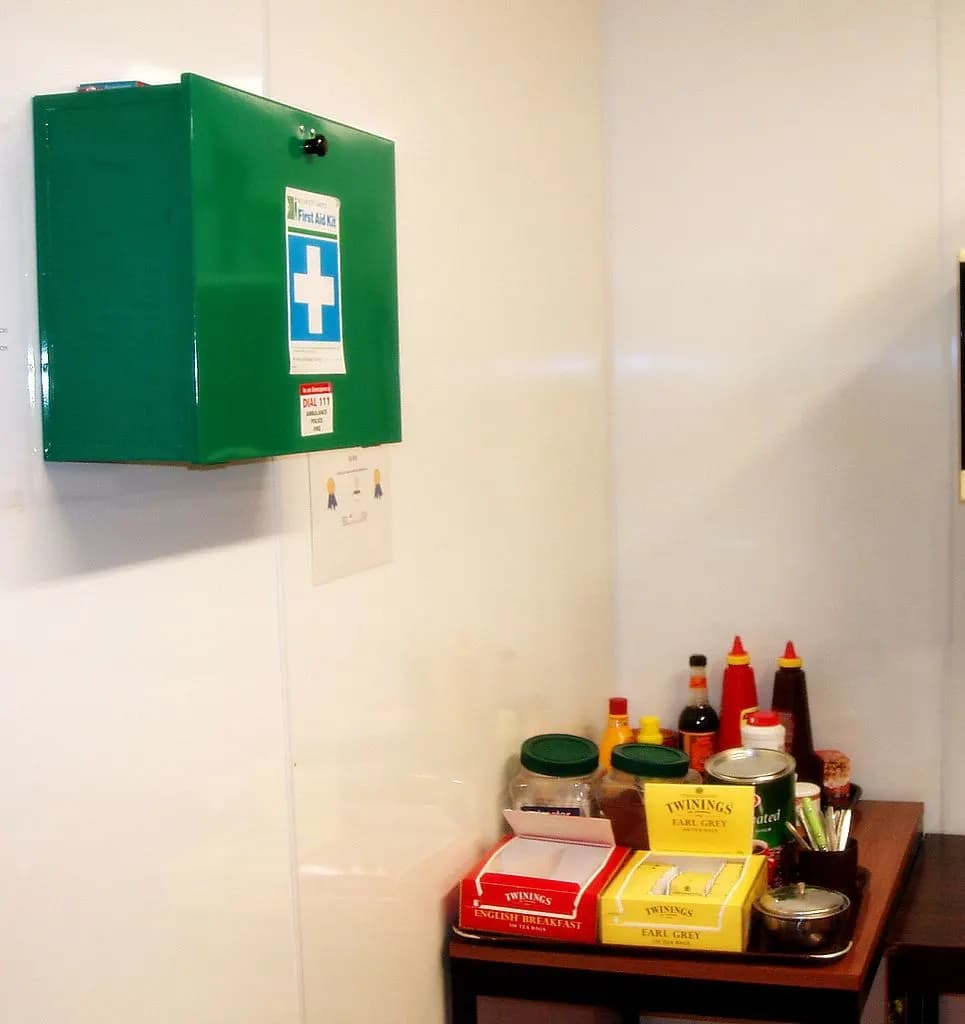
First aid | Qualified and appointed to first aid duty | A$14.55 a week |
Liquor licence | Employee holds the store's liquor licence | A$34.69 a week |
Broken Hill | Working in the County of Yancowinna (NSW) | A$1.26 an hour |
Travelling time | Working away from usual place | Ordinary rate for extra travel time (150% Sunday/public holiday) plus costs |
Special clothing | Employer requires a uniform or protective clothing | Reimbursement of cost |
Meal
- When it's payable
Overtime of more than 1 hour after usual finish without 24 hours' notice
- Amount
A$24.56; further A$22.27 if over 4 hours
Laundry
- When it's payable
Employee launders required special clothing
- Amount
A$6.42 a week (full-time) or A$1.28 a shift (part-time/casual)
Motor vehicle
- When it's payable
Employer asks employee to use own car
- Amount
A$1.00 per km
Cold work
- When it's payable
Principally working in cold chambers or refilling freezers
- Amount
A$0.38 an hour; extra A$0.59 an hour below 0°C
First aid
- When it's payable
Qualified and appointed to first aid duty
- Amount
A$14.55 a week
Liquor licence
- When it's payable
Employee holds the store's liquor licence
- Amount
A$34.69 a week
Broken Hill
- When it's payable
Working in the County of Yancowinna (NSW)
- Amount
A$1.26 an hour
Travelling time
- When it's payable
Working away from usual place
- Amount
Ordinary rate for extra travel time (150% Sunday/public holiday) plus costs
Special clothing
- When it's payable
Employer requires a uniform or protective clothing
- Amount
Reimbursement of cost
The Retail Award also requires the employer to pay at least 3 hours when an employee is recalled to work after completing their roster, to reimburse a commercial passenger vehicle fare when an employee starts before 7 am or finishes after 10 pm and their usual transport isn't available, and to pay the cost of moving if it transfers someone to another town.
Hospitality Industry (General) Award — clause 26
| Allowance | When it's payable | Amount |
|---|---|---|
Fork-lift driver (all-purpose) | Engaged to drive a fork-lift | A$0.44 an hour |
Meal | Overtime of more than 2 hours, not told the previous day (FT/PT) | A$17.42 |
Tools and equipment | Cook or apprentice cook supplies own tools | A$2.03 a day, up to A$9.94 a week |
First aid | Qualified and appointed | A$13.43 a week (full-time); A$2.69 a day up to A$13.43 a week (PT/casual) |
Split shift | FT/PT working split shifts | A$3.69 a day (2–3 hour break) or A$5.60 (over 3 hours) |
Motor vehicle | Managerial staff (hotels) using own car | A$1.01 per km |
Overnight stay | Asked to stay overnight on premises to assist guests | A$67.15 per stay, plus 150% for work over an hour |
Laundry | Employee launders special clothing | Agreed weekly amount or cost; set rates for catering and motel staff |
Fork-lift driver (all-purpose)
- When it's payable
Engaged to drive a fork-lift
- Amount
A$0.44 an hour
Meal
- When it's payable
Overtime of more than 2 hours, not told the previous day (FT/PT)
- Amount
A$17.42
Tools and equipment
- When it's payable
Cook or apprentice cook supplies own tools
- Amount
A$2.03 a day, up to A$9.94 a week
First aid
- When it's payable
Qualified and appointed
- Amount
A$13.43 a week (full-time); A$2.69 a day up to A$13.43 a week (PT/casual)
Split shift
- When it's payable
FT/PT working split shifts
- Amount
A$3.69 a day (2–3 hour break) or A$5.60 (over 3 hours)
Motor vehicle
- When it's payable
Managerial staff (hotels) using own car
- Amount
A$1.01 per km
Overnight stay
- When it's payable
Asked to stay overnight on premises to assist guests
- Amount
A$67.15 per stay, plus 150% for work over an hour
Laundry
- When it's payable
Employee launders special clothing
- Amount
Agreed weekly amount or cost; set rates for catering and motel staff
The Clerks—Private Sector Award, which covers office and administrative staff in many businesses, has fewer allowances: a first aid allowance of A$16.79 a week; a higher duties rule requiring at least the higher level's rate when someone does higher-level duties for more than one day; reimbursement of uniforms and protective clothing with a laundry allowance of A$3.64 a week (full-time) or A$0.73 a shift; a meal allowance of A$20.75 for more than 1.5 hours of overtime without 24 hours' notice; and a vehicle allowance of A$1.00 per km for a car or A$0.34 for a motorcycle, capped at 400 km a week.
How allowances are taxed
The ATO's Withholding for allowances guidance sorts allowances by purpose. The default is simple: withhold tax from the allowance as part of the employee's pay. That covers:
- allowances for working conditions, qualifications or special duties — crib, danger, dirt, height, site, shift or travelling time, trade, first aid certificate or safety officer allowances;
- allowances for non-deductible expenses — part-day travel with no overnight absence, meals other than award overtime meals, and car allowances for private travel such as home to work; and
- allowances for deductible expenses — tools, compulsory uniforms or dry cleaning, and car allowances for work travel paid above the ATO rate.
A handful of allowances get a varied rate of withholding, meaning you withhold nothing up to a limit:
- Car allowance per kilometre. No withholding if paid at or below the ATO rate — 91 cents per km for 2026-27, up from 88 cents in 2025-26 — for up to 5,000 km of business travel. Withhold from the part above the rate, and from payments for kilometres beyond 5,000.
- Award transport payments for deductible transport expenses: no withholding.
- Laundry allowance for deductible clothing: no withholding up to the ATO threshold, then withhold from the excess.
- Award overtime meal allowance: no withholding up to the ATO reasonable amount. For 2026-27, the reasonable amount in TD 2026/4 is reported as A$40 per meal (A$38.65 in 2025-26). Every award meal allowance in this guide is below it.
- Domestic or overseas travel allowances involving an overnight absence: no withholding up to the reasonable amounts, but always withhold from an overseas accommodation component.
Whether withholding applies isn't the same as whether the allowance is income. Allowances are generally assessable to the employee, who may then claim a deduction for the work-related expense they actually incurred. The ATO's reasonable amounts are a limit on substantiation, not an automatic deduction.
Reporting allowances in STP Phase 2
Single Touch Payroll Phase 2 changed allowance reporting. In Phase 1, many allowances were lumped into gross pay. In Phase 2 you must report most allowances separately under an allowance type, so the ATO, Services Australia and other agencies can apply their own rules. The ATO's three-step approach is: decide whether the amount is a reportable allowance, decide whether it needs to be disaggregated, then identify its purpose.
Not reportable as allowances: reimbursements of verified expenses; living away from home allowance fringe benefits (an FBT matter — see our fringe benefits tax guide); and overtime meal or travel allowances that don't exceed the ATO reasonable amount. If an overtime meal or travel allowance exceeds the reasonable amount, report the whole amount.
Two exceptions to separate reporting: an allowance that forms part of an overtime payment can stay inside the overtime amount, and allowances inside cashed-out leave or unused leave on termination are reported with that leave type.
| STP allowance type | Code | Typical award examples |
|---|---|---|
| Cents per km | CD | Car allowance per km for work travel (up to and above the ATO rate) |
| Award transport payments | AD | Award transport allowances for deductible travel |
| Laundry | LD | Laundry of compulsory or registered uniforms and protective clothing |
| Overtime meal | MD | Award overtime meal allowance above the reasonable amount |
| Travel | RD | Overnight travel allowances above the reasonable amount |
| Tools | TD | Tool and equipment allowances |
| Qualifications and certificates | QN | First aid, trade or licence allowances |
| Tasks | KN | Working-condition allowances such as cold work, dirt, height, industry or leading hand |
| Other | OD | With a code: G1 general, ND non-deductible (e.g. home-to-work travel), V1 private vehicle other than per-km car, T1 transport, U1 uniform |
All-purpose allowances must also be reported separately against their allowance type for the hours they relate to. The ATO's example is an employee whose industry allowance goes under KN and tool allowance under TD for ordinary hours, while the same allowances built into the overtime payment stay in overtime. Our Single Touch Payroll guide covers due dates and corrections.
Super on allowances
Super guarantee of 12% applies to ordinary time earnings — or, since Payday Super began on 1 July 2026, to qualifying earnings, which are built on ordinary time earnings. The ATO's allowance table shows how each type falls:
| Allowance type | Withhold? | Ordinary time earnings — super payable? |
|---|---|---|
| Working conditions, qualifications, special duties (first aid, shift, leading hand) | Yes | Yes |
| Non-deductible expenses (home-to-work car, part-day travel meals) | Yes | Yes |
| Deductible expenses (tools, uniform, work car travel) | Yes (or varied) | No |
| On-call allowance — ordinary hours | Yes | Yes |
| On-call allowance — outside ordinary hours | Yes | No |
| Car per km at or below ATO rate, award overtime meal, overnight travel, laundry | Varied | No |
So a retail first aider's A$14.55 a week attracts super, but their A$6.42 a week laundry allowance doesn't. Under Payday Super, super on allowances that are ordinary time earnings is due with the rest of that pay run's super, within 7 business days of payday. Our Payday Super guide explains the deadline.
Part-timers, casuals, salaried staff and fixing mistakes
Part-time and casual employees. Many weekly allowances have a daily or per-shift version for part-time and casual staff, because a full weekly amount wouldn't make sense for someone who works two shifts. The Retail Award pays laundry at A$1.28 a shift for part-timers and casuals instead of the weekly rate, and the Hospitality Award pays its first aid allowance at A$2.69 a day up to the full-time weekly cap. Where an award gives only a weekly figure, read the clause carefully: some weekly allowances are payable in full to anyone who qualifies in that week, while others are expressly pro-rated by hours worked. Casual loading doesn't replace allowances — a casual who meets the conditions gets the allowance on top of their loaded rate.
Key allowance figures for 2026-27
91 cents per km
ATO car rate
no withholding up to 5,000 km
A$40
Overtime meal reasonable amount
TD 2026/4
A$14.55 a week
Retail first aid allowance
super applies
A$16.79 a week
Clerks first aid allowance
super applies
Salaried and above-award employees. An employer can pay more than the award and use the extra to cover allowances, but only if the contract makes that clear and the total pay in each pay period is at least what the award would require for the hours and duties actually worked, allowances included. Where an award has an annualised wage clause, the employer must reconcile the salary against the award entitlements at the times the clause sets. If an employee becomes the first aider halfway through the year, their salary may suddenly fall short.
Changes during the year. Allowance amounts in the major awards changed from the first full pay period starting on or after 1 July 2026. A business with a fortnightly cycle starting on Monday 29 June applied the new amounts from Monday 13 July. Keep the old and new amounts on file, because a back-pay calculation needs both.
Fixing underpaid allowances. If you find an allowance was missed, work out what was owed for each pay period, pay the shortfall promptly with any super that applies, and correct the STP reporting so the employee's income statement shows the right allowance type. Under Payday Super, super on back pay is treated as an out-of-cycle payment and rides on the next regular payday. Keep a record of the calculation. The Fair Work Ombudsman treats prompt, documented self-correction very differently from an underpayment it discovers itself.
Worked examples in A$
1. Retail first aider. Grace is a full-time Retail Employee Level 1 on A$1,056.80 a week. She's the appointed first aider and launders her own uniform. Her weekly pay is A$1,056.80 + A$14.55 a week + A$6.42 a week = A$1,077.77. Tax is withheld from the wage and first aid allowance. The laundry allowance has a varied withholding rate: nothing is withheld until her laundry allowances for the year pass the ATO threshold, and only the excess is withheld after that. Super is due on A$1,071.35 (wage plus first aid): A$128.56. In STP, the first aid allowance goes under QN and the laundry under LD.
2. Clerk using her own car. Hana, an office administrator under the Clerks Award, drives 300 business kilometres in a week visiting clients and is paid A$1.00 per km — A$300.00. The award allows up to 400 km a week. Because A$1.00 is above the ATO rate of 91 cents per km, the employer withholds from the excess: 300 × A$0.09 = A$27.00 is added to her taxable pay for withholding. The full A$300 is reported as allowance type CD. No super applies, because work-related car travel is a deductible expense.
3. Hospitality split shifts. Jack works split shifts five days a week with a 3.5-hour break. He gets A$5.60 a day — A$28.00 a week — reported under KN. It's a working-conditions allowance, so tax is withheld and super applies.
4. Unexpected overtime. A retail employee works 2 hours past her usual finish without notice and gets the A$24.56 meal allowance. It's below the ATO reasonable amount, so there's no withholding, it isn't reported in STP, and it isn't ordinary time earnings. If the employer paid A$50 instead, the full A$50 would be reported under MD, with tax withheld from the excess over the reasonable amount.
5. Fork-lift driver on overtime. Under the Hospitality Award, a Level 1 employee who drives a fork-lift gets A$0.44 an hour on all purposes. For 2 hours of weekday overtime at 150%: 2 × (A$26.44 + A$0.44) × 1.5 = A$80.64, not A$79.32. That A$1.32 difference, repeated over a year, is exactly the kind of underpayment an audit finds.
Common allowance mistakes
- Forgetting the 1 July update. Wage-related allowances rise with the Annual Wage Review and expense-related ones with CPI. Update both.
- Leaving all-purpose allowances out of overtime and leave pay.
- Treating reimbursements as allowances (or the reverse), which distorts STP, withholding and income statements.
- Lumping allowances into gross in STP Phase 2. Most must be reported separately.
- Paying super on deductible expense allowances — or skipping it on first aid and other working-condition allowances.
- Using last year's ATO rates. The car rate is 91 cents per km from 1 July 2026, and reasonable amounts are reset each year by a new determination.
- Assuming an above-award rate absorbs allowances without a clear contract term and a per-period check.
Allowance set-up checklist
0/8Official links
- Withholding for allowancesATO — withholding, OTE and super by allowance type
- STP Phase 2 — allowancesATO — allowance types and codes
- Cents per kilometre determination 202691 cents per km for 2026-27
- Allowances under awardsFair Work Ombudsman
- Pay and Conditions ToolFWO — allowances in pay guides
- General Retail Industry Award 2020Clause 19 and Schedule C
What to do next
Pull up Schedule C of each award you use and compare it line by line with the allowances set up in your payroll software, including the STP type and super flag. Then check your vehicle allowance against the new 91-cent ATO rate and your overtime meal allowance against the 2026-27 reasonable amount. For the overtime that triggers meal allowances, see our overtime pay guide, and for base rates and penalties our award wages guide.
This is general information, not legal or tax advice — confirm on the official source or with a professional.
Frequently asked questions
It depends on the award. Common ones are first aid, meal (for unexpected overtime), laundry or uniform, tool, vehicle per kilometre, travel, split shift and leading hand or supervisory allowances. The General Retail Award, for example, pays A$14.55 a week for an appointed first aider and A$1.00 per km for using a private car. Each award's Schedule C summarises its allowances.
Most are. Employers must withhold tax from allowances for working conditions, qualifications and special duties, and from most expense allowances. Exceptions include car allowances at or below the ATO rate of 91 cents per km for up to 5,000 km, award overtime meal allowances up to the ATO reasonable amount, and overnight travel allowances up to the reasonable amount. All allowances are still income the employee may need to declare.
Super guarantee applies to allowances that are ordinary time earnings, such as first aid, leading hand, shift and other working-condition or qualification allowances, and expense allowances for non-deductible costs like home-to-work travel. It doesn't apply to allowances for deductible expenses — tools, compulsory uniforms or work-related car travel — or to overtime meal and overnight travel allowances.
An all-purpose allowance is added to the employee's minimum rate when calculating penalty rates, overtime, loadings and pay on annual leave. The award says which allowances are all-purpose. In the Hospitality Award, the fork-lift driver and airport catering supervisory allowances are all-purpose. In STP Phase 2 you still report all-purpose allowances separately, unless they're part of an overtime payment.
The rate for the 2026-27 income year is 91 cents per km, set by a determination registered on 23 June 2026 and up from 88 cents in 2025-26. A car allowance paid at or below that rate for up to 5,000 km of business travel needs no PAYG withholding. Withhold from any amount above the rate or beyond 5,000 kilometres.
A reimbursement pays back an exact cost the employee incurred, usually backed by a receipt — like the trailer hire fee in the ATO's example. An allowance is a set amount paid whether or not the employee spends it, like a per-kilometre rate. Allowances are reported through Single Touch Payroll; reimbursements aren't, and they aren't subject to withholding.
Sources & verification
Figures on this page were checked against the sources below when it was last reviewed on 13 October 2026. Each rate and limit is stored once with its own official source and review date, and official update channels are monitored daily so changes are picked up. How we verify
- 1.General Retail Industry Award 2020 [MA000004] — consolidated to 1 July 2026 — Fair Work Commission · accessed 13 October 2026
- 2.Hospitality Industry (General) Award 2020 [MA000009] — consolidated to 1 July 2026 — Fair Work Commission · accessed 13 October 2026
- 3.Clerks—Private Sector Award 2020 [MA000002] — consolidated to 1 July 2026 — Fair Work Commission · accessed 13 October 2026
- 4.Withholding for allowances — Australian Taxation Office · accessed 13 October 2026
- 5.STP Phase 2 employer reporting guidelines — Allowances — Australian Taxation Office · accessed 13 October 2026
- 6.Income Tax Assessment (Cents per Kilometre Deduction Rate for Car Expenses) Determination 2026 — Federal Register of Legislation · accessed 13 October 2026
- 7.TD 2026/4 — reasonable travel and overtime meal allowance expense amounts for 2026-27 — Australian Taxation Office · accessed 13 October 2026
MSMETOOLS is an independent platform and is not affiliated with any government agency, ministry or department.
Tools for this
Salary Slip Generator
Create professional salary slips in seconds.
Freelance Hourly Rate Calculator
Work out the hourly rate you need to charge.
Related guides
 Overtime Pay Australia 2026: Rates, 38 Hours & TOIL RulesRead guide
 Payday Super 2026: The 7-Day Rule, New SGC & DeadlinesRead guide
 Award Wages Australia 2026: Find Your Award & Pay RatesRead guide
 Payslip Requirements Australia 2026: What Must Be IncludedRead guide
Official links open the government site in a new tab.