 Business registration & legal
IFZA Free Zone in 2026: Licences, Real Costs, Visas and How Setup Works
IFZA free zone in 2026: who licenses IFZA companies, commercial and professional licences, estimated package costs, visas, flexi desks, set-up steps and 0% QFZP tax.
 Edited by Sumeet YadavFounder & editor, MSMETOOLS · fact-checked against official sources
Contents (10)
- 1. What IFZA is — and who actually licenses your company
- 2. IFZA licence types and legal forms
- 3. What IFZA costs in 2026: estimates, not a price list
- 4. Offices, flexi desks and visa allocations
- 5. How to set up an IFZA company
- 6. Corporate tax for IFZA companies
- 7. Working in mainland Dubai from IFZA
- 8. IFZA vs Meydan vs DMCC
- 9. Common mistakes to avoid
- 10. What to do next
IFZA is one of the most-used routes into a Dubai free zone licence for consultants, e-commerce sellers and small trading firms, and it's also one of the most confusing to price. IFZA doesn't sell to you directly and doesn't publish a fee schedule, so every number you see online comes from a partner. This guide is for founders comparing IFZA in 2026. It explains who actually licenses an IFZA company, the commercial and professional licences, what partners were charging in October 2026 (clearly labelled as estimates), visas and office options, the set-up steps, corporate tax and how IFZA stacks up against Meydan and DMCC.
Quick answer
IFZA is a business platform in Dubai Silicon Oasis (DSO) that sets up free zone companies (FZCOs) regulated by the Dubai Integrated Economic Zones Authority (DIEZA). You get 100% foreign ownership, a commercial or professional licence, and visas sold as part of the package. IFZA has no public price list: in October 2026, partners quoted roughly AED 12,900 for a zero-visa licence and AED 21,000–21,500 all-in with one visa (estimates).
Licences: professional (services), commercial (trading), and branches of existing companies
Sold only through authorised Professional Partners — quotes vary, so ask for an itemised proposal
Incorporation is remote; visas need a UAE visit for the medical and Emirates ID
Corporate tax: register within 3 months; 0% only on qualifying income if every QFZP condition is met
Mainland Dubai work needs a DET licence or permit under Resolution No. 11 of 2025
What IFZA is — and who actually licenses your company
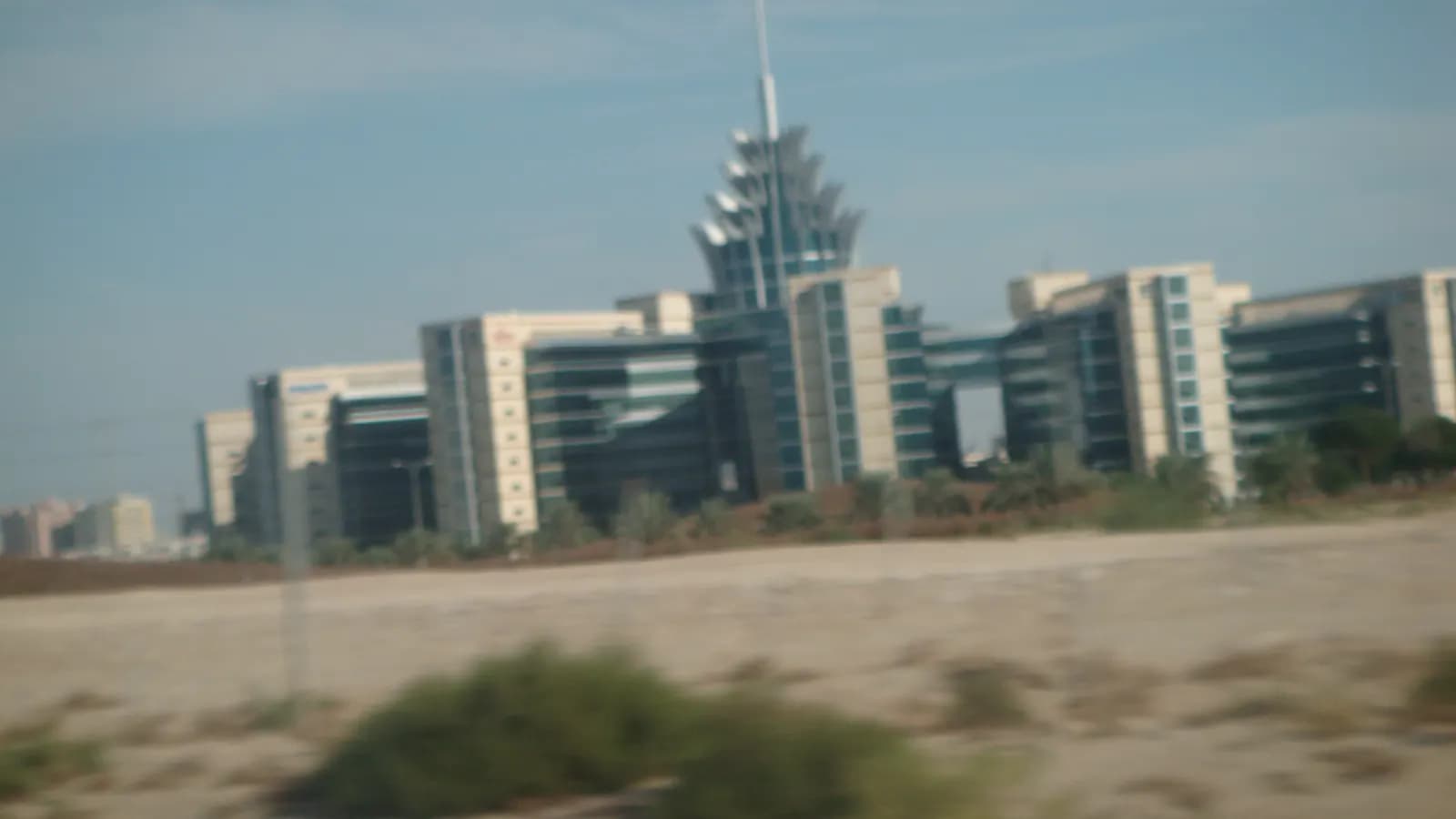
IFZA started life as the International Free Zone Authority and now describes itself as a global business community. In October 2020 it signed an agreement with the Dubai Silicon Oasis Authority that let new and existing IFZA companies work from DSO, the free zone technology park on the Dubai–Al Ain Road. Its reception is in the IFZA Business Park inside Dubai Digital Park, and in July 2026 IFZA announced it had bought IFZA Towers, a two-tower development at the entrance to DSO with offices from 93 square metres.
The legal structure matters, because it explains a lot of what you'll read online. Since 1 January 2022, Dubai Silicon Oasis has been regulated by the Dubai Integrated Economic Zones Authority (DIEZA), created by Dubai Law No. 16 of 2021 to bring DSO, Dubai Airport Free Zone and Dubai CommerCity under one authority. Your IFZA company is a free zone company formed under DIEZA's regulations and entered on its register. IFZA is the commercial operator that sells the licence, runs the onboarding, provides the office or flexi desk and services the company afterwards.
That set-up has two practical consequences. First, the company you incorporate is a real Dubai free zone company, with a licence you can check, a registered address in DSO and access to UAE residence visas. Second, IFZA runs a business-to-business model: it works through a network of authorised Professional Partners — setup consultants, law firms and agencies in the UAE and abroad — rather than selling licences to the public. That's why prices vary from one website to the next.
IFZA tends to suit:
- solo consultants, freelancers and agencies who want a Dubai company and one or two visas without leasing an office;
- e-commerce and online businesses that need a UAE company to hold a payment gateway, a marketplace account or a bank account;
- small trading companies that import and re-export goods but use third-party warehouses;
- international groups opening a low-cost UAE branch or holding entity.
It suits less well a company that needs its own warehouse or industrial land — look at JAFZA or the Sharjah industrial zones for that — or a regulated financial firm, which belongs in DIFC or ADGM.
IFZA licence types and legal forms
Commercial, professional or branch
IFZA offers three routes. A professional licence covers consultancy and services — marketing, IT, design, management consultancy, health and food consultancy, AI development and similar activities. A commercial licence lets you import, export and trade goods, from cosmetics and garments to auto parts, mobile phones and general trading, plus e-commerce and travel agency activities. A branch lets a company incorporated elsewhere, in the UAE or abroad, register a presence through IFZA.
IFZA licence options
| Licence | What it covers | Typical user |
|---|---|---|
Professional | Consultancy and services | Consultants, agencies, IT and creative firms |
Commercial | Import, export and trading of listed goods; e-commerce | Traders, online sellers, distributors |
Branch | A UAE presence for an existing company | Foreign or UAE parent companies |
Professional
- What it covers
Consultancy and services
- Typical user
Consultants, agencies, IT and creative firms
Commercial
- What it covers
Import, export and trading of listed goods; e-commerce
- Typical user
Traders, online sellers, distributors
Branch
- What it covers
A UAE presence for an existing company
- Typical user
Foreign or UAE parent companies
IFZA lets you combine several compatible activities under one licence, which is one of its selling points. Partners commonly say a standard package includes up to three activities, with extra activities or mixed commercial-and-professional licences costing more. Pick activities that describe what you actually do: banks check them, they decide your licence category and they affect your corporate tax position.
Some activities need approvals from other authorities before the licence is issued. Virtual asset businesses need the Virtual Assets Regulatory Authority (VARA), and regulated activities such as healthcare, education or food handling can need sector approvals. Your partner should flag this at proposal stage; if they don't, ask.
FZCO is the standard company type
Under DIEZA's 2023 regulations, the free zone company — FZCO — is the standard limited liability company. DSO's own licensing page says the older single-shareholder FZE form is no longer used and existing FZEs are treated as FZCOs. An FZCO has its own legal personality, shareholders' liability is limited to their share capital, and it can have individual or corporate shareholders. A branch has no separate legal personality: the parent stays liable for its debts.
IFZA doesn't publish a minimum share capital, and partner sites say no paid-up capital is required at incorporation. You still declare a share capital in the Memorandum and Articles, and the figure should be sensible for your business — banks look at it, and some visa routes ask for share certificates. Ask your partner what capital they recommend and whether any proof of deposit is needed.
What IFZA costs in 2026: estimates, not a price list
This is the most important thing to understand about IFZA pricing: IFZA doesn't publish prices. It sets wholesale prices for its partners, and partners sell packages with their own service fees on top. The figures below are what partner and consultancy sites were showing in July–October 2026. They're indicative only and they move with promotions.
| Package (1 year) | Indicative price | Basis |
|---|---|---|
| Licence, 0 visas, flexi desk | about AED 12,900 | Several partner sites, Oct 2026 |
| Licence + 1 residence visa, all-in | about AED 21,000–21,500 | Includes establishment card, visa, medical, Emirates ID |
| Licence + 2 visas, all-in | about AED 24,000–28,000 | Sources differ on what's included |
| Each extra visa | about AED 6,500 | Partner estimate (Avyanco, July 2026) |
| Establishment card | about AED 2,000 | Usually separate from the licence |
| Renewal from year two (licence) | about AED 11,500 | Partner estimate, plus visa renewals |
The gap between "zero-visa" and "one-visa" packages is where most budgets go wrong. A one-visa package isn't just the licence plus one fee: it brings in the establishment card (the immigration file that lets your company sponsor visas), the entry permit and residence visa, the medical fitness test, Emirates ID and, in practice, health insurance. Partners also charge to upgrade a zero-visa licence to a visa allocation later, so decide before you buy.
Partners also report multi-year discounts — roughly 15% for two years, 20% for three and up to 30% for five — but you pay the full term upfront and lose flexibility if your plans change. Only take a multi-year licence if you're confident the company will still be in IFZA when it expires.
Worked example: a one-person consultancy
Rahul is a marketing consultant moving from Mumbai to Dubai. He wants an IFZA professional licence with two activities, a flexi desk and one residence visa for himself.
- licence with flexi desk: about AED 12,900 (estimate);
- establishment card, visa, medical and Emirates ID: about AED 8,500 on top, by the partner figures above;
- year-one total: about AED 21,400, before the partner's own fee if it isn't already included and before health insurance.
In year two, he should budget about AED 11,500 for the licence renewal (estimate), plus the establishment card renewal. His residence visa is usually issued for two years, so its renewal falls in year three. Adding his spouse as a dependant is a separate family-sponsorship application with its own fees and deposit. Put these figures into our startup cost calculator with your own rent and living costs.
Offices, flexi desks and visa allocations
Every IFZA company needs a registered address in the free zone, but most start-ups don't need a room of their own. IFZA's own office guide lists five options:
- Flexi Desk — a shared workstation with 10 hours of access a week, an IFZA address and one hour of meeting-room use a month;
- Flexi Desk+ — unlimited access to your own dedicated desk and five hours of meeting-room use a month;
- Dedicated office — a private workspace booked for set periods within a year;
- Private office — unlimited access to your own office, plus meeting and conference-room hours;
- Personalised office — branded space with 24/7 access for established businesses.

Unlike DMCC, where the visa quota follows your floor area, IFZA sells visa allocations as part of the licence package. Partner sites describe packages from zero up to about six visas on a flexi desk, with larger teams moving into a dedicated or private office. The allocation is fixed in your licence package, so if you plan to hire, buy the allocation at the start or confirm what an upgrade will cost.
IFZA visas
An IFZA company can sponsor investor (partner) visas for shareholders and employment visas for staff, within its allocation. The steps follow the standard UAE sequence: establishment card, entry permit, entry or change of status inside the UAE, medical fitness test, Emirates ID biometrics, then the residence visa stamped or issued electronically. The applicant must be in the UAE for the medical test and biometrics.
A free zone visa lets the holder live in the UAE and work for the sponsoring company. It doesn't let them take a job with a mainland employer. If you also want long-term residence independent of the company, look at the UAE Golden Visa criteria, which IFZA's partners can't grant — GDRFA and ICP decide those.
How to set up an IFZA company
IFZA's process is the same for individual and corporate shareholders, though corporate shareholders need more documents. You don't need to be in Dubai to incorporate.
IFZA set-up in six steps
- 1
Consultation and proposal
An authorised partner agrees your licence type, activities, visa allocation and office option and sends a proposal. Ask for it itemised.
Tip: Check the partner is listed as an IFZA Professional Partner before you pay.
- 2
Documents
Licence application form with ultimate beneficial owner (UBO) details, passport copies, digital passport photos, and Emirates ID and visa copies for UAE residents. Corporate shareholders add attested company documents and board resolutions.
- 3
Processing and e-legal forms
Shareholders are registered on the portal. Once approved, two e-legal forms are issued for signature before incorporation.
- 4
Licence approval
The authority approves the application — partners typically quote one to two working days for initial approval.
- 5
MoA/AoA e-signature
A digital Memorandum and Articles of Association goes to every shareholder for e-signature.
- 6
Licence issued
A soft copy of the licence arrives by email; the original can be collected on request. Then apply for the establishment card and visas.
Partner guides put the whole licence stage at about three to seven working days once documents are complete, and the full set-up with visas at two to four weeks. Delays usually come from name rejections, unclear activity descriptions, missing attestations on corporate documents or incomplete UBO information.
After the licence: bank, tax and UBO
Three tasks follow the licence. Open a bank account — UAE banks run their own due diligence and commonly ask for a business plan, contracts or invoices and proof of the owners' source of funds; allow several weeks. Register for corporate tax with the FTA on EmaraTax within 3 months of incorporation, or face a AED 10,000 penalty. And keep your UBO register current: anyone owning or controlling 25% or more must be disclosed, and changes must be reported. Our UBO register guide explains the rules.
IFZA set-up checklist
0/7Corporate tax for IFZA companies
An IFZA company is a free zone person for UAE corporate tax. That doesn't make it tax-free. Every IFZA company must register with the FTA, file an annual return within 9 months of its financial year end, and work out which regime applies.
Qualifying Free Zone Person (QFZP). A company that meets every condition — adequate substance in the free zone, audited financial statements, transfer pricing compliance, qualifying income and not electing for standard taxation — pays 0% on qualifying income and 9% on the rest. Qualifying activities under Ministerial Decision No. 229 of 2025 include trading of qualifying commodities, manufacturing, logistics, distribution from a designated zone, headquarters and treasury services to related parties, and holding shares. Income from transactions with individuals generally isn't qualifying. Non-qualifying revenue must stay within 5% of total revenue or AED 5 million, whichever is lower, or the company loses QFZP status for 5 tax periods.
Why many small IFZA firms don't use QFZP. Much of IFZA's customer base is consultants and service providers who bill mainland companies, foreign clients or individuals. Consultancy for unrelated clients usually isn't a qualifying activity, so it isn't covered by the 0% rate. A QFZP also gives up the AED 375,000 0% band and Small Business Relief. For a small service company, the standard regime is often better.
Example. Rahul's consultancy earns AED 600,000 revenue and AED 250,000 taxable profit from mainland and overseas clients. As a QFZP he'd gain nothing — the consultancy income isn't qualifying, and it breaches the de minimis limit anyway. Under the standard regime, his first AED 375,000 of profit is taxed at 0%, so he pays AED 0. Because his revenue is under AED 3 million, he could also elect Small Business Relief, available for tax periods ending on or before 31 December 2029. If his profit grew to AED 500,000, standard tax would be 9% × (500,000 − 375,000) = AED 11,250, unless he elected the relief. Run your own numbers in the UAE corporate tax calculator and read our Small Business Relief guide.
Try it — corporate tax on your IFZA profit
VAT
IFZA companies follow normal VAT rules. Register once taxable supplies pass AED 375,000 in 12 months and charge 5% on most supplies. Dubai Silicon Oasis isn't treated as a VAT designated zone for most IFZA service and e-commerce businesses, so assume standard VAT applies and confirm with your tax adviser. See our UAE VAT guide.
Working in mainland Dubai from IFZA
A free zone licence lets you trade internationally and with other free zone companies. For years, serving mainland customers directly meant setting up a separate mainland company. On 17 March 2025, Dubai issued Executive Council Resolution No. 11 of 2025, which allows free zone companies to operate in Dubai outside their zone once they hold a licence or permit from the Department of Economy and Tourism (DET) — for example a branch licence or a temporary permit for a specific project.
For an IFZA consultant with mainland clients, that changes the calculation. You may be able to keep one company and add a DET permit rather than running two entities. Check the eligible activities and fees with DET before relying on it, and remember that mainland work also affects your corporate tax position.
IFZA vs Meydan vs DMCC
IFZA is usually compared with Meydan Free Zone, its closest rival for low-cost service licences, and with DMCC, the premium end of Dubai's free zones.
| IFZA | Meydan Free Zone | DMCC | |
|---|---|---|---|
| Location | Dubai Silicon Oasis | Meydan, Nad Al Sheba | JLT / Uptown Dubai |
| Regulator | DIEZA | Meydan Free Zone | DMCC Authority |
| Sales model | Partners only | Direct and via agents | Direct and via agents |
| Published entry figure | None — about AED 12,900 (estimate) | AED 12,500 licence with flexi desk | Jump Start AED 43,780 incl. 1 visa |
| Visa quota driven by | Package allocation | Package allocation | Office space |
| Best for | Consultants, e-commerce, small traders | Low-cost service and trading start-ups | Traders, commodities, HQs |
On headline price, IFZA and Meydan are close. Meydan publishes its own fees, which makes budgeting easier; IFZA's partner network means you can shop around but must compare like with like. DMCC costs more but gives a well-known address and space-based visa quotas for growing teams. See our guides to Meydan, DMCC and DAFZA, which shares DIEZA as its regulator.
Common mistakes to avoid
- Buying the cheapest zero-visa package and adding visas later. The upgrade usually costs more than buying the allocation upfront.
- Comparing quotes with different contents. One partner's AED 12,900 may exclude the establishment card; another's AED 14,900 may include it. Ask for line items.
- Using an unauthorised reseller. Pay only an authorised IFZA Professional Partner and get receipts showing what went to IFZA and government bodies.
- Choosing activities without thinking about banks and tax. Vague or high-risk activities slow bank onboarding and can push income into the 9% band.
- Missing the corporate tax registration. It applies even if you have no revenue yet, and the late penalty is AED 10,000.
- Letting the licence lapse. An expired licence blocks visa renewals and banking; start renewal at least a month before expiry.
Official links
- IFZA — set up your businessLicence options and the six-step process
- IFZA — become a partner / find a partnerPartner programme
- Dubai Silicon Oasis — licence typesFZCO, branch and licence categories under DIEZA
- FTA — Corporate Tax registrationRegister within 3 months of incorporation
- Ministry of Finance — Ministerial Decision No. 229 of 2025Qualifying and excluded activities
- Dubai Media Office — Resolution No. 11 of 2025Free zone firms operating in mainland Dubai
What to do next
Write down your activities, how many visas you'll need over two years and who your customers are — mainland, overseas or other free zone companies. Then ask two or three authorised IFZA partners for itemised proposals and compare them against Meydan's published fees. Build your year-one budget in the startup cost calculator and check your tax position with the UAE corporate tax guide.
This is general information, not legal or tax advice — confirm on the official source or with a professional.
Frequently asked questions
IFZA doesn't publish a public price list — it sells only through authorised partners, who add their own fees. In October 2026, partner sites commonly quoted about AED 12,900 for a zero-visa licence with a flexi desk and about AED 21,000–21,500 all-in for a licence with one residence visa. Treat these as market estimates and get an itemised written quote.
Yes. IFZA companies are free zone companies formed in Dubai Silicon Oasis, which is regulated by the Dubai Integrated Economic Zones Authority (DIEZA), a Dubai government authority created by Law No. 16 of 2021. IFZA is the commercial platform and business park that sells and services those licences through its partner network. Check any company on the licence you receive and with DIEZA.
IFZA packages are sold by visa allocation rather than office size — from zero-visa licences upwards, with each visa added to the package for an extra fee. Partner sites describe packages of up to six visas on a flexi desk; larger quotas usually need a dedicated or private office. Confirm the allocation in your written proposal before you sign.
IFZA companies are within UAE corporate tax and must register with the FTA within 3 months of incorporation. A company that meets every Qualifying Free Zone Person condition pays 0% on qualifying income; other taxable income is taxed at 9% above the AED 375,000 band for non-QFZPs. Many small IFZA service firms rely on Small Business Relief instead of QFZP status.
Partner guides put initial approval at one to two working days and the licence at about three to seven working days once documents are complete, with no visit to Dubai needed for incorporation. Visas take longer — allow two to four weeks overall — because the medical test and Emirates ID biometrics must be done in the UAE.
Not directly on its free zone licence. Since Executive Council Resolution No. 11 of 2025, a Dubai free zone company can get a licence or permit from the Department of Economy and Tourism to operate outside its zone — for example a branch licence or a temporary permit. Otherwise, sell through a mainland distributor or keep to international and free zone clients.
Sources & verification
Figures on this page were checked against the sources below when it was last reviewed on 12 October 2026. Each rate and limit is stored once with its own official source and review date, and official update channels are monitored daily so changes are picked up. How we verify
- 1.Set up your business — IFZA · accessed 12 October 2026
- 2.Commercial License — IFZA · accessed 12 October 2026
- 3.Professional License — IFZA · accessed 12 October 2026
- 4.About IFZA — IFZA · accessed 12 October 2026
- 5.Learn about the types of office spaces at IFZA — IFZA · accessed 12 October 2026
- 6.IFZA Expands Strategic Footprint with Acquisition of IFZA Towers — IFZA · accessed 12 October 2026
- 7.Dubai Silicon Oasis Authority signs agreement with IFZA — IFZA · accessed 12 October 2026
- 8.License types — Dubai Silicon Oasis (DIEZA) · accessed 12 October 2026
- 9.Corporate Tax registration — Federal Tax Authority (UAE) · accessed 12 October 2026
- 10.Ministerial Decision No. 229 of 2025 on Qualifying Activities and Excluded Activities — UAE Ministry of Finance · accessed 12 October 2026
- 11.Hamdan bin Mohammed issues resolution to regulate free zone establishments operating outside designated zones — Dubai Media Office · accessed 12 October 2026
- 12.IFZA Free Zone Setup Guide & Packages 2026 — BusinessDubai (consultancy) · accessed 12 October 2026
- 13.IFZA free zone cost — Avyanco (consultancy) · accessed 12 October 2026
- 14.Dubai Silicon Oasis and DIEZ in 2026: the umbrella IFZA sits under — UpperSetup (consultancy) · accessed 12 October 2026
MSMETOOLS is an independent platform and is not affiliated with any government agency, ministry or department.
Tools for this
Corporate Tax Calculator (UAE)
Calculate 9% UAE corporate tax above AED 375,000.
UAE VAT Calculator (UAE)
Calculate 5% UAE VAT on sales and purchases.
Startup Cost Calculator
Estimate how much capital you need to launch.
Related guides
 DAFZA Free Zone 2026: Licences, Costs, Visas & Tax GuideRead guide
 Meydan Free Zone 2026: Business Setup Costs, Visas & TaxRead guide
 DMCC Free Zone 2026: Costs, Licences, Visas & TaxRead guide
 SPC Free Zone 2026: Licence Costs, Visas & SetupRead guide
Official links open the government site in a new tab.