 Sales tax
Vermont Sales Tax in 2026: 6% Rate, Local Option Towns, Meals and Rooms Tax
Vermont sales tax 2026: the 6% rate, 1% local option towns, 9% meals and rooms, 10% alcohol, the 3% short-term rental surcharge, filing by the 25th and examples.
 Edited by Sumeet YadavFounder & editor, MSMETOOLS · fact-checked against official sources
Contents (11)
- 1. How Vermont's sales tax works
- 2. What's exempt from Vermont sales tax
- 3. The local option tax: 1% in about 50 towns
- 4. The meals and rooms tax
- 5. Lodging, vacation rentals and the 3% surcharge
- 6. Worked examples in dollars
- 7. Registering, licenses and filing
- 8. Penalties and interest
- 9. Remote sellers and marketplaces
- 10. Common mistakes and how to fix them
- 11. What to do next
Vermont's sales tax looks simple from a distance: one state rate of 6% and a long list of everyday exemptions, including clothing and groceries. Up close, there are two layers most businesses have to manage. Restaurants, inns and vacation rentals pay a separate meals and rooms tax, not sales tax, and a growing number of towns add a 1% local option tax on top of either. Thirteen more municipalities started collecting local option taxes in July or October 2026. This guide is for Vermont retailers, restaurants, lodging owners and out-of-state sellers who need the 2026 rates, registration and filing rules with dollar examples. We checked the figures against the Vermont Department of Taxes in October 2026.
Quick answer
Vermont's sales tax rate is 6%, plus 1% in about about 50 towns with a local option tax. Meals and lodging fall under a separate meals and rooms tax: 9% on meals and rooms and 10% on alcohol served in restaurants. Short-term rental homes pay a further 3% surcharge.
Clothing, footwear and most groceries are exempt
Registration for a business tax account and license is free
Returns and payment are due on the 25th of the following month
Local option tax is destination-based and filed on the same state return
Remote sellers collect after $100,000 or 200 transactions in 12 months
How Vermont's sales tax works
Under 32 V.S.A. Chapter 233, Vermont taxes retail sales of tangible personal property at 6% unless the law exempts them. The Department of Taxes' business fact sheet, FS-1017, lists what's taxable beyond ordinary goods: alcoholic drinks sold in sealed containers to take away, soft drinks, admission charges for entertainment and recreation, nonresidential utility services, telecommunications, digital downloads and prewritten software however it's delivered or accessed, fabrication charges, rentals and leases of goods, and certain labor charges. Delivery charges on taxable items are taxable even when they're listed separately, which catches many online sellers.
Vermont tax is destination-based. The tax that applies depends on where the buyer takes possession or where the goods are delivered, not where the seller sits. That matters for the local option tax: a Rutland retailer that ships to a customer in Williston charges Williston's 1%, not Rutland's.
Sales tax is reported on the accrual basis. You charge it at the time of sale and report it for that period even if the customer hasn't paid yet.
Use tax mirrors sales tax at the same 6% rate with the same exemptions. Businesses owe it on taxable purchases from vendors that aren't registered to collect Vermont tax, on goods they make for sale and then use themselves, and on items bought tax-free for resale but used in the business. The most common trigger is buying online, or buying in New Hampshire, which has no sales tax, and bringing the goods home.
Vermont tax rates at a glance (2026)
6%
Sales and use tax
1%
Local option tax
About about 50 municipalities
9%
Meals and rooms tax
10%
Alcohol served in restaurants
3%
Short-term rental surcharge
From Aug 1, 2024
What's exempt from Vermont sales tax
Vermont's exemption list is generous for consumers. FS-1017 names clothing and footwear, food, medicines, newspapers, certain agricultural products, some purchases by specific industries such as manufacturing, certain utility purchases, and goods shipped out of state. Unlike some neighbors, Vermont doesn't cap the clothing exemption at a price, so a $400 winter coat is tax-free.
The food exemption covers food for home consumption, not everything edible. Soft drinks are taxable under the sales tax. Restaurant meals and prepared food are taxed, but under the separate meals and rooms tax, not the sales tax, which is explained below.
Exemptions for business purchases work through certificates. A retailer buying stock for resale, an exempt organization, or a buyer with a direct pay permit gives the seller Form S-3; manufacturers, publishers, researchers and packaging buyers use Form S-3M. The seller must receive a completed, signed and dated certificate at the time of sale and keep it for at least three years after the last sale it covers. Businesses, nonprofits included, must have their own Vermont sales and use tax account before they can use an exemption certificate.
The local option tax: 1% in about 50 towns
Vermont lets municipalities adopt a 1% local option tax (LOT) on sales, on meals and alcohol, on rooms, or on any combination. The Department of Taxes administers most of them: you collect the 1% with the state tax and report it on the same return, Form SUT-451 for sales or Form MRT-441 for meals and rooms. No separate local registration is needed, and that applies to out-of-state vendors too. Calculate the local tax as 1% of taxable net sales in each town, not as a percentage of the state tax.
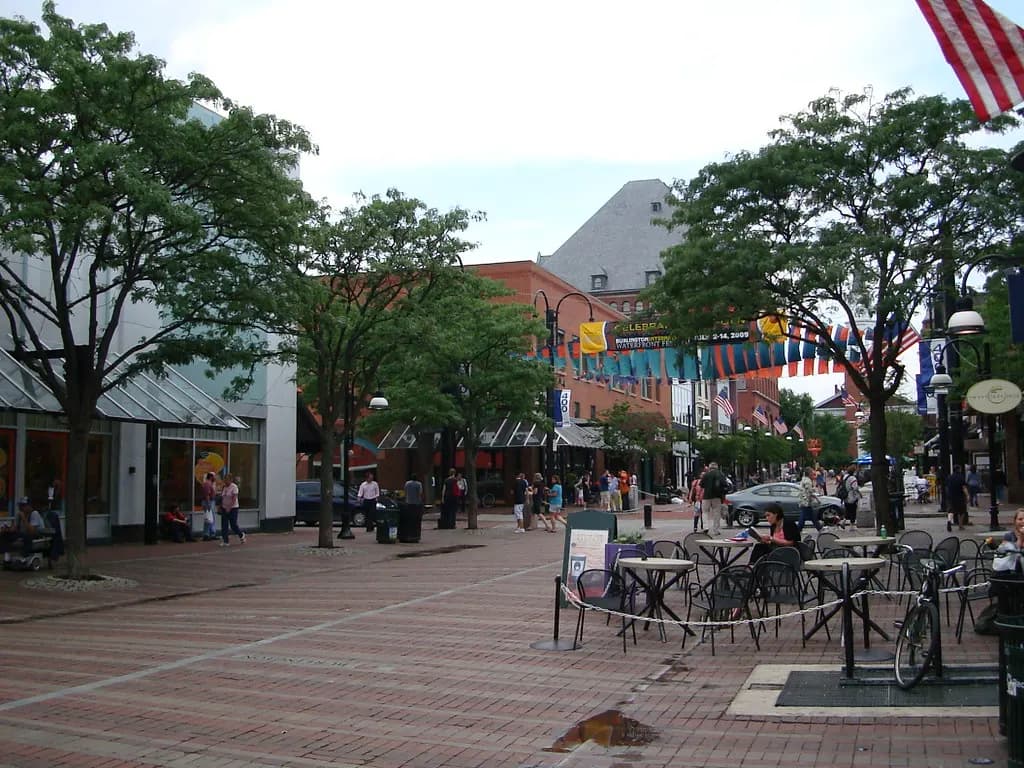
The list keeps growing. In October 2026 the Department's page lists about about 50 municipalities. Long-standing ones include Burlington (sales tax only through the state), South Burlington, Williston, Colchester, Winooski, Essex Junction, Stowe, Manchester, Middlebury, Brattleboro, Dover, Wilmington, Stratton, Winhall and Woodstock. Hartford, Ludlow, Marlboro and Montpelier added or expanded their taxes in July 2025, Berlin in January 2025. In July 2026, Bristol, Fair Haven, Mendon, Morristown, Pomfret, Swanton, Vergennes and Waitsfield added both sales and meals and rooms taxes, and Bolton, Pittsfield and West Windsor added meals and rooms taxes; Peru's sales and meals taxes start in October 2026. Montgomery repealed its sales LOT from October 1, 2025.
Burlington and Rutland City are special cases for meals and lodging. Both run their own local meals, rooms, entertainment or alcohol taxes, which you register for and pay to the city, not the state. Use the Department's Local Option Tax Finder to check any address before you set up your point-of-sale system, because a town line can split a single road.
The meals and rooms tax
Restaurants and lodging don't charge Vermont sales tax on meals and rooms. Under 32 V.S.A. Chapter 225 they charge the meals and rooms tax: 9% on prepared and restaurant meals, 9% on lodging and on meeting rooms in hotels, and 10% on alcoholic drinks served by restaurants. The Department's Restaurant Tax Guide, GB-1337, shows how the local option layer changes the totals: 7% sales tax, 10% meals tax and 11% alcohol tax where a town has adopted the matching LOT.
Grocery and convenience stores collect meals tax on prepared foods they sell, such as hot food and sandwiches. Mixed receipts need care. If food and alcohol are sold as one package price and the alcohol isn't separated on the receipt, the 10% rate applies to the whole bill. A takeout order of food with a sealed six-pack can split between sales tax on the beer and meals tax on the food, depending on how the business is licensed, so check GB-1337 for your setup.
Tips the customer chooses to leave aren't part of the meals tax base. Service charges set by the restaurant are treated differently and may be taxable; GB-1337 has a table showing which charges count.
Lodging, vacation rentals and the 3% surcharge
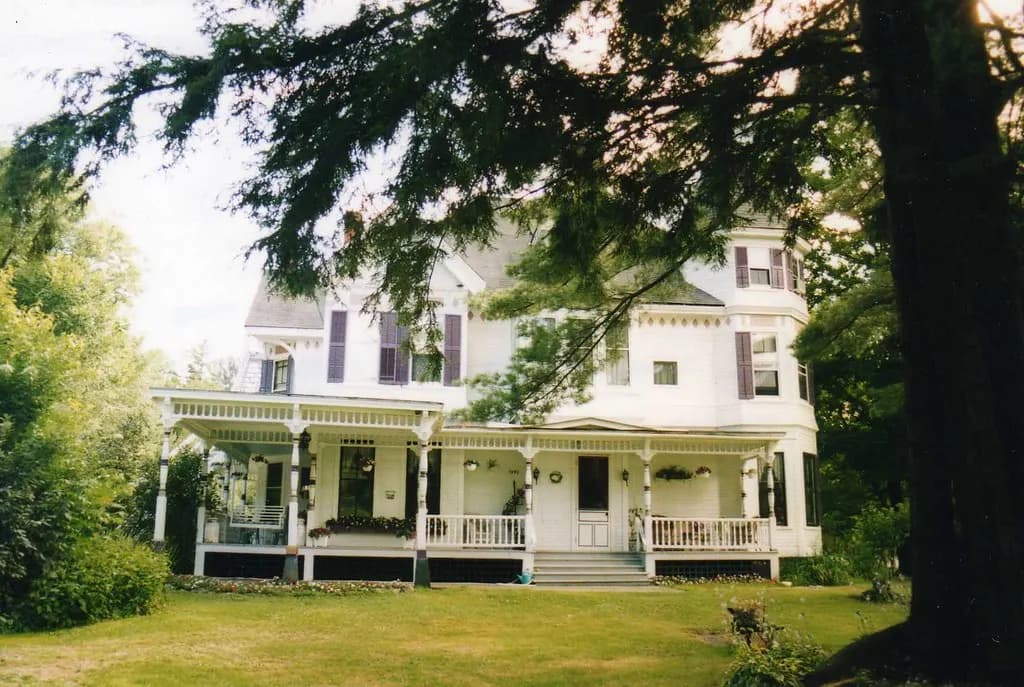
The 9% rooms tax applies to any charge by a "hotel" for the right to use rooms, furnishings or services. The definition is wide: hotels, motels, inns, B&Bs, cottages, cabins, condos, campsites, ski lodges, rooms in a primary home and second homes, and even treehouses and yurts. A private owner who rents for 15 days or more in a calendar year, whether consecutive or not, must charge the tax, and the first 14 days are taxable too.
Some charges always count. Forfeited deposits and cleaning charges are subject to rooms tax. Optional extras such as lessons, equipment or facility use are not, if they're separately stated; packaged into one price, the whole package is taxed at the rooms rate. Stays become exempt after 30 days of continuous occupancy in the same hotel without a lease, though the first 30 days stay taxable; a pre-existing lease of at least 30 days is exempt from the start.
Since August 1, 2024, Act 183 of 2024 has added a 3% short-term rental surcharge. It applies to furnished houses, condos and other dwellings rented to the public for fewer than 30 consecutive days and more than 14 days a year. Lodging licensed by the Vermont Department of Health under 18 V.S.A. Chapter 85, meaning hotels, motels, inns and B&Bs, doesn't pay it. Hosts collect the surcharge along with the 9% rooms tax and any 1% local option rooms tax, and must file and pay electronically.
| Where you stay | Rooms tax | Local option | Surcharge | Total |
|---|---|---|---|---|
| Hotel in a town without LOT | 9% | None | None | 9% |
| Hotel in Stowe | 9% | 1% | None | 10% |
| Vacation home in a town without LOT | 9% | None | 3% | 12% |
| Vacation home in Stowe | 9% | 1% | 3% | 13% |
Worked examples in dollars
A Burlington outdoor store. A customer buys a $180 tent and a $220 rain jacket. The jacket is clothing and exempt. The tent is taxed at 6% plus Burlington's 1%: 7% of $180 is $12.60, for a total of $412.60.
A restaurant in Stowe. Dinner is $90 of food and $36 of wine, itemized. Food pays 9% plus 1%, or $9; the wine pays 10% plus 1%, or $3.96. Total tax is $12.96. A $25 tip on top isn't taxed.
A ski weekend in a vacation home. Three nights in a Dover condo at $300 a night plus a $150 cleaning fee is $1,050. Dover has a local option rooms tax, so the host charges 9%, 1% and the 3% surcharge: 13% of $1,050 is $136.50.
An online seller in New York. A remote seller over the threshold ships $500 of kitchen goods to a buyer in Montpelier and charges $20 for delivery. Delivery on taxable goods is taxable, so tax is 7% of $520: $36.40.
A Rutland Town gift shop selling software. A $120 boxed copy of prewritten software is taxed at 6% plus Rutland Town's 1%, or $8.40.
Try it — 7% Burlington sales tax on $180
Registering, licenses and filing
Businesses, nonprofits included, must register for a Vermont business tax account and license before collecting tax. Registration is free. Register online in myVTax or on Form BR-400, choosing sales and use tax, meals and rooms tax, or both. Each location needs its own license, displayed where customers can see it, but you manage every location from one myVTax account. Vendors with no permanent location, such as food carts, can use one license for all their stops.
The Department sets your filing frequency: monthly, quarterly or annual. Monthly returns and payment are due on the 25th of the following month; the 2026 schedule lists February 23 for January and January 25, 2027 for December. Quarterly returns for 2026 are due April 27, July 27, October 26 and January 25, 2027. Annual filers had until January 26, 2026 for 2025 and have until January 25, 2027 for 2026. File for every period even with no sales; only approved occasional filers can skip periods with nothing to report.
Electronic filing is mandatory if you have sales subject to a local option tax, you file for multiple locations, your sales and use tax for the prior calendar year exceeded $100,000, or you pay the short-term rental surcharge. Paper Form SUT-451 is for single-location businesses without LOT sales that can't use myVTax.
A 2026 law addresses the disappearing penny. As retailers round cash totals now that the penny is being phased out, the 2026 Legislative Highlights say tax and fees on cash sales are calculated and remitted on the amount before rounding, effective June 8, 2026. Card payments aren't affected.
Before your first Vermont sale
0/6Penalties and interest
Vermont's penalties add up quickly. For sales, meals and rooms tax, failing to pay costs 5% of the unpaid tax for each month or part of a month, and failing to file costs 5% a month, with the civil penalty capped at 5% a month, up to 25%. A return filed more than 60 days after its due date also draws a flat $50 penalty, even if no tax was due. Interest accrues from the due date at a rate the Commissioner of Taxes sets each year. A business that has under-collected the local option tax is liable for it even if it never charged customers, so fix tax codes quickly and amend past returns.
Remote sellers and marketplaces
Out-of-state sellers must register, collect and remit once they reach $100,000 or 200 transactions into Vermont during the preceding 12 months, tested at the end of each quarter. Marketplace facilitators collect on sales they handle for third-party sellers. Because Vermont is destination-based and local option tax applies to deliveries into participating towns, remote sellers must collect the 1% where it applies and file electronically. Our economic nexus guide compares thresholds state by state.
Common mistakes and how to fix them
Charging sales tax on meals. Restaurant food is under the 9% meals tax, filed on Form MRT-441, not the sales tax return.
Missing new local option towns. Thirteen municipalities started in 2026. Update your tax tables every January, April, July and October.
Taxing clothing. Clothing and footwear are exempt at any price.
Not taxing delivery. Delivery charges on taxable goods are taxable even when itemized.
Forgetting the surcharge, or charging it at an inn. Vacation homes pay the 3% surcharge; Health Department-licensed hotels, inns and B&Bs don't.
Paying Burlington's meals tax to the state. Burlington and Rutland City collect their own local meals and rooms taxes.
What to do next
Register free in myVTax, decide whether you need a sales tax license, a meals and rooms license or both, and look up every location you sell to in the Local Option Tax Finder. Put the 25th on your calendar and file electronically if any local option tax applies. Use the sales tax calculator to check receipts at 6%, 7%, 9% or 10%, and our guide to calculating sales tax for tax-included prices. Renting a vacation home? Read our short-term rental business guide. Selling across New England? Compare Maine, Massachusetts and New York.
This is general information, not legal or tax advice — confirm on the official source or with a professional.
Frequently asked questions
The state rate is 6%. About about 50 municipalities add a 1% local option tax on sales, meals, rooms or alcohol, so the sales tax is 7% in towns such as Burlington, South Burlington, Williston, Stowe and Montpelier. Restaurant meals and lodging are taxed separately at 9%, and alcohol served in restaurants at 10%.
It's a separate tax from sales tax. Prepared and restaurant meals are taxed at 9%, lodging and hotel meeting rooms at 9%, and alcoholic drinks served in restaurants at 10%. In a town with a local option meals and rooms tax, add 1%: meals become 10% and restaurant alcohol 11%. Burlington and Rutland City run their own local meals and rooms taxes.
No. Clothing and footwear are exempt from Vermont sales tax, along with most food for home consumption, medicines, newspapers and certain farm items. Soft drinks, prewritten software and digital downloads are taxable. Delivery charges on taxable goods are taxable even when listed separately on the invoice.
Since August 1, 2024, Act 183 of 2024 adds a 3% surcharge on short-term rentals of furnished houses, condos and similar dwellings rented for under 30 days and more than 14 days a year. It's on top of the 9% rooms tax and any 1% local option tax. Hotels, motels, inns and B&Bs licensed by the Department of Health don't pay it.
Registration is free. You register for a Vermont business tax account and sales tax or meals and rooms license through myVTax or Form BR-400. Each location needs its own license displayed for customers, though one myVTax account covers all of them. Vendors with no permanent location, such as cart vendors, can use one license.
Monthly returns are due on the 25th of the following month. Quarterly returns for 2026 are due April 27, July 27, October 26 and January 25, 2027, and annual returns by January 25. Due dates on weekends or holidays move to the next business day. You must file even when no tax is due, unless you're an approved occasional filer.
Yes, once they have $100,000 or 200 transactions into Vermont in the preceding 12 months. Marketplace facilitators collect for their third-party sellers. Remote sellers must also collect the 1% local option tax on sales delivered into participating towns, since Vermont tax is destination-based, and file electronically.
Sources & verification
Figures on this page were checked against the sources below when it was last reviewed on 11 October 2026. Each rate and limit is stored once with its own official source and review date, and official update channels are monitored daily so changes are picked up. How we verify
- 1.Sales and Use Tax — Vermont Department of Taxes · accessed 11 October 2026
- 2.FS-1017: Vermont Sales and Use Tax for Businesses — Vermont Department of Taxes · accessed 11 October 2026
- 3.Meals and Rooms Tax — Vermont Department of Taxes · accessed 11 October 2026
- 4.GB-1337: Restaurant Tax Guide — Vermont Department of Taxes · accessed 11 October 2026
- 5.FS-1021: Vermont Rooms Taxes for Business (April 2025) — Vermont Department of Taxes · accessed 11 October 2026
- 6.Local Option Tax — Vermont Department of Taxes · accessed 11 October 2026
- 7.Interest and Penalties — Vermont Department of Taxes · accessed 11 October 2026
- 8.2026 Legislative Highlights — Vermont Department of Taxes · accessed 11 October 2026
- 9.South Dakota v. Wayfair FAQs — Vermont Department of Taxes · accessed 11 October 2026
MSMETOOLS is an independent platform and is not affiliated with any government agency, ministry or department.
Tools for this
Sales Tax Calculator (US)
Calculate sales tax for all US states and cities.
Invoice Generator
Create professional invoices with tax, logo and custom details.
Related guides
 Maine Sales Tax 2026: 5.5% Rate, 8% Meals, 9% LodgingRead guide
 Massachusetts Sales Tax 2026: 6.25%, Meals Tax & $175 RuleRead guide
 Rhode Island Sales Tax 2026: 7% Rate, Meals & Hotel TaxRead guide
 Vermont Business License 2026: Tax Account, OPR & Local RulesRead guide
Official links open the government site in a new tab.