 Finance & accounting
Business Credit Cards in 2026: How They Work, What They Cost and the Protections You Don't Get
How business credit cards work in 2026: personal guarantees, CARD Act gaps, EIN-only cards and a rewards vs APR example showing when a credit line is cheaper.
 Edited by Sumeet YadavFounder & editor, MSMETOOLS · fact-checked against official sources
Contents (10)
- 1. How a business credit card works
- 2. The personal guarantee: why your name is on the hook
- 3. What the CARD Act doesn't cover on business cards
- 4. EIN-only business credit cards: what's real
- 5. How business cards affect your personal and business credit
- 6. Rewards vs APR: a worked example
- 7. Choosing a card: the features that matter
- 8. Taxes and bookkeeping
- 9. Common mistakes and how to fix them
- 10. What to do next
A business credit card is usually the first credit a new company gets, and for many owners it stays the most-used one. It separates business spending from personal spending, gives you a month or so of free float, and can pay you back in rewards. It also comes with a personal guarantee and fewer legal protections than the card in your wallet. This guide explains how business cards work, what the Credit CARD Act does and doesn't cover, what "EIN-only" really means, how to weigh rewards against interest with real numbers, and when a line of credit is the better tool. Rates and rules were checked against Federal Reserve and CFPB sources in October 2026.
Quick answer
A business credit card is a revolving credit line issued for business spending. You get an interest-free grace period if you pay the full statement balance by the due date; carry a balance and you pay a card-level APR. Nearly all small business cards require a personal guarantee, and most of the Credit CARD Act's consumer protections don't apply to them.
Business-purpose credit is exempt from most of Regulation Z, but your unauthorized-use liability is still capped at $50
Expect a personal credit check and personal guarantee; true EIN-only cards are usually corporate or charge cards
Average card APR for accounts paying interest was 22.36% in August 2026 (Fed, consumer cards)
Paid in full monthly, 2% cash back on $8,000 a month earns $1,920 a year
Carried at 24%, a $15,000 balance paid down at $500 a month costs about $8,100 in interest
How a business credit card works
A business card works like any credit card: the issuer sets a credit limit, you or your employees make purchases, and each month you get a statement. If you pay the full statement balance by the due date, most cards charge no interest on purchases, which gives you a free loan of anywhere from three to seven weeks depending on when in the cycle you bought something. If you pay less than the full balance, interest accrues on what's left, usually from the date of each purchase once the grace period is lost.
The difference from a personal card is who the account is for and who is responsible for it. The account is opened in the business's name, using its legal name and taxpayer identification number, which is your EIN for a corporation, an LLC with employees or a partnership, and can be your Social Security number for a sole proprietor. You can usually issue employee cards with individual spending limits, and statements break down spending by cardholder, which makes bookkeeping and expense control easier. Some issuers also offer higher limits than a personal card because they look at business revenue as well as your personal income.
Responsibility is shared. The business is liable for the balance, and in almost all small business cards so is the owner who signed the application, through a personal guarantee. If the business closes owing $20,000, the issuer can pursue you personally for that amount. That's the first thing to understand before treating a business card as "the company's debt."
Business cards are a mainstream product. The Federal Reserve Banks' 2026 report on employer firms, based on the 2025 Small Business Credit Survey, found that credit cards and loans are the financial products firms use most regularly. The same survey found that 59% of firms with debt had used a personal guarantee to secure it.
The personal guarantee: why your name is on the hook
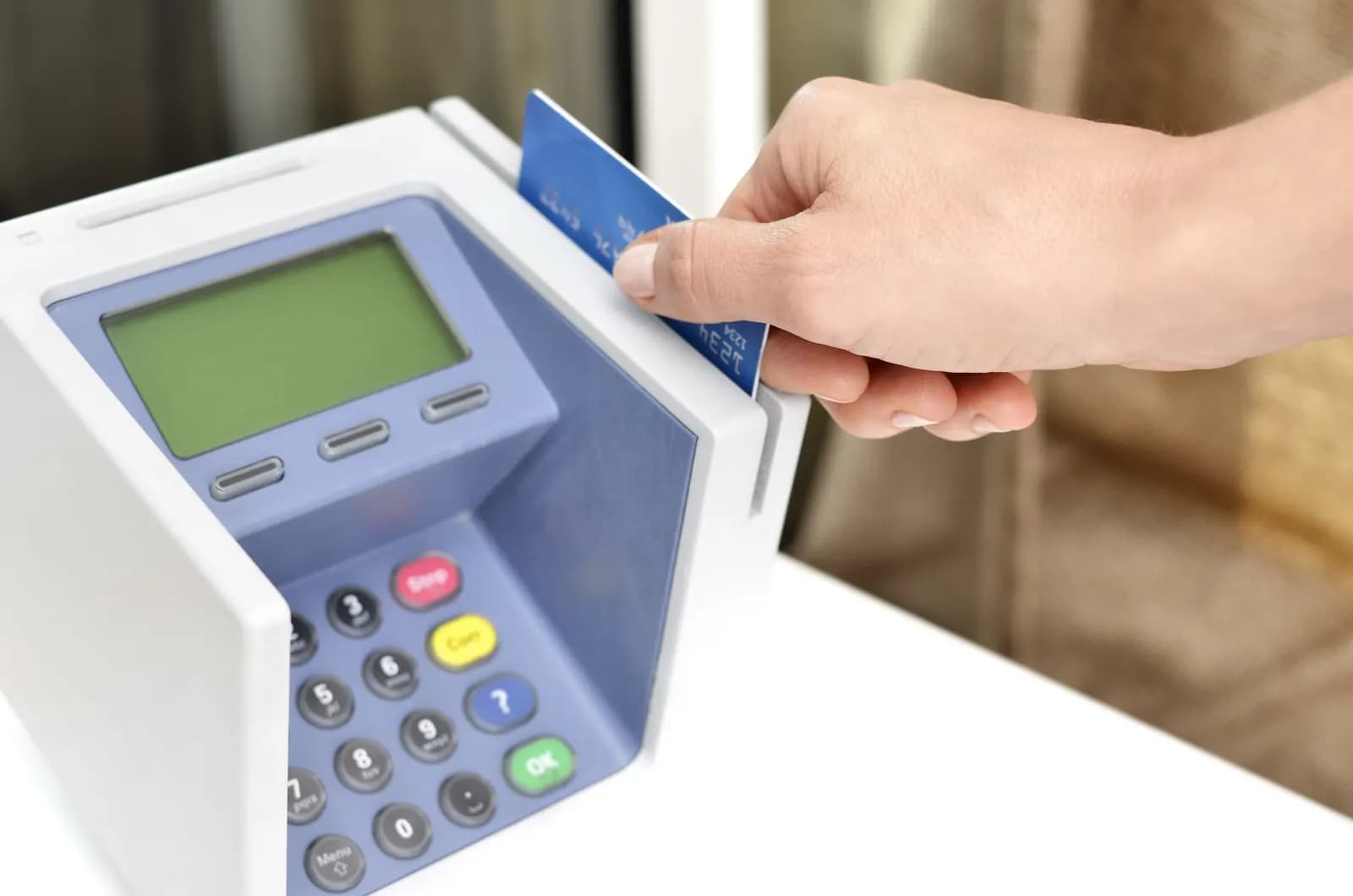
When the Federal Reserve reported to Congress on small business credit cards after the CARD Act passed, it noted that business cards typically carry a personal guarantee and that both the firm and the guarantor are responsible for the balance. Issuers rely heavily on the guarantor's personal credit history, especially when the business is young and has little credit history of its own. Nothing about that has changed since: application pages for small business cards still ask for the owner's Social Security number, date of birth and personal income, and the terms say you're personally responsible.
In practice, the guarantee means three things. First, approval and your credit limit will depend largely on your personal credit score and income, not just the business's numbers. Second, if the business defaults, the issuer can sue you personally, and a judgment can be enforced against your personal assets. An LLC or corporation doesn't shield you from a debt you've personally guaranteed. Third, if you have partners, ask who is signing. Only the owner who completes the application usually guarantees the account, which can leave one partner carrying all the personal risk for spending that everyone benefits from.
Who owes what if the business can't pay
Step 1
Business misses payments
Step 2
Issuer closes the account and demands the balance
Step 3
Business (the borrower) is liable
Step 4
Owner who signed the guarantee is liable too
LLC or corporation doesn't shield you
Read the guarantee section in the cardmember agreement before you apply. Look for whether it's "joint and several" with the business, whether it survives if you leave the company, and whether employee cardholders have any liability. Employees typically don't, but there's an exception for larger programs, covered in the next section.
What the CARD Act doesn't cover on business cards
The Credit CARD Act of 2009 gave consumer cardholders a list of protections: 45 days' notice before most rate increases, limits on raising rates on existing balances, caps on penalty fees, rules on how payments above the minimum are applied, a ban on over-limit fees unless you opt in, and payment due dates that fall on the same day each month. These rules apply to credit card accounts under a consumer credit plan.
Regulation Z, the CFPB rule that implements the Truth in Lending Act and the CARD Act, exempts credit that's extended primarily for a business, commercial or agricultural purpose, and credit extended to anyone other than a natural person. That means a business card account generally falls outside the CARD Act's pricing and fee rules. The Fed's 2010 report to Congress listed the provisions that don't reach business cards, including advance notice of rate increases, limits on over-limit transactions, re-evaluation of rate increases, limits on penalty fees and the payment-timing rules.
Two sets of protections do apply to every credit card, whatever its purpose. Under Regulation Z §1026.12(a), an issuer can send you a card only if you've asked for it, or as a renewal or substitute for one you already have. Under §1026.12(b), your liability for unauthorized use is capped at the lesser of $50 or the amount charged before you notify the issuer. The CFPB's official interpretation says these two provisions cover all credit cards, even those issued for business use.
There's a carve-out for larger programs. If an issuer provides 10 or more cards for an organization's employees, the issuer and the business can agree to different liability terms for unauthorized use, which can leave the business responsible for more of the losses from fraud. Individual employees still can't be made liable beyond the Regulation Z limit. If you're adding many employee cards, ask how fraud liability works under your agreement.
Consumer card vs business card protections
| Protection | Personal card | Business card |
|---|---|---|
45-day notice before most rate increases | Yes (CARD Act) | Not required by law |
Limits on raising the rate on existing balances | Yes | Not required by law |
Caps on late and penalty fees | Yes | Not required by law |
Payments above the minimum go to highest-rate balance | Yes | Not required by law |
Card issued only on request | Yes | Yes (Reg Z §1026.12(a)) |
Unauthorized-use liability capped | $50 | $50; different terms possible at 10 or more employee cards |
45-day notice before most rate increases
- Personal card
Yes (CARD Act)
- Business card
Not required by law
Limits on raising the rate on existing balances
- Personal card
Yes
- Business card
Not required by law
Caps on late and penalty fees
- Personal card
Yes
- Business card
Not required by law
Payments above the minimum go to highest-rate balance
- Personal card
Yes
- Business card
Not required by law
Card issued only on request
- Personal card
Yes
- Business card
Yes (Reg Z §1026.12(a))
Unauthorized-use liability capped
- Personal card
$50
- Business card
$50; different terms possible at 10 or more employee cards
Many large issuers say they voluntarily extend some CARD Act-style practices to their small business cards, such as advance notice of rate changes. Because those are company policies rather than legal requirements, they can change. Check the cardmember agreement for the change-in-terms notice period, how payments are allocated across balances with different rates, and the penalty APR and when it applies.
One more legal development to know about: proposals to cap credit card interest at 10%. In January 2026, the President called for a one-year 10% cap, and bills in both chambers would impose one. The Senate bill, S.381, was referred to the Senate Banking Committee on February 4, 2025, and showed no further action as of October 2026. No cap is in force, and none of the proposals has been tested against business cards.
EIN-only business credit cards: what's real
Searches for "business credit card with EIN only" usually come from owners who want to keep business debt off their personal credit or who have thin personal credit. It helps to separate two different things.
You can almost always apply for a small business card using your EIN as the business's tax ID. That's not the same as an EIN-only card. Most small business card applications still ask for the owner's Social Security number, run a personal credit inquiry and attach a personal guarantee. The EIN identifies the business; your SSN is what the issuer actually underwrites.
Cards that genuinely don't require a personal credit check or personal guarantee do exist, but they're a different product. They're typically corporate cards or charge cards that underwrite the business itself, usually based on cash in its bank accounts, monthly revenue or venture funding. Many require the balance to be paid in full every month or even more often, and limits may move up and down with your bank balance. Large banks also issue corporate cards to established companies with audited financials, where the company alone is liable. These are market practices rather than legal categories, so read each provider's terms; the eligibility thresholds vary and change.
Before you apply for a business card
0/6How business cards affect your personal and business credit
The application usually creates a hard inquiry on your personal credit report, which can lower your score slightly for a while. After that, reporting varies by issuer. Some report the account to the consumer bureaus every month, so a high balance raises your personal utilization ratio and can drag your score down. Others report only to the business credit bureaus unless the account goes delinquent, in which case the late payments can land on your personal report too. There's no rule requiring one approach, so ask before applying.
On the business side, a card that reports to the commercial bureaus can help build a business credit file, which some lenders and suppliers check. A record of on-time payments and modest utilization helps; maxed-out cards and late payments hurt. Our business credit score guide explains how business scores are built and checked.
Keep personal spending off the business card. It muddies your books, makes it harder to support deductions in an audit, and in an LLC or corporation it can weaken the separation between you and the business that limited liability depends on.
Rewards vs APR: a worked example
Card marketing focuses on rewards. The question that decides whether a card helps or hurts is whether you'll carry a balance. Here's the math for a landscaping company that puts $8,000 a month of fuel, supplies and software on a card earning 2% cash back, with a $95 annual fee.
Scenario A: paid in full every month. The company earns 2% × $96,000 = $1,920 a year in cash back, pays no interest, and nets $1,825 after the fee. It also gets three to seven weeks of interest-free float on each purchase. For a business that always pays in full, rewards are the main reason to choose one card over another.
Scenario B: carries a balance. After a slow winter, the company is carrying a $15,000 balance at a 24% APR and pays $500 a month toward it while still spending on the card. Just the $15,000 balance takes about 47 months to clear and costs roughly $8,100 in interest, more than four years of cash back. Even at the Fed's August 2026 average of 22.36% for consumer accounts that pay interest, the same paydown costs about $7,200.
$15,000 carried balance, $500 a month payment
≈ $8,100
Interest at 24% APR
≈ 47 months to pay off
≈ $7,200
Interest at 22.36%
≈ 45 months
≈ $2,300
Interest at 10% (line of credit)
≈ 35 months
$1,920
Annual 2% cash back
on $96,000 of spending
The alternative is to move the carried balance to cheaper credit. A bank or SBA-backed line of credit priced around prime plus 3%, about 10% with prime at 7.00%, would cut the interest on the same $15,000 paydown to about $2,300. That's the logic for keeping the card for spending and rewards, and using a business line of credit for balances you can't clear within a month or two.
Two details matter in the comparison. Rewards are usually calculated on purchases, not on balances, so carrying debt doesn't earn more. And many cards charge a higher APR on cash advances, start interest immediately on them and add a fee, which makes card cash advances one of the most expensive ways to cover a cash shortfall.
Try it — what a carried card balance grows to in a year
Choosing a card: the features that matter
Once you've decided whether you'll pay in full, most of the choice follows from that.
If you pay in full monthly, compare the rewards structure with where you actually spend. Flat-rate cash back is simple and works for spread-out spending. Category cards pay more on things like fuel, shipping, advertising or office supplies, sometimes with an annual cap on the bonus category. Travel cards suit businesses that fly or stay in hotels often. Weigh the annual fee against the rewards you'll realistically earn, not the sign-up bonus, which is a one-time payment that often requires a minimum spend within a few months.
If you might carry a balance, prioritize a low ongoing APR, a long 0% introductory period on purchases and modest fees over rewards. Check whether the intro rate applies to purchases, balance transfers or both, and when it ends. Plan to pay off the balance before the standard APR starts.
For teams, look at employee card controls: individual limits, category restrictions, real-time alerts, receipt capture and integration with your accounting software. A good expense-control setup can save more time than any reward rate is worth.
For international work, check the foreign transaction fee. Many business cards charge around 3% on foreign purchases; others charge none.

Taxes and bookkeeping
Interest and fees on a card used for business purchases are generally deductible business expenses. Larger businesses face a federal cap on business interest deductions, set at 30% of adjusted taxable income, but most small businesses are exempt from it if their average annual gross receipts over the prior three years are $32 million or less for 2026 tax years, according to the IRS. The annual fee on a card used for business is usually a deductible business expense as well.
How cash-back rewards are treated depends on how you earn them. Rewards earned on business purchases are commonly treated as a reduction in the cost of what you bought rather than as income, while sign-up bonuses that don't depend on spending can be treated differently. Ask your accountant how to record them, and be consistent. Keep receipts for every charge, reconcile the card monthly, and never mix personal and business spending on the same card.
A monthly routine that keeps a business card cheap
0/5Common mistakes and how to fix them
Treating the credit limit as working capital. A card limit isn't a cash plan. If you're regularly carrying balances to make payroll or pay suppliers, that's a working capital gap. Fix it with a line of credit, better customer payment terms or invoice financing, and keep the card for spending you'll pay off.
Missing a payment. Without the CARD Act's limits, a single late payment can trigger a late fee and a penalty APR that may apply to your whole balance under some agreements. Set up autopay for at least the minimum, then pay the rest manually.
Ignoring the change-in-terms notice. Because business cards don't get the CARD Act's 45-day rule by law, read every notice from the issuer. If the rate jumps, you can usually close the card and pay off the balance under the old terms, but only if you act within the window the agreement gives you.
Letting employees spend without controls. Set per-card limits, restrict categories you don't need and review statements monthly. For programs of 10 or more employee cards, confirm who carries fraud liability.
Stacking new cards to cover old ones. Opening several cards to move balances around adds inquiries and new accounts to your personal credit and doesn't fix cash flow. If you're at that point, compare the true cost of a consolidation loan or SBA option. Avoid merchant cash advances to pay off cards; our merchant cash advance guide shows why they usually cost far more.
Official links
- Regulation Z §1026.3 — Business-purpose exemptionComment 3(a)-2 on business cards
- Regulation Z §1026.12 — Card issuance and unauthorized use$50 cap and employee-card rules
- Federal Reserve — Report to Congress on small business credit cardsWhich CARD Act rules don't apply
- Federal Reserve G.19 — Credit card interest ratesUpdated monthly
- IRS — Business interest expense limitation Q&ASmall business exemption
- CFPB — Submit a complaintCard issuance or unauthorized-charge problems
What to do next
Decide first whether you'll pay the card in full every month. If you will, pick the card whose rewards match where you spend and whose employee controls fit your team. If you won't, set up a cheaper source of credit for the balance you'll carry and use the card only for spending you can clear. If you don't have an EIN yet, our EIN application guide walks through getting one free from the IRS, and our startup business loans guide covers financing options for new companies.
This is general information, not legal, tax or financial advice — confirm on the official source or with a professional.
Frequently asked questions
Almost all small business credit cards do. When you apply, you agree that you'll personally repay the balance if the business can't, and the issuer checks your personal credit to decide. The Federal Reserve's report to Congress on small business cards described this as standard practice. Cards without a personal guarantee exist, but they're usually corporate or charge cards for companies with significant revenue or cash in the bank.
Mostly no. The CARD Act's rules on rate-increase notices, penalty fees, payment timing and over-limit charges cover consumer credit card accounts, and Regulation Z exempts credit extended mainly for business purposes. Two protections do apply to every card, including business cards: issuers can only send a card you asked for, and your liability for unauthorized use is capped at $50.
You can apply using your EIN as the business's tax ID, but most issuers also ask for the owner's Social Security number, run a personal credit check and require a personal guarantee. Truly EIN-only cards, with no personal credit check or guarantee, are generally corporate cards or charge cards that underwrite on the company's bank balances and revenue and expect the balance to be paid in full.
It depends on the issuer. The application usually triggers a hard inquiry on your personal report. After that, some issuers report the account's activity to the personal credit bureaus, some report only if the account goes delinquent, and some report only to business credit bureaus. Ask the issuer how it reports before you apply, especially if you plan to carry high balances.
There's no official average for business cards. The Federal Reserve's average for consumer card accounts that paid interest was 22.36% in August 2026, and business cards are typically priced in a similar range. Anything that compares well with that is reasonable for a card, but a bank line of credit priced at prime plus a margin will usually be far cheaper for balances you'll carry.
Interest on genuinely business purchases is generally a deductible business expense, subject to the federal limit on business interest deductions. Most small businesses are exempt from that limit if their average annual gross receipts are $32 million or less for 2026 tax years. Personal purchases put on a business card aren't deductible, and mixing them makes the records harder to defend.
Sources & verification
Figures on this page were checked against the sources below when it was last reviewed on 12 October 2026. Each rate and limit is stored once with its own official source and review date, and official update channels are monitored daily so changes are picked up. How we verify
- 1.12 CFR 1026.3 — Exempt transactions (Regulation Z) and official interpretation — Consumer Financial Protection Bureau · accessed 12 October 2026
- 2.12 CFR 1026.12 — Special credit card provisions (Regulation Z) — Consumer Financial Protection Bureau · accessed 12 October 2026
- 3.Report to the Congress on the Use of Credit Cards by Small Businesses and the Credit Card Market for Small Businesses (May 2010) — Board of Governors of the Federal Reserve System · accessed 12 October 2026
- 4.G.19 Consumer Credit (released October 7, 2026) — Board of Governors of the Federal Reserve System · accessed 12 October 2026
- 5.H.15 Selected Interest Rates — Board of Governors of the Federal Reserve System · accessed 12 October 2026
- 6.2026 Report on Employer Firms: Findings from the 2025 Small Business Credit Survey — Federal Reserve Banks · accessed 12 October 2026
- 7.S.381 — 10 Percent Credit Card Interest Rate Cap Act (119th Congress) — Congress.gov · accessed 12 October 2026
- 8.Questions and answers about the limitation on the deduction for business interest expense — Internal Revenue Service · accessed 12 October 2026
MSMETOOLS is an independent platform and is not affiliated with any government agency, ministry or department.
Tools for this
Compound Interest Calculator
Calculate future value of your investments.
EMI Calculator
Calculate loan EMIs for business and personal loans.
Working Capital Calculator
Check working capital, current and quick ratios.
Budget Planner
Plan and track your business budget easily.
Related guides
 Unsecured Business Loans 2026: Rates, Liens & How to QualifyRead guide
 Business Credit Score 2026: PAYDEX, Experian, Equifax & SBSSRead guide
 Credit Card Surcharge Laws by State 2026: Caps & BansRead guide
 ACH Payments for Small Business 2026: Costs, Timing, RulesRead guide
Official links open the government site in a new tab.