 HR, payroll & employment
Workplace Pension Auto-Enrolment for Employers (2026): Duties, Thresholds, Costs and Penalties
Auto enrolment for employers in 2026: the £10,000 trigger, qualifying earnings band, 3% employer minimum, deadlines, re-enrolment, fines and worked costs.
 Edited by Sumeet YadavFounder & editor, MSMETOOLS · fact-checked against official sources
Contents (11)
- 1. When your duties start
- 2. Who you must enrol, and who can ask to join
- 3. The 2026-27 earnings thresholds
- 4. How much you and your staff pay
- 5. Setting up: choosing a scheme and writing to staff
- 6. Opt-outs, opt-ins and refunds
- 7. Paying contributions and keeping records
- 8. Re-enrolment every three years
- 9. Penalties and enforcement
- 10. Changes to watch
- 11. What to do next
If you employ even one person in the UK, you almost certainly have workplace pension duties. This guide explains auto-enrolment from the employer's side for the 2026-27 tax year: when your duties start, who you must enrol, the earnings thresholds for every pay period, how much you and your staff must pay, what to do when people opt out or ask to join, re-enrolment every three years, and the penalties The Pensions Regulator can impose. Worked examples show the cost in pounds for a small team.
Quick answer
Every UK employer must enrol staff aged 22 to State Pension age who earn over £10,000 a year into a qualifying workplace pension and pay in at least 3% of their qualifying earnings — pay between £6,240 and £50,270 in 2026-27. The total minimum is 8%, so the employee pays the other 5% including tax relief. Duties start the day your first employee starts work.
Thresholds are frozen at 2025-26 levels for 2026-27
Write to staff within 6 weeks; declare compliance within 5 months of your duties start date
Pay deducted contributions by the 22nd of the following month (19th by cheque)
Re-enrol and re-declare every three years
Fines start at £400 and can escalate to £50 to £10,000 a day
When your duties start
Your auto-enrolment duties begin on your duties start date: the day your first member of staff starts work. You don't apply for a date or wait for a letter. If you register as an employer with HMRC and run payroll for someone, assume your duties have started. You're usually an employer for these purposes if you deduct tax and National Insurance from someone's pay.
From that date, The Pensions Regulator (TPR) expects four things. Choose a pension scheme that can be used for automatic enrolment; work out who must be enrolled; write to each member of staff within six weeks of your duties start date; and complete your declaration of compliance within 5 months of your duties start date. If your scheme isn't set up in time, you have to backdate the contributions you missed.
Two situations don't create duties. A company whose only staff are directors without employment contracts usually isn't an employer for auto-enrolment, although it should tell TPR so it doesn't receive compliance letters. And a sole trader with no employees has no duties for their own pension, though they can set one up voluntarily. If you're about to take on your first employee, read our guide to registering as an employer first.
Your first year as a new employer
Day 1
Duties start date — your first employee starts work
Up to 3 months
Optional postponement of assessment (must be notified in writing)
Within 6 weeks
Enrol eligible staff and write to every member of staff
Each pay day
Deduct and pay contributions; pay to the scheme by the 22nd of the next month
Within 5 months
Declaration of compliance to The Pensions Regulator
Every 3 years
Re-enrol eligible staff who left and re-declare
Who you must enrol, and who can ask to join
Auto-enrolment sorts staff into groups based on age and earnings in each pay reference period — usually the period you pay them for, such as a week or a month. You assess every time you run payroll, not once a year, so someone whose pay or age changes can move between groups.
Eligible jobholders must be enrolled automatically. They're aged at least 22 and under State Pension age, earn more than the earnings trigger (£10,000 a year, £833 a month or £192 a week) and normally work in the UK. You must pay employer contributions for them.
Non-eligible jobholders aren't enrolled automatically but can opt in. They're either aged 16 to 21 or State Pension age to 74 and earn above the lower limit, or aged 22 to State Pension age and earn above the lower limit but not above the trigger. If they opt in, you must enrol them and pay employer contributions, just as for an eligible jobholder.
Entitled workers earn at or below the lower limit (£520 a month or £120 a week). They can ask to join a pension and you must arrange it, but you don't have to contribute.
GOV.UK lists some exceptions where you don't have to enrol an eligible jobholder, although they can still choose to join: someone who has given or received notice to leave, someone with HMRC evidence of lifetime allowance protection, someone who took a winding-up lump sum and left and rejoined within 12 months, and directors without employment contracts.
Staff groups and what you owe them (2026-27)
| Group | Age | Earnings | Enrol? | Employer pays? |
|---|---|---|---|---|
Eligible jobholder | 22 to State Pension age | Over £10,000 a year | Yes, automatically | Yes, at least 3% |
Non-eligible jobholder | 16–74 | Over £6,240 (and not an eligible jobholder) | Only if they opt in | Yes, if they opt in |
Entitled worker | 16–74 | £6,240 or less | Only if they ask to join | No |
Eligible jobholder
- Age
22 to State Pension age
- Earnings
Over £10,000 a year
- Enrol?
Yes, automatically
- Employer pays?
Yes, at least 3%
Non-eligible jobholder
- Age
16–74
- Earnings
Over £6,240 (and not an eligible jobholder)
- Enrol?
Only if they opt in
- Employer pays?
Yes, if they opt in
Entitled worker
- Age
16–74
- Earnings
£6,240 or less
- Enrol?
Only if they ask to join
- Employer pays?
No
The 2026-27 earnings thresholds
The Department for Work and Pensions reviews the thresholds every year. On 18 December 2025 it decided to keep the 2025-26 figures for 2026-27, citing policy stability while the Pensions Commission looks at pension adequacy. They apply from 6 April 2026.
| Pay period | Lower limit of qualifying earnings | Earnings trigger | Upper limit of qualifying earnings |
|---|---|---|---|
| Weekly | £120 | £192 | £967 |
| Fortnightly | £240 | £384 | £1,934 |
| Four-weekly | £480 | £768 | £3,867 |
| Monthly | £520 | £833 | £4,189 |
| Quarterly | £1,560 | £2,499 | £12,568 |
| Bi-annual | £3,120 | £4,998 | £25,135 |
| Annual | £6,240 | £10,000 | £50,270 |
Source: The Pensions Regulator, thresholds for 2026-27.
Use the threshold for the pay period you actually use. A four-weekly payroll uses £768 as the trigger, not the monthly £833. This matters for staff with variable pay: a part-time worker on a weekly payroll who usually earns £150 but works overtime and earns £200 in one week passes the £192 trigger that week and, if aged 22 to State Pension age, must be enrolled automatically, even if their annual pay ends up below £10,000.
How much you and your staff pay
The legal minimum for most defined contribution schemes is a percentage of qualifying earnings — the slice of pay between the lower and upper limits. Earnings include salary or wages, bonuses, commission and overtime, plus statutory sick pay and statutory maternity, paternity, adoption, shared parental, parental bereavement and neonatal care pay.
Minimum contributions (2026-27)
3%
Employer minimum
Of qualifying earnings
5%
Employee share
Includes tax relief
8%
Total minimum
£6,240–£50,270
Qualifying earnings band
You can pay more than the minimum, and if you do, your staff can pay less, as long as the total reaches 8%. Some employers pay the whole 8% as a recruitment benefit. Some schemes calculate contributions on basic pay or total pay instead of qualifying earnings; these "certification" options are allowed if they meet higher minimum percentages, so check the rules with your provider.
How the employee's tax relief appears depends on the scheme. Under net pay, the contribution is taken before tax, so relief is automatic at the person's highest rate, but someone who earns below the personal allowance gets no relief. Under relief at source, you deduct 4% of qualifying earnings from net pay and the provider claims 1% basic-rate relief from HMRC, so the employee's total still reaches 5%. See our guide to pension tax relief for higher-rate relief and the annual allowance.
Worked examples
Example 1: full-time employee on £25,000. Qualifying earnings are £25,000 minus £6,240, which is £18,760. The employer pays 3%, or £562.80 a year; the employee's share is 5%, £938, made up of £750.40 from their pay and £187.60 tax relief if the scheme uses relief at source. The total going into the pension is £1,500.80. On a monthly payroll, pay is £2,083.33, qualifying earnings are £1,563.33, and the employer pays £46.90 a month.
Example 2: high earner on £60,000. Qualifying earnings are capped at the upper limit, so the band is £50,270 minus £6,240, or £44,030. The minimum employer contribution is £1,320.90 and the employee's minimum is £2,201.50. Many employers pay a percentage of full salary instead, which costs more.
Example 3: part-timer on £9,000. Below the trigger, so not enrolled automatically, but above the lower limit, so a non-eligible jobholder. If they opt in, the employer pays 3% of £2,760, which is £82.80 a year.

What a small team costs
Take a café with six staff. Four full-timers aged 22 to 50 earn £25,000 each and must be enrolled: the employer minimum is 4 × £562.80, which is £2,251.20 a year. A weekend worker aged 40 on £9,000 opts in, adding £82.80. A 19-year-old on £14,000 isn't enrolled automatically because of their age, but if they opt in the employer pays 3% of £7,760, which is £232.80. The total employer pension cost for the year is £2,566.80 if both opt in.
Employer pension contributions don't attract employer National Insurance, and they're normally an allowable business expense for Income Tax or Corporation Tax. That makes a pension contribution cheaper for you than paying the same amount as salary, where you'd also pay employer National Insurance at 15%.
Setting up: choosing a scheme and writing to staff
You can use any scheme that qualifies for automatic enrolment. Options include the government-backed NEST scheme, which must accept any employer, and master trusts and group personal pensions from commercial providers. Compare charges to members, the investment options, how the scheme connects to your payroll software, and whether it uses net pay or relief at source. If you already have a scheme, ask the provider whether it meets the auto-enrolment rules.
Getting auto-enrolment right as a new employer
- 1
Choose a qualifying scheme
Do this as early as possible — set-up can take time. Make sure it links to your payroll software.
- 2
Assess every member of staff
On your duties start date (or after postponement), sort staff by age and earnings in the pay period.
Tip: Most payroll software assesses staff automatically each pay run.
- 3
Enrol eligible jobholders
Put them into the scheme and start deducting and paying contributions from the first pay period.
- 4
Write to every member of staff
Within six weeks, tell each person how auto-enrolment applies to them, including those not enrolled.
- 5
Declare compliance
Duties for new employers (TPR)Complete the declaration of compliance online with The Pensions Regulator within 5 months of your duties start date.
- 6
Keep going every pay period
Monitor ages and earnings, pay contributions on time, handle opt-ins and opt-outs, and keep records.
Postponement. You can delay assessing staff for up to three months, for example to avoid enrolling short-term seasonal workers who will leave before the end. Postponement doesn't change your duties start date, and you must write to staff to tell them. If an employee asks to join during postponement, you must still enrol them.
Opt-outs, opt-ins and refunds
Staff can opt out of the scheme by contacting the pension provider. If they do it within one month of being enrolled (the opt-out window), you must refund the contributions they paid, normally through payroll, within one month of the request, and stop deductions. After the window, contributions usually stay invested until retirement.
Staff can ask to join or opt in at any time, and you must put them in within one month of the request. If someone has opted in and then left within the past 12 months, you don't have to accept them again.
You must not encourage or induce anyone to opt out — for example, by offering a pay rise or a bonus for leaving, or by asking job applicants whether they plan to opt out. TPR treats this as a breach and can fine employers for "prohibited recruitment conduct" at a prescribed rate of £1,000 to £5,000 depending on the number of staff.
Paying contributions and keeping records
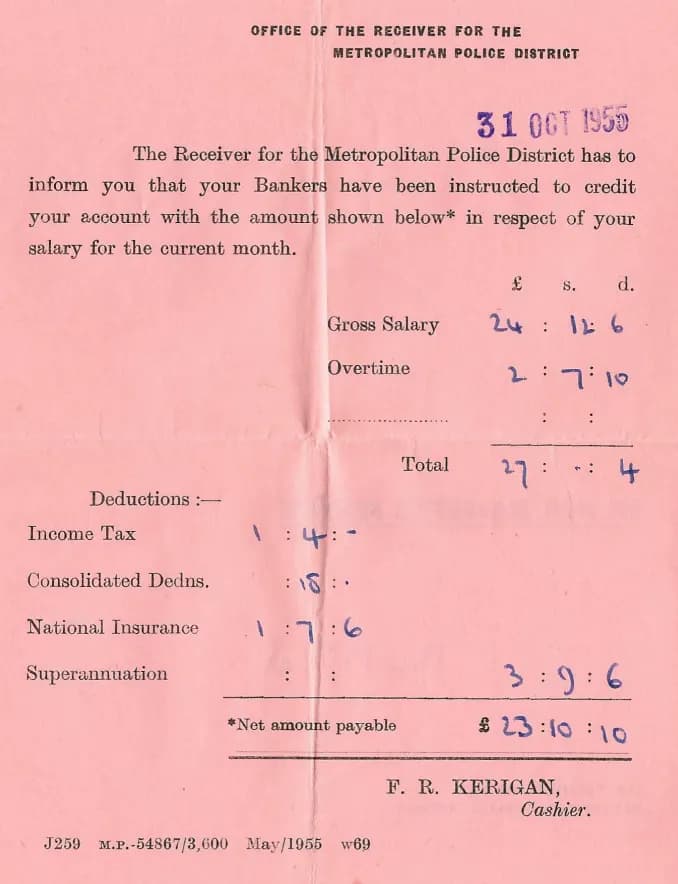
You must pay the contributions you deduct to the scheme by the 22nd of the following month after the month you deducted them (the 19th if you pay by cheque), or earlier if your agreement with the provider says so. Providers report late payments to TPR, which can issue an unpaid contributions notice requiring you to pay the full amount owed and send evidence by a deadline.
Keep records of how you've met your duties — the scheme you use, who you enrolled and when, contributions paid, and opt-in and joining requests — for six years. Records of opt-out requests need to be kept for four years. You don't send these to TPR routinely, but you must be able to produce them if asked.
Re-enrolment every three years
Every three years you must re-enrol eligible jobholders who have opted out or left the scheme, and those still in the scheme but paying below the minimum. Your re-enrolment date is around the third anniversary of your duties start date; TPR's guidance lets you choose a date in a six-month window from three months before to three months after that anniversary.
If someone left the scheme in the 12 months before your re-enrolment date, you can choose whether to re-enrol them now or wait for the next cycle. You must write to re-enrolled staff within six weeks, and you must complete a re-declaration of compliance with TPR every time, even if nobody needed to be re-enrolled. TPR's re-enrolment tool gives you your exact deadline.
Penalties and enforcement
TPR's approach is to warn first. If its records show you've missed a deadline, it usually sends a letter or compliance notice setting a new deadline. If you still don't comply, it can issue:
- a fixed penalty notice of £400;
- an escalating penalty notice with a new deadline, after which the fine grows each day at £50 to £10,000 a day depending on the number of staff, until you comply;
- an unpaid contributions notice where contributions haven't been paid, requiring you to pay what's owed.
Wilfully failing to enrol eligible staff, and knowingly giving false information in a declaration or re-declaration, are criminal offences with a maximum of two years in prison or a fine. Fines are payable online or by BACS, and unpaid fines can be recovered through the courts.
The most common slip for small employers isn't refusing to comply: it's missing the declaration, paying contributions late, or forgetting to re-declare after three years. A calendar reminder for each deadline prevents most fines.
Auto-enrolment checks for every employer
0/8Changes to watch
Thresholds for 2027-28. DWP usually announces the following year's thresholds in the winter. The 2026-27 freeze was linked to the Pensions Commission, which published its interim report in May 2026 and plans to make final recommendations to the government in 2027. The interim report notes that 4 million employees aren't eligible because of the age limits and the £10,000 trigger.
Wider coverage. Legislation passed in 2023 lets the government lower the minimum age for auto-enrolment from 22 to 18 and calculate contributions from the first pound earned, removing the lower limit. No start date has been set, and the changes need further regulations, so they don't apply in 2026-27.
Salary sacrifice cap from April 2029. Many employers run pensions through salary sacrifice to save National Insurance. From 6 April 2029, HMRC says only £2,000 a year of employee pension contributions made by salary sacrifice will be free of National Insurance each year. If your scheme relies on salary sacrifice, review the savings before then.
The Budget on 28 October 2026. Pension tax and National Insurance measures are often announced at the Budget. We'll update this page with anything that affects employer pension costs.
What to do next
If you haven't yet set up PAYE, start with registering as an employer, then use TPR's duties checker to get your personal timeline. Build pension contributions into your payroll costs alongside employer National Insurance, the National Minimum Wage and statutory sick pay, and use the salary slip generator to check the deductions look right on each payslip.
This is general information, not legal or tax advice — confirm on the official source or with a professional.
Frequently asked questions
On the day your first member of staff starts work. That's your duties start date. From then you must assess staff, enrol eligible jobholders, write to them within six weeks and complete your declaration of compliance with The Pensions Regulator within 5 months of that date. You can postpone assessing staff for up to three months, but the start date doesn't move.
At least 3% of qualifying earnings, with a minimum total of 8% including the employee's share and tax relief. In most schemes qualifying earnings are pay between £6,240 and £50,270 a year in 2026-27. For someone earning £25,000, that's £562.80 a year from the employer and £938 from the employee, including tax relief.
The government kept them the same as 2025/26: the earnings trigger is £10,000 a year (£833 a month or £192 a week), and the qualifying earnings band runs from £6,240 to £50,270. The thresholds were confirmed in December 2025 and apply from 6 April 2026.
The Pensions Regulator usually sends a compliance notice first. If you miss the deadline, it can issue a £400 fixed penalty, then an escalating penalty of £50 to £10,000 a day depending on how many staff you have. Unpaid contributions must be backdated. Wilfully failing to enrol staff is a criminal offence carrying up to two years in prison or a fine.
Yes. If they opt out within one month of being enrolled, they get back everything they paid in and you must refund it, usually through payroll, within one month. You must not encourage or pressure staff to opt out, or offer anything in return. They'll be re-enrolled automatically at your next re-enrolment date if they're still eligible.
Not if the director doesn't have an employment contract. A company whose only staff are directors without employment contracts usually has no auto-enrolment duties, but it should tell The Pensions Regulator. Once you take on an employee who meets the criteria, your duties start.
Sources & verification
Figures on this page were checked against the sources below when it was last reviewed on 9 October 2026. Each rate and limit is stored once with its own official source and review date, and official update channels are monitored daily so changes are picked up. How we verify
- 1.Set up and manage a workplace pension scheme — GOV.UK · accessed 9 October 2026
- 2.Workplace pensions — GOV.UK · accessed 9 October 2026
- 3.Automatic enrolment earnings thresholds — The Pensions Regulator · accessed 9 October 2026
- 4.Review of the automatic enrolment earnings trigger and qualifying earnings band for 2026/27 — Department for Work and Pensions · accessed 9 October 2026
- 5.I'm an employer who has to provide a pension — The Pensions Regulator · accessed 9 October 2026
- 6.Work out who to put into a pension — The Pensions Regulator · accessed 9 October 2026
- 7.Ongoing duties for employers — The Pensions Regulator · accessed 9 October 2026
- 8.How we enforce — The Pensions Regulator · accessed 9 October 2026
- 9.Re-enrolment — The Pensions Regulator · accessed 9 October 2026
- 10.Pensions 2050: evidence and future priorities – interim report — Pensions Commission / DWP · accessed 9 October 2026
- 11.Changes to salary sacrifice for pensions from April 2029 — HMRC · accessed 9 October 2026
MSMETOOLS is an independent platform and is not affiliated with any government agency, ministry or department.
Tools for this
Salary Slip Generator
Create professional salary slips in seconds.
Budget Planner
Plan and track your business budget easily.
Compound Interest Calculator
Calculate future value of your investments.
Related guides
 Register as an Employer UK 2026: PAYE, NIC & PensionsRead guide
 Employer Pension Contributions 2026: 3% Minimum & Tax ReliefRead guide
 Holiday Entitlement UK 2026: 5.6 Weeks, 12.07% & Holiday PayRead guide
 Emergency Tax Code 2026: 1257L W1/M1, Refunds & How LongRead guide
Official links open the government site in a new tab.