 Income tax & TDS
How to Calculate HRA Exemption in 2026: Formula, the New Eight-City List and Worked Examples
How to calculate HRA exemption in 2026: the three-limb formula, the new 8-city 50% list under the 2025 Act, old vs new regime, landlord PAN and ₹ examples.
 Edited by Sumeet YadavFounder & editor, MSMETOOLS · fact-checked against official sources
Contents (10)
- 1. What HRA is and who can claim the exemption
- 2. The HRA formula: three limits, take the lowest
- 3. The eight cities on the 50% list from tax year 2026-27
- 4. Worked examples in ₹
- 5. Old regime or new regime: when HRA is worth it
- 6. Documents: rent receipts, landlord PAN and Form 124
- 7. No HRA in your salary? The section 134 rent deduction
- 8. For employers: running HRA in payroll
- 9. Common mistakes in HRA calculation
- 10. What to do next
House rent allowance is the one salary component where the tax-free amount depends on your rent, your salary and the city you live in — so two employees with the same HRA can end up with very different taxable pay. This guide shows how to calculate the HRA exemption step by step, with the rules that apply from 1 April 2026 under the Income-tax Act, 2025: the three-limb formula, the expanded list of eight cities that get the 50% limit, what changes in the new tax regime, the documents an employer needs, and the rent deduction for people who don't get HRA at all. It's written for employees and for small employers running their own payroll, with worked ₹ examples throughout. Rules were checked against the Income Tax Department's material and payroll alerts in October 2026.
Quick answer
HRA exemption is the lowest of: (1) HRA actually received, (2) rent paid minus 10% of salary, and (3) 50% of salary in the eight specified cities or 40% of salary elsewhere. Salary means basic + DA (if it counts for retirement benefits) + turnover-based commission. Only the old tax regime allows it.
From tax year 2026-27 the 50% cities are Delhi, Mumbai, Kolkata, Chennai, Bengaluru, Hyderabad, Pune and Ahmedabad
Legal basis: Schedule III, S.No. 11 of the Income-tax Act, 2025 and Rule 279 of the Income-tax Rules, 2026
Landlord's PAN is required if rent exceeds ₹1 lakh a year; declarations go to the employer in Form 124
No HRA in salary? Section 134 allows up to ₹5,000 a month in the old regime
What HRA is and who can claim the exemption
HRA is an allowance your employer pays specifically to meet the rent of the house you live in. The allowance itself is part of salary; the law then exempts part of it from tax if you actually pay rent. Under the Income-tax Act, 1961 this exemption sat in section 10(13A) and rule 2A. From 1 April 2026 it sits in Schedule III, Table S. No. 11 of the Income-tax Act, 2025, read with Rule 279 of the Income-tax Rules, 2026, which were notified on 20 March 2026. The formula didn't change; the city list did.
You can claim the exemption only if all of these are true:
- You're salaried and your pay includes an allowance specifically called HRA. Self-employed people and employees whose salary has no HRA component use the rent deduction instead (covered below).
- You actually pay rent for the house you live in. Living in your own house, or in a family home without paying rent, gives no exemption.
- The house isn't yours. You can own a house in another city — for example, a flat in your home town while you rent in Bengaluru for work — and still claim HRA on the rented one.
- You're in the old tax regime. The new regime under section 202 is the default, and it doesn't allow the exemption at all.
Income earned up to 31 March 2026 is still taxed under the 1961 Act, so returns filed in 2026 use the old four-city list. The 2025 Act and its eight-city list apply from tax year 2026-27 — salary from April 2026 onwards. Our guide to the financial year, assessment year and the new tax year explains the switch.
The HRA formula: three limits, take the lowest
The exempt part of HRA is the lowest of three amounts, each worked out for the period during which you lived in rented accommodation and received HRA:
| Limb | What you calculate | What it caps |
|---|---|---|
| 1 | HRA actually received from the employer | You can't exempt more than you were paid |
| 2 | Rent actually paid minus 10% of salary | Rent you'd be expected to bear yourself isn't covered |
| 3 | 50% of salary in the eight cities, 40% of salary elsewhere | Sets a ceiling relative to pay |
| Result | Lowest of 1, 2 and 3 is exempt; the rest of HRA is taxable | — |
What counts as "salary". For HRA, salary is narrower than your gross pay. It's basic salary, plus dearness allowance if your terms of employment count DA for retirement benefits, plus commission paid as a fixed percentage of turnover you achieve. Other allowances, bonuses, perquisites and variable pay are left out. So an employee on a ₹1,00,000 monthly CTC with ₹40,000 basic uses ₹40,000 in limbs 2 and 3, not ₹1,00,000. This is why CTC structures with a low basic produce a lower exemption.
Salary is counted on a due basis for the relevant period. Arrears of salary for earlier years don't get pulled in, and if you joined in July, you count July to March only.
Rent means rent you actually pay — not the rent written in an agreement you don't honour. Maintenance charges billed separately by a housing society are generally not treated as rent unless they're part of what you pay the landlord.
The eight cities on the 50% list from tax year 2026-27
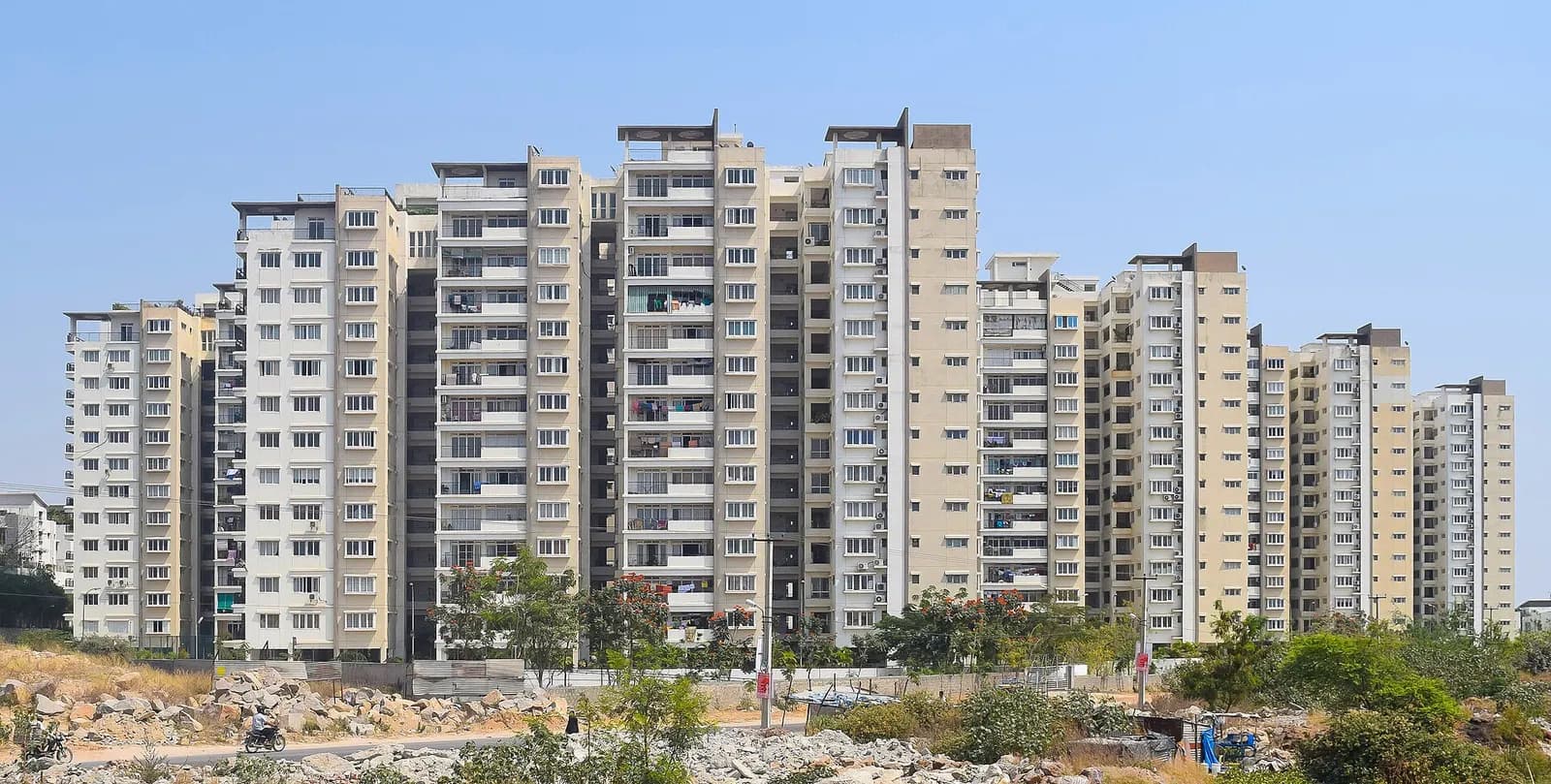
For decades the old rule 2A gave the 50% limit only to Mumbai, Kolkata, Delhi and Chennai. Rule 279 of the Income-tax Rules, 2026 adds Bengaluru, Hyderabad, Pune and Ahmedabad, so the list is now: Delhi, Mumbai, Kolkata, Chennai, Bengaluru, Hyderabad, Pune and Ahmedabad. Everywhere else — including large cities such as Jaipur, Lucknow, Kochi, Indore or Chandigarh — the limit stays at 40% of salary of salary.
The list names cities, not regions. Payroll summaries of the rules read it as excluding satellite cities: an employee renting in Noida, Ghaziabad, Gurugram or Faridabad uses 40% even though they work for a Delhi office, and the same caution applies to places around Mumbai such as Thane or Navi Mumbai. What matters is where the rented house is, not where your employer is registered. If you live somewhere at the edge of one of the eight cities, check the municipal limits the rule refers to with your payroll team or adviser before relying on 50%.
The change matters only when the third limb is the lowest — typically for people whose rent is high relative to basic pay. For a Bengaluru employee with ₹50,000 basic paying ₹30,000 a month in rent, the exempt amount rises by ₹60,000 a year (Example 1 below). For someone whose rent is modest, limb 2 is usually the lowest anyway and the new list changes nothing.
Worked examples in ₹
Example 1 — a Bengaluru employee, before and after the change. Priya's basic salary is ₹50,000 a month with no DA. Her HRA is ₹25,000 a month and she pays rent of ₹30,000 a month. Annual figures: salary ₹6,00,000; HRA ₹3,00,000; rent ₹3,60,000.
- Limb 1, HRA received: ₹3,00,000
- Limb 2, rent minus 10% of salary: ₹3,60,000 − ₹60,000 = ₹3,00,000
- Limb 3, share of salary: 50% = ₹3,00,000 in tax year 2026-27 (it was 40% = ₹2,40,000 in FY 2025-26)
In FY 2025-26, under the four-city list, ₹2,40,000 was exempt and ₹60,000 of her HRA was taxed. From tax year 2026-27 the full ₹3,00,000 is exempt. At a 30% marginal rate plus 4% cess, that's about ₹18,720 less tax a year — provided she stays in the old regime.
Example 1 — Priya in Bengaluru, ₹30,000 rent
₹2,40,000
Exempt in FY 2025-26
40% limit — Bengaluru not on the old list
₹3,00,000
Exempt from tax year 2026-27
50% limit under Rule 279
≈ ₹18,720
Tax saved a year
30% slab + 4% cess, old regime
Example 2 — a Jaipur employee with DA. Rakesh earns basic ₹40,000 and DA ₹4,000 a month (DA counts for his PF and gratuity), HRA ₹15,000 a month, and pays rent of ₹12,000 a month. Salary for HRA = ₹44,000 × 12 = ₹5,28,000. HRA received ₹1,80,000. Rent ₹1,44,000.
- Limb 1: ₹1,80,000
- Limb 2: ₹1,44,000 − ₹52,800 = ₹91,200
- Limb 3: 40% of ₹5,28,000 = ₹2,11,200
Exempt: ₹91,200. Taxable HRA: ₹1,80,000 − ₹91,200 = ₹88,800. Rakesh could raise his exemption only by paying more rent; a higher HRA from his employer wouldn't help, because limb 2 is the binding one.
Example 3 — moving city mid-year. Arjun worked in Indore from April to September and in Pune from October to March. Basic ₹60,000 a month throughout; HRA ₹24,000 a month. Rent was ₹15,000 a month in Indore and ₹28,000 in Pune. Because the city and rent changed, calculate each period separately:
| Period | Salary | HRA received | Rent − 10% salary | City limit | Exempt |
|---|---|---|---|---|---|
| Apr–Sep (Indore, 40%) | ₹3,60,000 | ₹1,44,000 | ₹90,000 − ₹36,000 = ₹54,000 | ₹1,44,000 | ₹54,000 |
| Oct–Mar (Pune, 50%) | ₹3,60,000 | ₹1,44,000 | ₹1,68,000 − ₹36,000 = ₹1,32,000 | ₹1,80,000 | ₹1,32,000 |
| Year | ₹7,20,000 | ₹2,88,000 | — | — | ₹1,86,000 |
Taxable HRA for the year is ₹2,88,000 − ₹1,86,000 = ₹1,02,000. Payroll software that does one annual calculation with a single city will get this wrong; the rule applies to "the period" during which the accommodation was occupied, so split the year whenever salary, HRA, rent or city changes.
Example 4 — rent too low to count. Meera's basic is ₹1,00,000 a month and she pays ₹9,000 a month to share a flat. Rent of ₹1,08,000 a year is less than 10% of salary (₹1,20,000), so limb 2 is zero and none of her HRA is exempt. This surprises many senior employees: the formula assumes you bear the first 10% of salary yourself.
Old regime or new regime: when HRA is worth it
Under the Income-tax Act, 2025, section 202 makes the new regime the default for individuals, and you have to opt out to use the old regime. The Income Tax Department's FAQ on the new Act confirms that an option exercised under the 1961 Act carries over automatically. The new regime has lower slab rates and a larger rebate, but it doesn't allow the HRA exemption, the section 134 rent deduction, or most other deductions such as those for life insurance, PPF or home-loan interest on a self-occupied house.
So HRA alone rarely decides the question. What matters is the total of everything you'd give up. A salaried person whose exemptions and deductions in the old regime add up to a large amount — HRA in a high-rent city, provident fund and other savings, health insurance, home-loan interest — can still pay less tax in the old regime, especially at higher incomes. Someone with modest rent, few investments and income near the rebate limit usually does better in the new regime.
Work out your tax both ways at the start of the year. The easiest method is to list each exemption and deduction you'd claim in the old regime, add them up, and compare the tax on (salary minus those amounts) at old-regime rates with the tax on salary at new-regime rates. Salaried employees without business income can usually make the final choice when filing the return; people with business income face tighter limits on switching back and forth. Tell your employer which regime you're using, because it decides how much TDS comes out of each month's pay.
HRA and rent relief by regime (tax year 2026-27)
| Old regime (opt-out) | New regime (section 202, default) | |
|---|---|---|
HRA exemption (Schedule III S.No. 11) | Allowed — lowest of the three limbs | Not allowed — all HRA taxable |
Rent deduction without HRA (section 134) | Allowed — up to ₹5,000 a month | Not allowed |
50% cities | Delhi, Mumbai, Kolkata, Chennai, Bengaluru, Hyderabad, Pune and Ahmedabad | Not relevant |
Employer TDS | Allows HRA on Form 124 evidence | Taxes the full HRA |
HRA exemption (Schedule III S.No. 11)
- Old regime (opt-out)
Allowed — lowest of the three limbs
- New regime (section 202, default)
Not allowed — all HRA taxable
Rent deduction without HRA (section 134)
- Old regime (opt-out)
Allowed — up to ₹5,000 a month
- New regime (section 202, default)
Not allowed
50% cities
- Old regime (opt-out)
Delhi, Mumbai, Kolkata, Chennai, Bengaluru, Hyderabad, Pune and Ahmedabad
- New regime (section 202, default)
Not relevant
Employer TDS
- Old regime (opt-out)
Allows HRA on Form 124 evidence
- New regime (section 202, default)
Taxes the full HRA
Documents: rent receipts, landlord PAN and Form 124
Your employer can only allow the exemption in monthly TDS if you give evidence. Under the 1961 Act this went in Form 12BB; from April 2026 it is Form 124, which the Income Tax Department describes as the statement an employee gives the employer for deductions, exemptions and allowances under section 392 of the 2025 Act. It isn't filed on the tax portal — you hand it, with proofs, to your employer, who keeps it.
Landlord PAN. If the rent you pay exceeds ₹1 lakh a year, you must give the landlord's PAN. If the landlord genuinely has no PAN, a signed declaration from the landlord with name and address is the long-standing alternative. A wrong or made-up PAN is easy to catch, because the landlord's PAN links your claim to their tax records.
Relationship with the landlord. Form 124 asks you to state whether the landlord is related to you. That's aimed at rent paid to parents or other relatives, which is allowed only when it's real: the relative owns the house, you pay rent regularly, preferably by bank transfer, there's a written agreement, and the relative reports the rent as income in their return. Rent paid to a spouse is usually rejected, because spouses commonly share the home.
Rent receipts and agreement. Keep monthly receipts showing the landlord's name, address of the property, amount, period and signature, plus the rent agreement and bank statements showing the payments. Paying by bank transfer or UPI is much easier to defend than cash.
HRA proofs to give your employer
0/5If you miss your employer's proof deadline, the employer deducts TDS without the exemption. You don't lose it: you can still claim the exemption in your income tax return, keep the same documents, and get the extra tax back as a refund. Expect the claim to be checked against the landlord's PAN.
No HRA in your salary? The section 134 rent deduction
If you pay rent but your salary has no HRA component — or you're self-employed, a consultant or a business owner — you can claim a deduction for rent under section 134 of the Income-tax Act, 2025, which replaced section 80GG. The deduction is the lowest of:
- ₹5,000 a month (₹60,000 for a full year)
- 25% of total income of total income for the tax year
- rent paid minus 10% of total income
Both percentages are worked out on total income before this deduction. You can't claim it if you, your spouse or minor child (or your HUF) own a house in the place where you live, work or run your business, or if you receive HRA that falls under Schedule III S.No. 11. Under the 1961 Act the claim needed a declaration in Form 10BA filed on the portal; expect a similar declaration under the 2026 Rules.
Example — a consultant in Ahmedabad. Neha's total income before this deduction is ₹9,00,000 and she pays rent of ₹20,000 a month (₹2,40,000 a year). The limits are ₹60,000; 25% × ₹9,00,000 = ₹2,25,000; and ₹2,40,000 − ₹90,000 = ₹1,50,000. Her deduction is ₹60,000. Compared with HRA, the fixed monthly cap makes section 134 far less generous, which is one reason employers include HRA in salary structures.
For employers: running HRA in payroll
How a small employer should handle HRA each year
- 1
Collect regime choices in April
Ask every employee whether they're opting out of the new regime. If they don't say, deduct TDS under the default new regime, where HRA is fully taxable.
- 2
Take provisional declarations
Get expected rent, city and landlord details in Form 124 at the start of the year so monthly TDS under section 392 reflects the likely exemption.
- 3
Calculate monthly, period by period
Apply the three limbs to each month's basic + DA, HRA and rent, using 50% for the eight cities and 40% elsewhere. Recalculate when an employee moves city, changes rent or gets a raise.
- 4
Verify proofs before the year-end
Collect rent receipts or bank proofs and the landlord's PAN where rent exceeds ₹1 lakh a year. Disallow unsupported amounts and adjust TDS in the remaining months.
- 5
Report correctly
Show exempt HRA in the salary certificate (Form 130, formerly Form 16) and in the quarterly TDS statement (Form 138, formerly 24Q).
Small employers often get three things wrong. They pay a fixed "HRA" without checking whether employees pay rent at all, which is fine for salary but means no exemption should be allowed in TDS. They apply 50% to anyone in a large city, which over-exempts employees in places such as Noida, Thane or Jaipur. And they calculate HRA once a year, missing mid-year salary revisions and transfers. Each of these leads to short deduction of TDS, which the department can raise against the employer with interest. Our guide to TDS covers deposit dates and default consequences, and the salary slip generator lays out basic, DA and HRA lines clearly.
When designing salary structures, remember that HRA is calculated on basic + DA, not CTC. A structure with very low basic and a large "special allowance" reduces both the HRA exemption and provident fund and gratuity costs — and since the Code on Wages, wage definitions for those benefits are tighter. Get the structure reviewed rather than chasing one component.
Common mistakes in HRA calculation
Using gross salary instead of basic + DA. This inflates limbs 2 and 3 and overstates the exemption.
Using last year's city list. Returns for FY 2025-26 filed in 2026 still use the four-city list; payroll for April 2026 onwards uses eight cities.
Claiming in the new regime. If you haven't opted out, the exemption simply isn't available — the claim will be reversed when the return is processed.
One annual calculation for a changing year. Split the year by period whenever salary, rent or city changes, as in Example 3.
Rent to a spouse or undocumented cash rent to parents. Both are frequently challenged. Use bank transfers, an agreement, and make sure the landlord declares the income.
Claiming both HRA and section 134. Section 134 is barred for anyone with HRA income under Schedule III S.No. 11.
Official links
- Income-tax Act, 2025 — FAQs on the new ActSection 202 default regime and opt-out
- Salaried individuals — return and forms80GG limits and Form 12BB for FY 2025-26
- Form 124 FAQsEmployee declaration replacing Form 12BB
- Income Tax Department — Acts and RulesIncome-tax Rules, 2026 (Notification 22/2026) incl. Rule 279
- e-Filing portalFile your return and claim HRA missed in payroll
What to do next
Get your basic + DA, HRA and monthly rent together, run the three limbs for each period of the year, and compare the result under both regimes before you give your employer your Form 124. If you employ people, put the eight-city list into your payroll sheet now and check employees who moved city or changed rent this year. For the tax-year switch behind these changes, see our financial year vs assessment year guide, and for the other statutory deduction on salaries, our professional tax guide.
This is general information, not legal or tax advice — confirm on the official source or with a professional.
Frequently asked questions
The exempt amount is the lowest of three figures for the period you lived in rented housing: the HRA actually received; rent paid minus 10% of salary; and 50% of salary if you live in one of the eight specified cities, or 40% of salary elsewhere. Salary here means basic pay plus dearness allowance that counts for retirement benefits, plus any turnover-based commission. The rest of your HRA is taxable.
From tax year 2026-27, Rule 279 of the Income-tax Rules, 2026 lists eight cities for the 50% limit: Delhi, Mumbai, Kolkata, Chennai, Bengaluru, Hyderabad, Pune and Ahmedabad. Until 31 March 2026 only Delhi, Mumbai, Kolkata and Chennai qualified. All other places, including satellite cities such as Noida and Gurugram, use 40%.
No. The new regime under section 202 of the Income-tax Act, 2025 — the default — doesn't allow the HRA exemption, so all HRA is taxable. You need to opt for the old regime to claim it. Whether that saves tax depends on your total exemptions and deductions, so compare both regimes before you tell your employer.
Yes, if the rent you pay exceeds ₹1 lakh a year. You give the landlord's PAN to your employer in Form 124 (the replacement for Form 12BB). If the landlord has no PAN, a signed declaration from the landlord is generally accepted. Without it, the employer may refuse the exemption in payroll.
Yes, if the arrangement is genuine: your parent owns the house, you actually pay rent (preferably by bank transfer), there's a rent agreement, and your parent shows the rent as income in their own return. Form 124 now asks you to disclose your relationship with the landlord. Rent paid to a spouse is usually not accepted.
You can claim a deduction under section 134 of the Income-tax Act, 2025 (earlier section 80GG) in the old regime. It's the lowest of ₹5,000 a month, 25% of total income and rent minus 10% of total income — and you can't claim it if you, your spouse or minor child own a house where you live or work.
Sources & verification
Figures on this page were checked against the sources below when it was last reviewed on 9 October 2026. Each rate and limit is stored once with its own official source and review date, and official update channels are monitored daily so changes are picked up. How we verify
- 1.Objective and scope of the new Act (Income-tax Act, 2025) — FAQs — Income Tax Department (e-filing portal) · accessed 9 October 2026
- 2.Return / forms applicable — salaried individuals (AY 2026-27) — Income Tax Department (e-filing portal) · accessed 9 October 2026
- 3.India: Changes in Income Tax Act & Rules effective April 1, 2026 — Mercans (payroll statutory alert) · accessed 9 October 2026
- 4.HRA Calculator — Schedule III (S.No. 11), Income-tax Act 2025 — TaxRoutine · accessed 9 October 2026
- 5.House Rent Allowance — exemption, calculation and new Income Tax Rules 2026 — ClearTax · accessed 9 October 2026
- 6.Section 134, Income-tax Act 2025 — deduction in respect of rent paid — TaxHeal (bare text) · accessed 9 October 2026
- 7.Form 124 — FAQs (Income-tax Rules, 2026) — Income Tax Department · accessed 9 October 2026
MSMETOOLS is an independent platform and is not affiliated with any government agency, ministry or department.
Tools for this
Salary Slip Generator
Create professional salary slips in seconds.
TDS Calculator (India)
Calculate TDS for payments and generate reports.
Related guides
 Financial Year vs Assessment Year vs Tax Year (2026 Guide)Read guide
 Professional Tax in 2026: State-wise Slabs, Rules & Due DatesRead guide
 TDS on Salary 2026: Section 392 Rules & Monthly CalculationRead guide
 Company Tax Rate in India 2026: 22%, 25%, 30% & MAT 14%Read guide
Official links open the government site in a new tab.