 Business registration & legal
Business Registration in Canada (2026): Federal, Provincial and CRA Steps
Business registration in Canada for 2026: federal vs provincial incorporation, name fees in 8 provinces, CRA Business Number, GST/HST and payroll steps.
 Edited by Sumeet YadavFounder & editor, MSMETOOLS · fact-checked against official sources
Contents (10)
- 1. Sole proprietorship, partnership or corporation?
- 2. Federal vs provincial incorporation
- 3. Business registration fees by province (2026)
- 4. How to register a business in Canada, step by step
- 5. Your CRA Business Number and program accounts
- 6. GST/HST: the C$30,000 small-supplier rule
- 7. Payroll, workers' compensation and local licences
- 8. Worked example: what registration costs in Saskatchewan
- 9. Common mistakes when registering a business in Canada
- 10. What to do next
Starting a business anywhere in Canada means dealing with up to three levels of government. Your province registers your business name or corporation. Ottawa can incorporate you federally, and the Canada Revenue Agency (CRA) issues the Business Number you need for tax accounts. Your city may add a licence on top. This guide explains which registrations you actually need in 2026, compares federal and provincial incorporation, sets out official fees for eight provinces, and walks through the CRA, GST/HST, payroll and workers' compensation steps that follow.
Quick answer
Business registration in Canada happens mainly at the provincial level: sole proprietors and partnerships register a business name, and corporations incorporate either with their province or federally with Corporations Canada (C$200 online). Then get a CRA Business Number online and open GST/HST or payroll accounts when you need them.
Trading only under your own legal name as a sole proprietor? Most provinces don't require a name registration
Federal corporations still have to register in each province where they carry on business
Since 3 November 2025, new CRA Business Numbers are registered online only, and issued instantly
Register for GST/HST once sales pass C$30,000 in a quarter or four consecutive quarters
Check BizPaL for municipal licences, and your provincial WCB once you hire
Sole proprietorship, partnership or corporation?
Your structure decides who you register with and what it costs, so choose it first.
A sole proprietorship is you, trading on your own. A general partnership is two or more people sharing the business. Neither is a separate legal person: the owners are personally liable for debts, and profits go on their personal T1 returns. You register only the business name with your province, and most provinces skip even that if you trade under your exact legal name — "Jane Doe" doesn't register, "Jane Doe Consulting" does.
A corporation is a separate legal entity. It owns its assets, signs contracts, files a T2 corporate return and limits shareholders' liability to what they invested. It costs more to set up and run: annual returns, minute books and separate bookkeeping.
Business structures in Canada compared (2026)
| Sole proprietorship | General partnership | Corporation | |
|---|---|---|---|
Who registers it | Province (name only, if not your own name) | Province (partnership name) | Province or Corporations Canada |
Government fee | From C$41 (see table) | From C$41 (see table) | From C$200 (see table) |
Owner liability | Unlimited, personal | Shared, personal | Limited to investment |
Income tax | Personal T1 | Each partner's T1 | Corporate T2 |
CRA Business Number | Only when you open a program account | Only when you open a program account | Automatic in most provinces |
Ongoing filings | Name renewal (term varies) | Name renewal | Annual return every year |
Who registers it
- Sole proprietorship
Province (name only, if not your own name)
- General partnership
Province (partnership name)
- Corporation
Province or Corporations Canada
Government fee
- Sole proprietorship
From C$41 (see table)
- General partnership
From C$41 (see table)
- Corporation
From C$200 (see table)
Owner liability
- Sole proprietorship
Unlimited, personal
- General partnership
Shared, personal
- Corporation
Limited to investment
Income tax
- Sole proprietorship
Personal T1
- General partnership
Each partner's T1
- Corporation
Corporate T2
CRA Business Number
- Sole proprietorship
Only when you open a program account
- General partnership
Only when you open a program account
- Corporation
Automatic in most provinces
Ongoing filings
- Sole proprietorship
Name renewal (term varies)
- General partnership
Name renewal
- Corporation
Annual return every year
Most founders start as sole proprietors and incorporate once profits or liability risk justify it. An hour with an accountant costs less than unwinding the wrong structure.
Federal vs provincial incorporation
You can incorporate under a provincial Act (for example, Ontario's Business Corporations Act) or the federal Canada Business Corporations Act (CBCA). Both create a full corporation; the difference is name protection and paperwork.
Federal incorporation is done online through Corporations Canada's Online Filing Centre. The fee is C$200 and online applications are processed in about one business day. Since 28 July 2020 the name search is built into the online form, so you no longer need to buy a NUANS report before incorporating federally with a word name. An approved federal name can be used across Canada.
The catch: a federal corporation must still register extra-provincially in every province or territory where it carries on business. Corporations Canada lets you register in Ontario, Nova Scotia and Newfoundland and Labrador as part of the incorporation filing, and has data-sharing arrangements with Alberta, BC, Manitoba, Saskatchewan and Quebec — but each province still applies its own rules and fees. Ontario charges nothing for a federal corporation; Nova Scotia charges C$274.10; Saskatchewan's extra-provincial registration is C$255.

Federal corporations also file an annual return (C$12 online) within 60 days of their anniversary date. Since 22 January 2024 they must also file information on individuals with significant control with Corporations Canada at incorporation and with each annual return — skipping it can lead to dissolution.
Provincial incorporation is usually cheaper if you'll only operate in one province, and the province's own registry handles everything in one place. Most provinces also pass your details to the CRA so your Business Number arrives automatically.
Federal or provincial incorporation?
| Federal (CBCA) | Provincial | |
|---|---|---|
Filing fee | C$200 online | Varies by province (see table below) |
Name protection | Across Canada | That province only |
Name search | Built into the online form | Some provinces need a NUANS report (AB, NB, ON) |
Other provinces | Extra-provincial registration still required | Extra-provincial registration still required |
Annual return | C$12 federally + any provincial filings | Provincial annual return only |
Best for | Multi-province or national brands | Single-province businesses |
Filing fee
- Federal (CBCA)
C$200 online
- Provincial
Varies by province (see table below)
Name protection
- Federal (CBCA)
Across Canada
- Provincial
That province only
Name search
- Federal (CBCA)
Built into the online form
- Provincial
Some provinces need a NUANS report (AB, NB, ON)
Other provinces
- Federal (CBCA)
Extra-provincial registration still required
- Provincial
Extra-provincial registration still required
Annual return
- Federal (CBCA)
C$12 federally + any provincial filings
- Provincial
Provincial annual return only
Best for
- Federal (CBCA)
Multi-province or national brands
- Provincial
Single-province businesses
Business registration fees by province (2026)
Every province runs its own registry. These are the government fees published on each official site as of October 2026. Lawyers, registry agents and online incorporation services charge their own fees on top. Where we couldn't open the official fee page today, we've left the figure out — check the registry directly.
| Province | Registry | Business name (sole prop / partnership) | Incorporation |
|---|---|---|---|
| Ontario | Ontario Business Registry | C$60 | C$300 + Ontario NUANS report for a word name |
| Quebec | Registraire des entreprises (REQ) | C$41 (sole proprietor using another name) | C$397 |
| British Columbia | BC Registries (BC Business Registry) | C$30 name approval + registration fee | C$350 + C$30 name request |
| Alberta | Corporate Registry, via registry agents | Government fee + agent service fee | Government fee + agent fee + Alberta NUANS report |
| Manitoba | Companies Office | C$60 + C$45 name reservation | C$350 + C$45 name reservation |
| Saskatchewan | Saskatchewan Registry Services (ISC) | C$65 + C$50 reservation | C$255 + C$50 reservation |
| Nova Scotia | Registry of Joint Stock Companies | C$68.55 (renews yearly) | C$200; then C$118.35 a year |
| New Brunswick | Service New Brunswick Corporate Registry | See SNB fee page | See SNB fee page + NUANS report |
A few provincial quirks worth knowing:
- Ontario — everything runs through the Ontario Business Registry; online filings are processed immediately. See our Ontario registration guide for the step-by-step.
- Quebec — the REQ assigns a Quebec enterprise number (NEQ). Quebec is one of the provinces where incorporating does not give you a CRA Business Number automatically, so register with the CRA separately. Revenu Québec, not the CRA, administers GST and QST in Quebec.
- British Columbia — reserve your name through BC Registries' Name Request before incorporating or registering a proprietorship.
- Alberta — you file through a private registry agent, which charges a government fee plus its own unregulated service fee, so prices vary between agents. Word-name corporations need an Alberta NUANS report less than 91 days old.

How to register a business in Canada, step by step
The order matters: a CRA program account needs your legal name and registration details, and banks ask for both.
Registering a business in Canada (2026)
- 1
Choose your structure and province
Decide between sole proprietorship, partnership or corporation, and where the business will actually operate — that's the province you register in.
- 2
Search and reserve the name
Search your provincial registry. Some provinces need a paid name reservation (Manitoba C$45, Saskatchewan C$50, BC C$30) or a NUANS report (Ontario, Alberta, New Brunswick). Federal online incorporation includes the name check.
Tip: A registered name isn't a trademark. For real brand protection, search and file with the Canadian Intellectual Property Office.
- 3
Register or incorporate
Corporations Canada — federal incorporationFile with your province, or with Corporations Canada for C$200. Federal corporations then complete extra-provincial registration in each province where they operate.
- 4
Get your CRA Business Number
CRA — Business number and program accountsCorporations in most provinces get one automatically. Everyone else registers through Business Registration Online when they need a program account.
- 5
Open tax and payroll accounts
Add GST/HST (RT), payroll (RP) and import-export (RM) accounts as needed, plus provincial sales tax in BC, Manitoba, Saskatchewan or Quebec.
- 6
Licences and workers' compensation
Search BizPaLSearch BizPaL for municipal and provincial permits, and register with your province's workers' compensation board before or when you hire.
Your CRA Business Number and program accounts
The Business Number (BN) is a nine-digit federal number the CRA uses to identify your business. Program accounts hang off it with two-letter codes: RT for GST/HST, RP for payroll, RC for corporate income tax and RM for import-export. The CRA doesn't list a fee for any of them.
Corporations incorporated in Alberta, British Columbia, Manitoba, New Brunswick, Nova Scotia, Ontario, Prince Edward Island and Saskatchewan get a BN and corporate income tax account automatically. Corporations in Quebec, Newfoundland and Labrador and the territories register with the CRA themselves. Sole proprietors and partnerships only need a BN when they open their first program account.
What changed in 2025: from 3 November 2025, new BNs and program accounts must be registered online through Business Registration Online (BRO), reached through your CRA account. The BN is issued instantly. Phone or paper registration is kept for a few cases: reactivating a closed account, businesses with only non-resident owners, and businesses owned by another business.
GST/HST: the C$30,000 small-supplier rule
You don't have to register for GST/HST while you're a small supplier: your worldwide taxable sales (with associated businesses) stay at or below C$30,000 both in a single calendar quarter and over the last four consecutive quarters. Cross that line and you must register within 29 days. Taxi and commercial ride-sharing drivers register from day one, whatever their sales.
Voluntary registration below the threshold lets you claim input tax credits on business purchases — useful if you sell mostly to other GST-registered businesses. Here's what you charge once registered:
| Province | GST/HST | Provincial sales tax |
|---|---|---|
| Ontario | 13% HST | Included in HST |
| Quebec | 5% GST | 9.975% QST (Revenu Québec) |
| British Columbia | 5% GST | 7% PST (register with BC) |
| Alberta | 5% GST | None |
| Manitoba | 5% GST | 7% RST (register with Manitoba) |
| Saskatchewan | 5% GST | 6% PST (register with Saskatchewan) |
| Nova Scotia | 14% HST (from 1 April 2025) | Included in HST |
| New Brunswick | 15% HST | Included in HST |
Provincial sales tax is a separate registration with the province, with its own thresholds and rules. Try the Canada GST/HST calculator to see how each rate changes your prices.
Payroll, workers' compensation and local licences
Payroll. Before you pay your first employee, open a payroll (RP) program account. The CRA requires it before your first remittance due date — normally the 15th of the month after the month you first withheld CPP, EI and income tax.
Workers' compensation. Each province runs its own board, and most businesses with employees must register:
- Ontario — Workplace Safety and Insurance Board (WSIB), within 10 calendar days of hiring your first worker
- Quebec — CNESST
- British Columbia — WorkSafeBC
- Alberta — Workers' Compensation Board of Alberta
- Manitoba — Workers Compensation Board of Manitoba
- Saskatchewan — Saskatchewan Workers' Compensation Board
- Nova Scotia — Workers' Compensation Board of Nova Scotia
- New Brunswick — WorkSafeNB
Covered industries and owner coverage vary by province.
Licences and permits. A provincial registration is not a business licence. Cities license restaurants, contractors, home-based businesses, short-term rentals and more, and provinces regulate trades and food safety. BizPaL is a free federal-provincial-municipal search tool that lists the permits for your business type and location.
Worked example: what registration costs in Saskatchewan
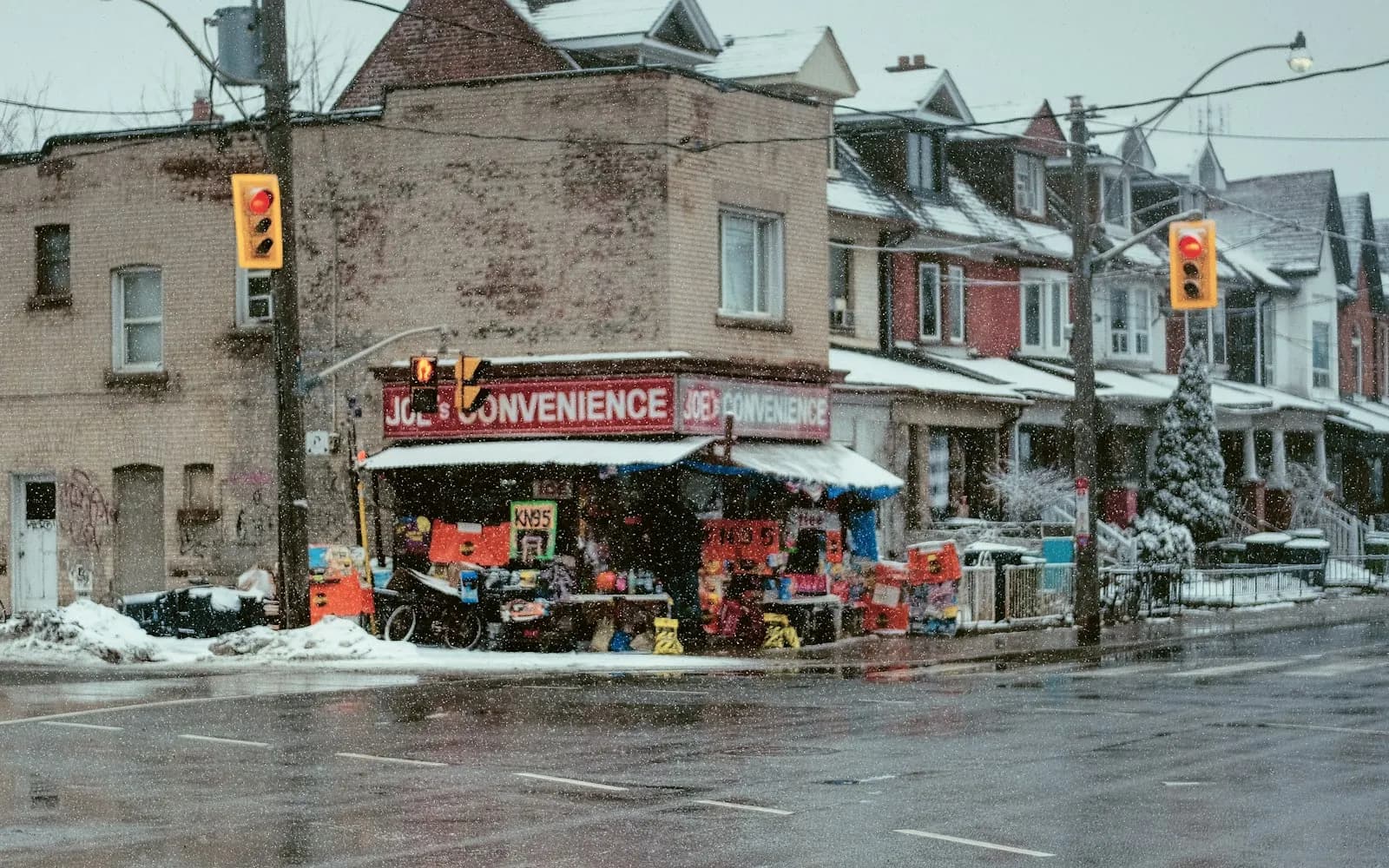
Amira is opening a bakery in Saskatoon. Here's the government cost under three set-ups, using the published fees:
- Sole proprietorship, "Amira's Bakehouse": name reservation C$50 + business name registration C$65 = C$115. BN and GST/HST registration: no listed fee.
- Saskatchewan corporation: name reservation C$50 + incorporation C$255 = C$305. BN issued automatically.
- Federal corporation operating in Saskatchewan: federal incorporation C$200 + Saskatchewan extra-provincial registration C$255 = C$455, plus a C$12 federal annual return each year on top of Saskatchewan's.
If Amira only ever sells in Saskatchewan, the provincial corporation saves C$150 up front and a second set of annual filings. Federal makes sense if she plans stores in Alberta and Manitoba under one protected name. Whichever she picks, once her quarterly sales pass C$30,000 she registers for GST (5%) with the CRA and for PST (6%) with Saskatchewan if she sells taxable goods. Plug your own numbers into the startup cost calculator.
Common mistakes when registering a business in Canada
- Incorporating federally and forgetting the province. A federal certificate doesn't let you operate in Alberta or Nova Scotia by itself. Register extra-provincially before you start trading there.
- Thinking a registered name is protected. Provincial registration records who owns a name; it doesn't stop someone else using it. Trademarks give real protection.
- Paying a "registration service" far above the government fee. Some sites charge several times the government fee for a filing you can do online yourself. Compare their price with the fees above.
- Waiting too long on GST/HST. Track sales every quarter. If you cross C$30,000 and register late, you may owe the tax you didn't charge.
- Letting renewals lapse. Name registrations expire (every year in Nova Scotia, every three in Manitoba, every 5 years in Ontario), and corporations that skip annual returns can be dissolved.
Official links
- Corporations Canada — federal incorporationOnline Filing Centre, fees and name rules
- Corporations Canada — register a federal corporation in a province
- CRA — Business number and program accounts
- CRA — GST/HST registrant guide (RC4022)
- Ontario — cost and time to register
- Québec — Registraire des entreprises fees
- BC Registries — Corporate Online fee schedule
- Alberta — Incorporate an Alberta corporation
- Manitoba Companies Office — business names
- Saskatchewan Registry Services — fees
- Nova Scotia — incorporate a limited company
- Service New Brunswick — Corporate Registry
- BizPaL — permits and licences
What to do next
Pick your structure, register in the province where you'll operate, and get your BN the same week so your bank account, invoices and GST/HST setup line up. If you're still choosing a name to search, try our business name generator; once you're registered, the free invoice generator adds your BN and the right tax line. Starting in Ontario? Go straight to the Ontario registration guide.
This is general information, not legal or tax advice — confirm on the official source or with a professional.
Frequently asked questions
Pick a structure, then register with the right government. Sole proprietors and partnerships register a business name with their province, unless they trade only under their own legal name. Corporations incorporate either provincially or federally with Corporations Canada. After that, get a CRA Business Number online and open GST/HST or payroll accounts as needed, then check municipal licences on BizPaL.
It depends on the province and the structure. A business name costs C$60 in Ontario, C$60 in Manitoba and C$65 in Saskatchewan. Incorporating costs C$200 federally online, C$300 in Ontario and C$350 in BC plus a C$30 name request. The CRA Business Number and GST/HST registration have no listed fee.
Incorporate provincially if you'll only operate in one province — it's usually cheaper and simpler. Federal incorporation gives you a name that's protected across Canada, which helps if you'll trade in several provinces or online nationwide. But a federal corporation must still register extra-provincially in every province where it carries on business, so the total cost is often higher.
Only when you need a CRA program account. That usually means registering for GST/HST once sales pass C$30,000, or opening a payroll account when you hire. Since 3 November 2025, new Business Numbers are registered online through Business Registration Online, and the number is issued instantly. You report sole-proprietor income on your personal T1 return.
When your worldwide taxable sales go over C$30,000 in a single calendar quarter or over the last four consecutive quarters, you stop being a small supplier. You must then register within 29 days and charge GST (5%) or HST at your province's rate. Taxi and commercial ride-sharing drivers must register from their first fare.
Yes, but you register where the business operates, not where you live. If your corporation carries on business in a second province — an office, staff or a warehouse there — it must register in that province as an extra-provincial corporation. Each province sets its own fee: Ontario charges nothing for a federal corporation, while Nova Scotia charges C$274.10.
Sources & verification
Figures on this page were checked against the sources below when it was last reviewed on 7 October 2026. Each rate and limit is stored once with its own official source and review date, and official update channels are monitored daily so changes are picked up. How we verify
- 1.Services, fees and processing times — Corporations Canada (ISED) · accessed 7 October 2026
- 2.Corporations Canada launches streamlined naming service for businesses and not-for-profits — Corporations Canada (ISED) · accessed 7 October 2026
- 3.Register a federal corporation in a province or territory — Corporations Canada (ISED) · accessed 7 October 2026
- 4.Provincial registration of federal business corporations — Corporations Canada (ISED) · accessed 7 October 2026
- 5.Individuals with significant control - File your information — Corporations Canada (ISED) · accessed 7 October 2026
- 6.Nuans provincial/territorial report — ISED Canada · accessed 7 October 2026
- 7.Do you need a business number or program account — Canada Revenue Agency · accessed 7 October 2026
- 8.Businesses: Go online to register for a business number or CRA program account — Canada Revenue Agency · accessed 7 October 2026
- 9.RC4022 General Information for GST/HST Registrants — Canada Revenue Agency · accessed 7 October 2026
- 10.GST/HST calculator (and rates) — Canada Revenue Agency · accessed 7 October 2026
- 11.Determine if you need to register (payroll) — Canada Revenue Agency · accessed 7 October 2026
- 12.Cost and time required to register, change or search for a business name, corporation or not-for-profit — Government of Ontario · accessed 7 October 2026
- 13.Tarifs du Registraire des entreprises pour une société par actions — Gouvernement du Québec · accessed 7 October 2026
- 14.Tarifs du Registraire des entreprises — personne physique exploitant une entreprise individuelle — Gouvernement du Québec · accessed 7 October 2026
- 15.Corporate Online fee schedule — BC Registries and Online Services · accessed 7 October 2026
- 16.Incorporate an Alberta corporation — Government of Alberta · accessed 7 October 2026
- 17.Business name registration — forms and fees — Manitoba Companies Office · accessed 7 October 2026
- 18.Forms — Manitoba corporations — Manitoba Companies Office · accessed 7 October 2026
- 19.Corporate Registry Fees Table (effective 15 April 2026) — Saskatchewan Registry Services (ISC) · accessed 7 October 2026
- 20.Register a sole proprietorship — Government of Nova Scotia · accessed 7 October 2026
- 21.Incorporate a limited company — Government of Nova Scotia · accessed 7 October 2026
- 22.Workers' Compensation Boards in Canada — Canadian Centre for Occupational Health and Safety · accessed 7 October 2026
- 23.BizPaL — permits and licences — BizPaL (federal, provincial/territorial and municipal governments) · accessed 7 October 2026
MSMETOOLS is an independent platform and is not affiliated with any government agency, ministry or department.
Tools for this
GST/HST Calculator (Canada)
Calculate GST, HST and PST by province.
Business Name Generator
Find unique business names.
Startup Cost Calculator
Estimate how much capital you need to launch.
Invoice Generator
Create professional invoices with tax, logo and custom details.
Related guides
 Register a Business in Ontario 2026: Costs & ChecklistRead guide
 Register a Business in BC (2026): Name Request, Fees & StepsRead guide
 Register a Business in Nova Scotia (2026): RJSC Fees & StepsRead guide
 Register a Business in Quebec (2026): NEQ, Fees & French NamesRead guide
Official links open the government site in a new tab.