 HR, payroll & employment
New Brunswick Statutory Holidays (2026): The 8 Paid Public Holidays, the 90-Day Rule and Holiday Pay
New Brunswick statutory holidays for 2026 and 2027: the 8 paid public holidays, the 90-day rule, regular day's pay, the 4% option, working a holiday and C$ examples.
 Edited by Sumeet YadavFounder & editor, MSMETOOLS · fact-checked against official sources
Contents (10)
- 1. New Brunswick paid public holidays: dates for 2026 and 2027
- 2. Who qualifies: the 90-day rule and the other tests
- 3. How to calculate holiday pay in New Brunswick
- 4. The 4% alternative
- 5. Holidays on a day off or during vacation
- 6. Substituting another day
- 7. Overtime in a holiday week
- 8. When an employee leaves: holiday pay on the ROE
- 9. Common mistakes New Brunswick employers make
- 10. What to do next
New Brunswick has eight paid public holidays — including Remembrance Day and New Brunswick Day, but not Victoria Day or Thanksgiving, which surprises many people who move there from other provinces. Its pay rules have a feature found almost nowhere else: every employee who works a public holiday gets time and a half, even if they haven't been employed long enough to qualify for holiday pay. This guide is for New Brunswick employers, payroll staff and employees in 2026. It lists the holidays with dates for 2026 and 2027, explains the 90-day rule and the other eligibility tests, shows how to calculate a regular or average day's pay, explains the 4% alternative, and covers substitution, exempt occupations and common mistakes, with examples in Canadian dollars.
Quick answer
New Brunswick has 8 paid public holidays. To qualify for holiday pay, an employee needs 90 calendar days in the 12 months before the holiday and must work their scheduled day before and after (unless there's a good reason). A qualifying employee who has the day off gets a regular day's pay; one who works gets that plus 1.5 times their wage for each hour. Everyone who works a holiday gets the 1.5×, qualified or not.
Not paid public holidays: Victoria Day, Thanksgiving, Easter Monday, Boxing Day, 30 September
Variable wages: average day's pay from the last 30 days, overtime excluded
Alternative: an extra 4% of gross wages from day one — still 1.5× if they work
Holiday on a day off or during vacation: another paid day off, or a day's pay if the employee agrees
Some professions and commission sales roles are exempt
New Brunswick paid public holidays: dates for 2026 and 2027
| Paid public holiday | 2026 | 2027 |
|---|---|---|
| New Year's Day | Thursday, 1 January | Friday, 1 January |
| Family Day (third Monday in February) | Monday, 16 February | Monday, 15 February |
| Good Friday | Friday, 3 April | Friday, 26 March |
| Canada Day | Wednesday, 1 July | Thursday, 1 July |
| New Brunswick Day (first Monday in August) | Monday, 3 August | Monday, 2 August |
| Labour Day | Monday, 7 September | Monday, 6 September |
| Remembrance Day | Wednesday, 11 November | Thursday, 11 November |
| Christmas Day | Friday, 25 December | Saturday, 25 December |
The eight holidays are listed by the Government of New Brunswick's Employment Standards Branch. The dates follow from fixed calendar dates and the Monday rules for Family Day, New Brunswick Day and Labour Day.
Days that are not paid public holidays
Victoria Day, Thanksgiving, Easter Monday and Boxing Day are not paid public holidays under the Employment Standards Act. Neither is the National Day for Truth and Reconciliation on 30 September. Provincially regulated employers can open on these days at regular rates and don't have to pay staff who have them off. Retail opening on some of these days is a separate question governed by New Brunswick's days-of-rest rules and local bylaws, not by holiday pay law — check with your municipality if you run a store.
An employer can still give any of these days off with pay through a policy, an employment contract or a collective agreement. Many offices close on Boxing Day and Thanksgiving. If you do, write it down and apply it consistently, because a promised benefit becomes a term of employment.
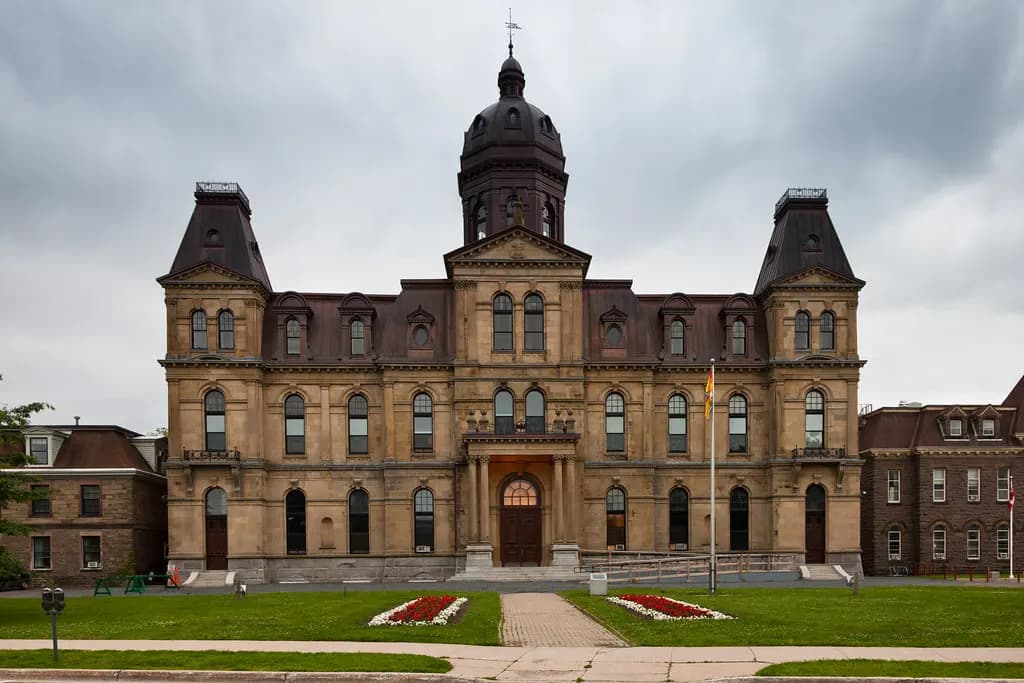
New Brunswick Day and Remembrance Day
New Brunswick Day, the first Monday in August, is a full paid public holiday — the same long weekend that is only a civic holiday in Ontario or Nova Scotia. Remembrance Day is also a paid public holiday in New Brunswick, unlike in Ontario, Quebec, Manitoba and Nova Scotia, where it is not. So in New Brunswick, 11 November follows the same eligibility and pay rules as Canada Day.
Federally regulated employers in New Brunswick
Banks, airlines, ports, railways, interprovincial trucking, telecoms and other federally regulated employers follow the Canada Labour Code. Its 10 general holidays are New Year's Day, Good Friday, Victoria Day, Canada Day, Labour Day, the National Day for Truth and Reconciliation, Thanksgiving, Remembrance Day, Christmas Day and Boxing Day. Family Day and New Brunswick Day are not federal holidays. Federal holiday pay is one-twentieth of the wages earned in the four weeks before the week of the holiday, excluding overtime, and there's no 90-day test.
Who qualifies: the 90-day rule and the other tests
To qualify for a paid public holiday in New Brunswick, an employee must meet all of these conditions:
- 90 calendar days. They have been employed by the employer for at least 90 calendar days in the 12 months before the holiday. The government stresses these are calendar days, not only workdays.
- Before and after. They worked their regular scheduled day before and after the holiday — not necessarily the day immediately before or after — unless there is a good reason. The government says most reasons related to illness are acceptable.
- Showing up. If they agreed to work on the holiday, they report for and work that shift, unless there's a good reason.
- Not self-scheduling. They are not employed under an arrangement where they decide for themselves when to work or not to work.
- Not exempt. They aren't in one of the occupations excluded by regulation (listed below).
The 90-day rule is the one that catches new hires and seasonal staff. It counts calendar days on the payroll, so a part-timer who works one shift a week clears it at the same time as a full-timer hired the same day. That's quite different from Alberta's rule, which counts 30 days actually worked.
Example — the spring hire. A landscaping company in Moncton hires a labourer on Friday, 1 May 2026. By Canada Day on 1 July he has been employed for 61 days, so he doesn't qualify for Canada Day holiday pay. By New Brunswick Day on 3 August he has been employed for 94 days, so he qualifies — as long as he works his scheduled days before and after the long weekend or has a good reason not to.
Example — the sick day. A retail clerk is scheduled on the Thursday before Good Friday but calls in sick with the flu. Illness is generally accepted as a good reason, so she keeps her holiday pay. If she had simply not shown up without explanation, she would lose it.
Before paying a New Brunswick public holiday, confirm
0/6Occupations that don't qualify
The government lists employees in these occupations as not entitled to pay for a public holiday:
- architecture, dentistry, law, medicine, chiropody, optometry, pharmacy, professional engineering, public or chartered accounting, psychology, surveying and veterinary science;
- real estate sales, and car and mobile home sales;
- commission sales professionals, other than route sales, whose sales are normally made away from the employer's premises;
- athletes, when taking part in activities related to their sport.
The exemption is about the occupation, not the workplace. A receptionist at a law firm qualifies normally; the lawyers don't.
How to calculate holiday pay in New Brunswick
The time-and-a-half rule applies to everyone
Start with the rule that makes New Brunswick unusual. All employees are entitled to 1.5 times their regular wage rate for each hour worked on a paid public holiday, whether or not they qualify for holiday pay. An employee who doesn't meet the 90-day rule gets only the time and a half for hours worked; one who does qualify also gets a regular day's pay.
A regular day's pay
A qualifying employee who has the holiday off receives their regular day's pay. For someone on a steady 8-hour day at C$20 an hour, that's 8 × C$20 = C$160.
Average day's pay for variable wages
If wages vary from day to day, holiday pay is an average day's pay, based on all hours worked (excluding overtime) in the 30 days immediately before the holiday. The government also asks employers to keep documentation of any agreement with the employee about this.
Example. A part-time server at a Fredericton restaurant earns C$15.90 an hour. In the 30 days before Labour Day she worked 16 shifts totalling 110 regular hours. Her average day is 110 ÷ 16 = 6.875 hours, so her holiday pay is 6.875 × C$15.90 = C$109.31. Using hours worked rather than a flat 8 hours keeps the pay proportionate for short-shift staff.
Working out a New Brunswick holiday
Step 1
Works the holiday? → 1.5× for every hour (everyone)
Step 2
90 calendar days in last 12 months?
Step 3
Worked scheduled day before and after (or good reason)?
Step 4
Qualifies → + regular day's pay
Average of last 30 days if wages vary
Step 5
Or employer pays 4% of all wages
From day one
Working on a public holiday
A qualifying employee who works a paid public holiday gets their regular day's pay plus 1.5 times their regular wage for every hour worked.
Example — full-timer. A warehouse supervisor on C$20 an hour with steady 8-hour shifts works Canada Day. He gets his regular day's pay of C$160 plus 8 × C$30 = C$240, for C$400.
Example — new hire on minimum wage. A cashier hired 60 days before Labour Day works a 6-hour shift on the holiday at C$15.90 an hour. She doesn't meet the 90-day rule, so there's no regular day's pay, but she still gets time and a half: 6 × C$23.85 = C$143.10.
What a New Brunswick employee is paid on a public holiday
| Situation | Pay |
|---|---|
Qualifies, day off (8h × C$20) | C$160 |
Qualifies, works 8h at C$20 | C$160 + C$240 = C$400 |
Doesn't qualify (under 90 days), works 6h at C$15.90 | 6 × C$23.85 = C$143.10 |
Doesn't qualify, day off | Nothing |
4% method, works 8h at C$20 | 4% on every cheque + C$240 |
Holiday on a day off, qualifies | Another paid day off, or a day's pay if the employee agrees |
Qualifies, day off (8h × C$20)
- Pay
C$160
Qualifies, works 8h at C$20
- Pay
C$160 + C$240 = C$400
Doesn't qualify (under 90 days), works 6h at C$15.90
- Pay
6 × C$23.85 = C$143.10
Doesn't qualify, day off
- Pay
Nothing
4% method, works 8h at C$20
- Pay
4% on every cheque + C$240
Holiday on a day off, qualifies
- Pay
Another paid day off, or a day's pay if the employee agrees
The 4% alternative
Instead of paying a regular day's pay for each public holiday, an employer can pay an additional 4% of all the employee's gross wages, starting from the first day of employment. This is popular with seasonal businesses, staffing agencies and employers with casual workforces, because it removes the need to track the 90-day rule and the before-and-after shifts holiday by holiday.
Two points are easy to miss. First, the 4% starts on day one — including during the first 90 days, when the employee wouldn't otherwise qualify. Second, the 4% replaces only the regular day's pay. If the employee works a public holiday, the employer must still pay 1.5 times their regular rate for the hours worked.
Example. A seasonal tour guide earns C$1,200 every two weeks. Under the 4% method, the employer adds C$48 of holiday pay to each cheque. When the guide works an 8-hour shift on New Brunswick Day at C$18.75 an hour, she is also paid 8 × C$28.125 = C$225 for the hours worked. Show the 4% as its own line on the pay statement so the employee can see it.

Holidays on a day off or during vacation
If a public holiday falls on a qualifying employee's non-working day, or during their vacation, the employee must receive another working day off with pay in lieu of the holiday — or, if the employee agrees, a regular day's pay for that day instead.
Christmas Day 2027 falls on a Saturday. A Monday-to-Friday office employee who qualifies would get another working day off with pay — commonly Monday, 27 December — or, if she agrees, an extra day's pay with no day off. A part-timer who never works Wednesdays gets the same treatment for Remembrance Day 2026, which falls on a Wednesday.
Substituting another day
An employer and an employee can agree that another working day off will be given in place of a paid public holiday. The substituted day must be taken no later than the employee's next vacation period. The employer should record the substituted day in the payroll records as the public holiday and keep a copy of the agreement.
Continuous operations have more flexibility. Where the business runs continuously — the government gives hotels, tourist resorts, taverns and restaurants as examples — the employer may substitute the paid public holiday without the employee's agreement, on the employee's first working day immediately after their next vacation, or with the employee's agreement on another working day, paying regular wages for that day.
Example. A hotel in St. Andrews keeps its housekeeping staff working on New Brunswick Day, its busiest weekend. For staff who agree, it sets a paid day off in late September. For those who don't agree, it adds the paid day to the first working day after their next vacation. Either way, the hotel records the substitute day as the public holiday in its payroll.
Running New Brunswick holiday pay each time
- 1
Pay 1.5× to everyone who worked the holiday
This applies whether or not the employee qualifies for holiday pay.
- 2
Check the 90-day rule
Count calendar days employed in the 12 months before the holiday — unless you use the 4% method.
- 3
Check the days before and after
Did they work their regular scheduled day before and after, or have a good reason?
- 4
Work out the regular or average day
Steady schedule: a normal day's pay. Variable: average of hours worked (no overtime) in the last 30 days.
- 5
Handle holidays on days off
Give another paid working day off, or a day's pay if the employee agrees, and record any substitute day.
Overtime in a holiday week
New Brunswick's overtime rule is 44 hours a week, paid at 1.5 times the minimum wage rather than the employee's own rate — C$15.90 an hour × 1.5 = C$23.85 an hour from 1 April 2026. Because the threshold is high and the premium is tied to minimum wage, holiday premium pay (1.5 × the employee's regular rate) is usually the larger cost in a holiday week for anyone earning above minimum wage. Track the two separately on the pay statement so it's clear which premium was paid for which hours. See our overtime pay guide for other provinces.
When an employee leaves: holiday pay on the ROE
Holiday pay is part of final pay, and it has to be reported correctly on the Record of Employment. Service Canada's ROE guide says that if a statutory holiday — or a paid day off that replaces one — falls after the last day for which the employee was paid (Block 11), the employer reports the date and amount of each holiday in Block 17B and includes that amount in the insurable earnings totals. The guide is explicit that statutory holiday pay is always insurable earnings. If a substituted or replacement day was still owed when the employee left, confirm with the Employment Standards Branch how to settle it; any holiday pay paid for a holiday after the last day paid is reported the same way. Our Record of Employment guide walks through the blocks.
Common mistakes New Brunswick employers make
Paying no premium to new hires who work a holiday. The 1.5× applies to every employee who works a paid public holiday, not only those past 90 days.
Treating Victoria Day and Thanksgiving as statutory. They aren't in New Brunswick. If you pay them, do it deliberately and in writing.
Forgetting Remembrance Day. It's a full paid public holiday in New Brunswick, unlike in some neighbouring provinces.
Using 4% but dropping the premium. The 4% method replaces the regular day's pay, not the time and a half for hours worked.
Missing the replacement day. A qualifying employee whose holiday falls on a day off or during vacation is owed another paid day — or a day's pay with their agreement.
Docking pay for a sick day before the holiday. Illness is generally a good reason, so it doesn't disqualify the employee.
Questions or complaints go to the Employment Standards Branch at 1-888-452-2687 or [email protected].
What to do next
Add the 2026 and 2027 public holidays to your payroll calendar, decide whether you'll use the regular-day method or the 4% method, and make sure every employee who works a holiday gets time and a half regardless of their start date. If you have staff in other provinces, compare our guides to statutory holidays in Nova Scotia and statutory holidays in Ontario, and check your vacation pay setup. Our salary slip generator can show holiday pay, the 4% and premium pay as separate lines.
This is general information, not legal or tax advice — confirm on the official source or with a professional.
Frequently asked questions
New Brunswick's Employment Standards Act has 8 paid public holidays: New Year's Day, Family Day, Good Friday, Canada Day, New Brunswick Day, Labour Day, Remembrance Day and Christmas Day. Victoria Day, Thanksgiving, Easter Monday, Boxing Day and the National Day for Truth and Reconciliation are not on the list for provincially regulated employers.
To qualify for a paid public holiday, an employee must have been employed for at least 90 calendar days in the 12 months before the holiday. These are calendar days, not workdays. They must also work their regular scheduled day before and after the holiday unless they have a good reason, such as illness.
Every employee who works a paid public holiday gets 1.5 times their regular wage for each hour worked. An employee who also meets the qualifying rules gets their regular day's pay on top. So a qualifying employee on C$20 an hour who works 8 hours gets C$160 plus C$240, or C$400.
A qualifying employee gets a regular day's pay. If their wages vary from day to day, the employer works out an average day's pay from all hours worked, excluding overtime, in the 30 days before the holiday. Alternatively, the employer can pay an extra 4% of gross wages from the first day of employment instead of holiday pay.
No. Boxing Day isn't one of New Brunswick's eight paid public holidays, so provincially regulated employers don't have to pay staff who have it off. Federally regulated employers in New Brunswick, such as banks and airlines, must treat Boxing Day as a general holiday under the Canada Labour Code.
No. Victoria Day and Thanksgiving are not paid public holidays under New Brunswick's Employment Standards Act, even though they are in most other provinces. Employers can give them off with pay if they choose. Federally regulated employers in the province must observe both.
Sources & verification
Figures on this page were checked against the sources below when it was last reviewed on 13 October 2026. Each rate and limit is stored once with its own official source and review date, and official update channels are monitored daily so changes are picked up. How we verify
- 1.Paid public holidays, vacation time and pay — Government of New Brunswick · accessed 13 October 2026
- 2.Annual vacations and general holidays (federally regulated employers) — Employment and Social Development Canada · accessed 13 October 2026
- 3.Province announces boost to minimum wage in April — Canadian HR Reporter · accessed 13 October 2026
- 4.2026 minimum wage increases in Atlantic Canada — McInnes Cooper · accessed 13 October 2026
- 5.Minimum wage rates and overtime rules in Canada — CFIB · accessed 13 October 2026
- 6.Statutory holidays in New Brunswick: 2026 guide — EBSource · accessed 13 October 2026
- 7.Record of Employment (ROE) guide — Block 17B, statutory holiday pay — Employment and Social Development Canada · accessed 13 October 2026
MSMETOOLS is an independent platform and is not affiliated with any government agency, ministry or department.
Tools for this
Salary Slip Generator
Create professional salary slips in seconds.
Freelance Hourly Rate Calculator
Work out the hourly rate you need to charge.
Related guides
 Statutory Holidays Ontario (2026): Dates, Pay & RulesRead guide
 Nova Scotia Statutory Holidays (2026): Dates, Pay & RulesRead guide
 Saskatchewan Statutory Holidays (2026): Dates & Holiday PayRead guide
 Manitoba Statutory Holidays (2026): Dates, Pay & RulesRead guide
Official links open the government site in a new tab.