 Starting & growing a business
Starting a Home-Based Food Business in Canada in 2026: Ontario, BC and Alberta Rules Compared
Start a home-based food business in Canada in 2026: low-risk foods, Ontario health unit notice, BC market rules, Alberta's no-permit regime, labels and GST/HST.
 Edited by Sumeet YadavFounder & editor, MSMETOOLS · fact-checked against official sources
Contents (10)
- 1. Low-risk vs higher-risk: the line every province draws
- 2. Ontario, BC and Alberta compared
- 3. Ontario: notify your public health unit first
- 4. British Columbia: markets yes, home kitchens mostly no
- 5. Alberta: no permit for low-risk home-prepared food
- 6. Federal rules: labels and the CFIA licence
- 7. GST/HST on home-made food
- 8. Start-up costs and pricing
- 9. Common mistakes
- 10. What to do next
Sourdough from a Hamilton kitchen, decorated cookies from a Burnaby condo, jams and salsa from an Alberta farm kitchen: selling home-made food is one of the most popular ways to start a small business in Canada. There's no single national rule for it, though. Each province regulates food premises through its own public health law, and the rules for Ontario, British Columbia and Alberta are noticeably different. This guide sets them out side by side, explains what "low-risk" really means, and covers the federal labelling, licensing and GST/HST points that apply wherever you live — with worked examples in Canadian dollars.
Quick answer
You can run a home-based food business in most of Canada if you stick to low-risk foods — items that don't need refrigeration, such as breads, cookies, hard candy, granola and high-acid jams. Ontario requires you to notify your local public health unit and allows inspections; Alberta lets you sell low-risk home-prepared food without a permit or routine inspection if you label it; BC mostly limits home-prepared foods to lower-risk items sold at farmers' markets. Higher-risk foods need an approved kitchen.
Ontario: notify the public health unit before you start; low-risk-only kitchens skip some equipment rules
Alberta: no permit since 1 June 2020, but labels must say the food was made in a home kitchen that isn't inspected
BC: home-prepared food allowed at markets with a market manager, not at temporary events
Ship to another province? A federal Safe Food for Canadians licence may be needed
GST/HST only after C$30,000 — and sweet baked goods are taxable in packs under six
Low-risk vs higher-risk: the line every province draws
Every Canadian regime for home food businesses rests on the same idea: foods that can't easily grow harmful bacteria at room temperature can be made in an ordinary kitchen; foods that can need commercial-grade controls. Public health units call these low-risk (or "non-hazardous" or "lower-risk") foods.
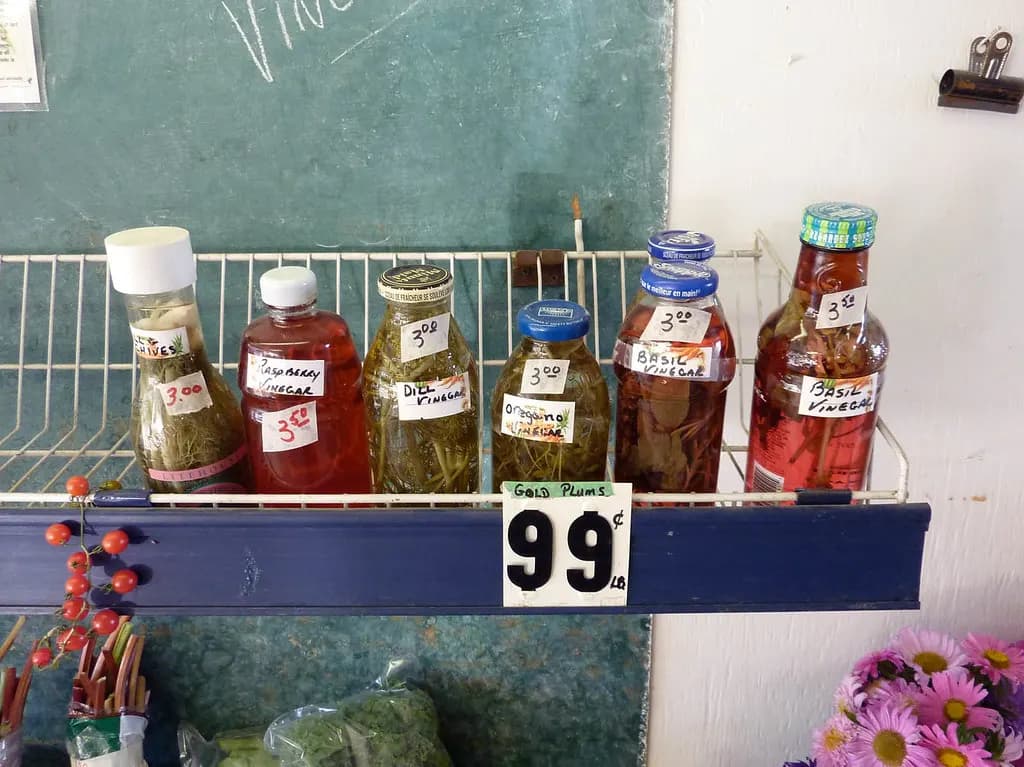
Alberta's operator fact sheet has the clearest list. It treats as low-risk: breads and buns, cakes, cookies, brownies, muffins, fruit pies and doughnuts; chocolate, hard candy, fudge, toffee and brittle; dried fruit, granola, trail mix, spices and dry baking or soup mixes; honey, syrup, herb vinegars and nut butters; and "controlled" foods such as jams, jellies, pickles, relish and salsa with a pH of 4.6 or lower. Ontario health units give very similar examples — cookies, muffins, breads, brownies and trail mix.
The exclusions matter as much as the list. Low-risk home-prepared foods can't contain meat, poultry, seafood, uninspected eggs or raw milk. Baked goods can't have meat, dairy, cheese or meringue fillings; in Alberta only sugar icing and buttercream made without eggs, cream or cream cheese are allowed. So cheesecake, cream puffs, custard tarts, sandwiches, cooked rice dishes, samosas with meat and fresh pasta all fall on the higher-risk side. Peel Public Health in Ontario lists meats, dairy, seafood, eggs, cooked rice, potatoes and pasta as moderate- or high-risk.
If your product sits near the line — a low-sugar jam, a garlic-in-oil condiment, a home-canned salsa — talk to your health inspector before you sell. Acidity and water activity decide whether some of these are safe at room temperature, and a lab test may be needed.
Ontario, BC and Alberta compared
Home-based food business rules in three provinces (2026)
| Ontario | British Columbia | Alberta | |
|---|---|---|---|
Main law | Health Protection and Promotion Act; Food Premises Regulation (O. Reg. 493/17) | Public Health Act; Food Premises Regulation (B.C. Reg. 210/99) | Public Health Act; Food Regulation |
Tell public health first? | Yes — notify your local public health unit | Approval needed for most food premises; lower-risk market sales need no application | No permit for low-risk home-prepared food |
Inspections | Yes, periodic; results published | Yes, for permitted premises | No routine inspection; follow-up after complaints or outbreaks |
Where you can sell | From home, online, markets (with health unit and municipal OK) | Lower-risk home-prepared foods at farmers' markets with a market manager; not at temporary events | From home (incl. online and mail-order), special events, farmers' markets |
Food handler training | Not required for low-risk only (Peel); required for higher-risk | FOODSAFE Level 1 for permit holders | Strongly encouraged |
Labels | Follow federal rules; ask your unit | Market and federal rules | Home-kitchen and 'not for resale' statements, your name and contact, food name and date |
Main law
- Ontario
Health Protection and Promotion Act; Food Premises Regulation (O. Reg. 493/17)
- British Columbia
Public Health Act; Food Premises Regulation (B.C. Reg. 210/99)
- Alberta
Public Health Act; Food Regulation
Tell public health first?
- Ontario
Yes — notify your local public health unit
- British Columbia
Approval needed for most food premises; lower-risk market sales need no application
- Alberta
No permit for low-risk home-prepared food
Inspections
- Ontario
Yes, periodic; results published
- British Columbia
Yes, for permitted premises
- Alberta
No routine inspection; follow-up after complaints or outbreaks
Where you can sell
- Ontario
From home, online, markets (with health unit and municipal OK)
- British Columbia
Lower-risk home-prepared foods at farmers' markets with a market manager; not at temporary events
- Alberta
From home (incl. online and mail-order), special events, farmers' markets
Food handler training
- Ontario
Not required for low-risk only (Peel); required for higher-risk
- British Columbia
FOODSAFE Level 1 for permit holders
- Alberta
Strongly encouraged
Labels
- Ontario
Follow federal rules; ask your unit
- British Columbia
Market and federal rules
- Alberta
Home-kitchen and 'not for resale' statements, your name and contact, food name and date
Ontario: notify your public health unit first
Ontario changed its food premises rules on 1 January 2020 to make home-based food businesses easier, and the Ministry of Health followed up with a step-by-step guide. The key point is that a home kitchen selling food to the public is a food premises under the Health Protection and Promotion Act and the Food Premises Regulation. That means you must notify your local public health unit before you start — most units have an online form — and your kitchen can be inspected like any other food business. Peel Public Health, for example, publishes inspection results and convictions online.
If you make only low-risk foods, you're exempt from some requirements that would otherwise apply. Peel lists three: the designated handwashing sink in the preparation area, commercial dishwashing rules, and food handler certification. You still have to wash your hands properly (a two-compartment kitchen sink can serve; a bathroom sink can't), and you can use a household dishwasher as long as dishes are cleaned and sanitized.
Every home operator, low-risk or not, must also:
- keep an approved sanitizer on hand (chlorine, quaternary ammonium or iodine);
- store business food and equipment separately from family food, in labelled bins or areas;
- keep a thermometer in fridges and freezers used for the business;
- buy ingredients from inspected or approved sources;
- use safe drinking water — homes on private wells or septic systems should talk to the inspector first;
- dispose of garbage properly.
Make higher-risk foods and the bar rises: a dedicated handwashing sink, a two- or three-compartment sink or commercial dishwasher, a certified food handler, record keeping and pest control. Health units don't all apply the rules in exactly the same way, and some strongly recommend food handler training even for low-risk kitchens, so ask your own unit before you assume an exemption.
Public health approval is not the whole story. Peel puts it bluntly: an inspection doesn't give you approval to operate. Your municipality decides whether a home business is allowed at your address under its zoning by-law, and may require a business licence, a fire inspection or limits on customer pickups. If you'll trade under a name other than your own, register it in the Ontario Business Registry for C$60 — see our Ontario registration guide.
British Columbia: markets yes, home kitchens mostly no
BC is the strictest of the three. Its Food Premises Regulation requires approved plans before food premises are built or altered, a permit to operate a food service establishment, and FOODSAFE (or an equivalent) for operators. The regulation's exclusions cover bed-and-breakfasts, food banks, some volunteer caterers and premises that sell only whole fresh produce or prepackaged non-hazardous food — but there's no general exemption for home kitchens selling to the public. Health authorities such as Fraser Health say that businesses preparing food for the public need a health operating permit or approval, and that owners need at least FOODSAFE Level 1.
The main route for home cooks in BC is the temporary food market — farmers' markets, Christmas markets and craft fairs run by a designated market manager. Under the provincial Guideline for the Sale of Foods at Temporary Food Markets, home-prepared food is allowed at these markets but limited to lower-risk foods, and vendors of lower-risk foods don't have to apply to the health authority first. The market manager is responsible for checking that what you sell really is lower-risk. Higher-risk foods can only be sold prepackaged from an approved facility with a letter of confirmation from the health authority.
Two traps catch new BC vendors. First, a temporary event — a festival, fundraiser or sports event — is not a market: Island Health's April 2026 planning guide states that home-prepared food is not allowed at temporary events, where food must come from an approved premises or a temporary food permit holder. Second, a sale without a market manager isn't a market, so home-prepared foods aren't allowed there either. Most lower-risk foods should be prepackaged; whole fresh fruit and vegetables are the exception.
If you want to sell from home, online or to cafés in BC, plan to rent time in a commercial or commissary kitchen with its own health approval, or to have your home kitchen assessed by your health authority. BC's Ministry of Health and the BC Centre for Disease Control consulted in 2026 on an update to the market guideline, including a clearer definition of "home-prepared food", so check your health authority's page for the current version before your first market season. Register a trade name with BC Registries (C$40 plus a C$30 Name Request) if you're not using your own name — see our BC registration guide.
Where can a BC home cook sell?
Step 1
Lower-risk food made at home
Step 2
Farmers' market with a market manager
allowed, no application
Step 3
Festival or temporary event
not allowed
Step 4
From home, online or wholesale
approved kitchen needed
Alberta: no permit for low-risk home-prepared food
Alberta has the most open regime. Since 1 June 2020, a section of the Food Regulation has allowed Albertans to sell low-risk home-prepared foods without a permit, a commercial kitchen or routine inspection. You can sell from home — including online and mail-order — at special events such as craft fairs and festivals, and at farmers' markets, where the market's own rules also apply. Alberta Health Services can still inspect if there's a complaint or an outbreak.
The freedom comes with conditions set out in Alberta Health's operator fact sheet:
- Low-risk food only, from the list above, made with ingredients from inspected sources where inspection applies. You can buy produce straight from a grower, but you can't use someone else's home-made jam as an ingredient.
- Safe water. Municipal tap water is fine; on a private well, get the water tested.
- Only you and your household may prepare the food. Non-household helpers may sell for you at special events, so you can be at two events at once.
- No on-site dining at your home, though free samples are allowed.
- At special events, food must be packaged at home and sold in that packaging, and you can't sell anything other than your own low-risk home-prepared food.
Every product needs a label (a tag, sticker or card is fine) with a statement similar to "prepared in a home kitchen that is not subject to inspection", a statement similar to "not for resale", your name or business name with an email or phone number, and the name of the food and the date it was made. Whole fresh fruit and vegetables don't need labels. Food safety training isn't mandatory, but Alberta strongly encourages it and AHS offers free online courses and home-study booklets, including home canning.
You still need your municipality's blessing. Calgary, for example, charges a C$172 base fee for a new business licence and requires land use approval for every business. A trade name in Alberta costs C$10.30 in government fees plus the registry agent's charge — see our Alberta registration guide.
Launching a low-risk home food business
- 1
Pick a low-risk product
Check it against your province's list; ask the health inspector about borderline items like low-sugar jam or salsa.
- 2
Clear the provincial health step
Ontario: notify your public health unit. BC: confirm market rules or arrange an approved kitchen. Alberta: no permit for low-risk food — follow the labelling rules.
- 3
Check zoning and municipal licensing
Home business rules, pickups, parking and any city licence.
- 4
Register a name and tax accounts as needed
CRA Business Registration OnlineProvincial trade name if not your own name; CRA Business Number when you register for GST/HST.
- 5
Design compliant labels
Provincial statements, allergens, contact details and dates; keep the federal Nutrition Facts exemption by avoiding nutrition claims.
Federal rules: labels and the CFIA licence
Provincial rules decide whether you may sell; federal rules still shape what goes on the package and where you can ship.
Nutrition Facts tables. Most prepackaged foods need one, but the CFIA lists an exemption for products sold only at a roadside stand, craft show, flea market, fair, farmers' market or sugar bush by the individual who prepared and processed the product. You lose that exemption if you add vitamins or minerals, make nutrition or health claims (such as "high in fibre" or "heart healthy"), or mention energy or nutrient values in labels or advertising. Gluten-free and other allergen-free claims don't count as nutrition claims on their own. Selling through a retailer or online falls outside the exemption, so check the full labelling rules before you move beyond markets.
Allergens. Even where labels are minimal, tell customers what's in your food. The priority allergens — peanuts, tree nuts, sesame, milk, eggs, fish, crustaceans and molluscs, soy, wheat and triticale, mustard and sulphites — cause the most serious reactions, and a single cross-contact mistake can end a home business.
Shipping across provinces. The Safe Food for Canadians Regulations require a CFIA licence for businesses that import food, export certain foods, or manufacture, process, package or label food to be sent across provincial or territorial borders. Provincial home-food permissions don't cover that. If an Alberta baker wants to mail cookies to customers in Saskatchewan, she should run the CFIA's licensing tool first.
GST/HST on home-made food
You don't have to register for GST/HST until your taxable sales pass C$30,000 over four consecutive quarters (or in a single quarter); then you generally have 29 days to register. Most home food businesses stay under that line for a while. Note that zero-rated sales (taxed at 0%) are still taxable supplies, so they count towards the C$30,000 total.
Food is where GST/HST gets fiddly. Under the CRA's basic groceries rules:
| Product | GST/HST status | Why |
|---|---|---|
| Loaf of bread, bagels, buns (no sweet filling) | Zero-rated | Basic grocery |
| Box of six or more muffins, cookies or tarts | Zero-rated | Six or more single servings |
| Fewer than six single-serving sweet baked goods | Taxable | Each under 230 grams, sold in a pack under six |
| A whole cake or pie | Zero-rated | Not a single serving |
| Fudge, toffee, hard candy, chocolate bars | Taxable | Candy and confectionery |
| Chips, popcorn, puffs | Taxable | Snack foods |
| Baking chocolate, chocolate chips | Zero-rated | Baking ingredient |
Worked example — an Ottawa baker. Lena sells at a Saturday market and takes pickup orders. In a typical week she sells 40 sourdough loaves at C$10, 20 boxes of six cookies at C$15 and 60 single cookies at C$3. Once registered, the loaves and boxes of six are zero-rated, but the single cookies are taxable: 60 × C$3 = C$180 a week, on which she must charge 13% HST (C$23.40). Many market bakers price single items "HST included" to keep change simple, then back the tax out in their books. Until she passes the small-supplier line, she charges no HST at all.
Registering early lets you claim back the tax you pay on mixers, ovens and packaging, which can be worth it in year one. See our GST/HST registration guide.
Start-up costs and pricing
A low-risk home food business is cheap to start compared with a café or food truck. Figures below are estimates based on typical Canadian retail prices; your own will depend on the product.
| Item | Estimated cost | Notes |
|---|---|---|
| Trade name | C$60 (ON) / C$10.30 + agent fee (AB) | Government fee; free if you use your own name |
| Health notification or market application | Usually free for low-risk | Ask your health unit or market |
| Food handler or FOODSAFE course | About C$0 – C$150 | Estimate; AHS online courses are free |
| Equipment (mixer, pans, scale, thermometer, storage bins) | About C$300 – C$1,500 | Estimate |
| Labels and packaging (first batches) | About C$150 – C$500 | Estimate |
| Market table fees | About C$20 – C$80 a day | Estimate; set by each market |
| Product liability insurance | About C$300 – C$800 a year | Estimate; many markets require it |
Price from your food cost, not from what the stall next door charges. Weigh every ingredient in a batch, add packaging and labels, and divide by the number of units. A cookie that costs C$0.55 in ingredients and C$0.20 in packaging has C$0.75 of direct cost; at C$3 it leaves C$2.25 to cover your time, market fees, insurance and profit. Our food cost calculator does the per-unit maths, and the profit margin calculator shows whether the price works.
Common mistakes
- Selling higher-risk food from a home kitchen. Cream-filled pastries, cheesecake and anything with meat need an approved kitchen in all three provinces.
- Skipping the health unit in Ontario. Notification is required before you start, even for cookies.
- Bringing home-baked goods to a BC festival. Temporary events aren't markets; home-prepared food isn't allowed.
- Missing Alberta's label statements. The home-kitchen and "not for resale" wording are conditions of the no-permit regime.
- Adding "healthy" or "high-protein" claims. That can cost you the federal Nutrition Facts exemption.
- Shipping out of province without checking the CFIA licence rules.
- Ignoring zoning. Public health approval doesn't override a municipal ban on home businesses or customer pickups.
Official links
- Alberta — Low-risk home-prepared foods
- Peel Public Health — Starting a home-based food businessTypical Ontario health unit requirements
- BC Food Premises Regulation
- Fraser Health — Requirements for food businesses
- Island Health — Temporary events and food markets guide
- CFIA — Nutrition labelling exemptions
- CFIA — Licensing food businesses
- CRA — GST/HST Memorandum 4.3, Basic Groceries
- BizPaL — permits and licences
What to do next
Choose one or two low-risk products, cost them carefully, and contact your health unit or market manager before your first sale. Then sort out your name, labels and any municipal licence. For the wider set-up steps — Business Number, bank account and income tax — read our guide to starting a business in Canada; if you plan to take orders through a website, our guide to starting an online business covers the e-commerce side.
This is general information, not legal or tax advice — confirm on the official source or with a professional.
Frequently asked questions
Yes, in most provinces, but usually only low-risk foods such as cookies, breads without cream fillings, jams, hard candy and granola. Ontario lets home kitchens operate after you notify the local public health unit; Alberta allows low-risk home-prepared foods without a permit or routine inspection; BC limits home-prepared sales mainly to lower-risk foods at farmers' markets. Meat, dairy-filled and other higher-risk foods need an approved or commercial kitchen.
There's no provincial licence, but you must notify your local public health unit before you start, and your home premises falls under the Food Premises Regulation and can be inspected. Low-risk-only operations are exempt from some rules, such as a dedicated handwashing sink and commercial dishwashing. Check your municipality's zoning and home business rules too — health approval alone isn't permission to operate.
Low-risk foods don't need refrigeration or time and temperature control to stay safe. Typical examples are breads and buns, cookies, brownies, fruit pies, hard candy, fudge, granola, dried herbs and high-acid jams and pickles. Anything containing meat, poultry, seafood, cream or custard fillings, cheesecake or uncooked eggs is generally treated as higher risk.
Usually not if you sell only at a roadside stand, craft show, flea market, fair, farmers' market or sugar bush and you personally made the product. That federal exemption is lost if you make nutrition or health claims, add vitamins or minerals, or advertise energy or nutrient values. Provinces may still require labels — Alberta, for example, requires a home-kitchen statement and your contact details.
Only once you're registered — you don't have to register until taxable sales pass C$30,000. Many staple foods are zero-rated, but sweet baked goods sold as fewer than six single servings (under 230 grams each) are taxable, as are candies, chocolate bars and chips. A box of six or more muffins is zero-rated.
Be careful. Provincial home-food rules apply within the province, and preparing, packaging or labelling food that's sent across provincial borders can require a federal Safe Food for Canadians licence from the CFIA. Use the CFIA's licensing tool before you take orders from other provinces, and check the receiving province's rules.
Sources & verification
Figures on this page were checked against the sources below when it was last reviewed on 13 October 2026. Each rate and limit is stored once with its own official source and review date, and official update channels are monitored daily so changes are picked up. How we verify
- 1.Low-risk home-prepared foods — Government of Alberta · accessed 13 October 2026
- 2.Low-risk home-prepared food: fact sheet for operators (May 2020) — Alberta Health (hosted by City of Medicine Hat) · accessed 13 October 2026
- 3.Starting a home-based food business — Region of Peel — Peel Public Health · accessed 13 October 2026
- 4.Requirements for food businesses — Fraser Health · accessed 13 October 2026
- 5.Food Premises Regulation, B.C. Reg. 210/99 — King's Printer for British Columbia · accessed 13 October 2026
- 6.Planning Guide for Temporary Events and Food Markets (rev. April 2026) — Island Health · accessed 13 October 2026
- 7.Nutrition labelling — exemptions — Canadian Food Inspection Agency · accessed 13 October 2026
- 8.Licensing food businesses — Canadian Food Inspection Agency · accessed 13 October 2026
- 9.GST/HST Memorandum 4.3 — Basic Groceries — Canada Revenue Agency · accessed 13 October 2026
MSMETOOLS is an independent platform and is not affiliated with any government agency, ministry or department.
Tools for this
Food Cost Calculator
Calculate food cost, menu pricing and profit margins.
Startup Cost Calculator
Estimate how much capital you need to launch.
Profit Margin Calculator
Calculate profit, markup and margin for your products or services.
Invoice Generator
Create professional invoices with tax, logo and custom details.
Related guides
 How to Start a Business in Canada (2026): 8 Steps & CostsRead guide
 How to Start an Online Business in Canada (2026): Rules & TaxRead guide
 How to Start a Cleaning Business in Canada (2026): CostsRead guide
 GST Registration in Canada 2026: C$30,000 Test & How-ToRead guide
Official links open the government site in a new tab.