 HR, payroll & employment
Probation Period in Australia (2026): The Minimum Employment Period, Small Business Rules and Ending Employment Lawfully
Probation in Australia for 2026: how it differs from the 6 or 12-month minimum employment period, notice and leave on probation, and ending it lawfully.
 Edited by Sumeet YadavFounder & editor, MSMETOOLS · fact-checked against official sources
Contents (10)
- 1. What probation means under Australian law
- 2. Probation versus the minimum employment period
- 3. Casual employees and the minimum period
- 4. What employees are entitled to during probation
- 5. Ending employment during probation
- 6. Extending or passing probation
- 7. Key dates for a new employee
- 8. Worked examples in A$
- 9. Common probation mistakes
- 10. What to do next
Almost every Australian employment contract has a probation clause, and almost every one is misunderstood by someone. Employers often assume probation lets them end employment at will; employees often assume they have no rights until it ends. Neither is true. This guide explains how probation actually works in 2026: what the law says (and doesn't say) about probation, how it differs from the minimum employment period that controls unfair dismissal claims, the longer period for small businesses, what an employee on probation is entitled to, and how to end employment during probation without creating a claim. Worked examples use real dates and Australian dollar amounts.
Quick answer
Probation is a contract term, not a legal status. The employer sets its length — the Fair Work Ombudsman says it's often 3 to 6 months — and the employee gets full NES entitlements throughout it. What really matters is the separate minimum employment period in the Fair Work Act: 6 months, or 12 months for a small business with fewer than 15 employees. Before it ends, an employee can't claim unfair dismissal, but notice, leave payouts and general protections still apply.
Notice still applies on probation — usually 1 week or pay in lieu
Annual and sick leave accrue from day one
Extending probation doesn't extend the minimum employment period
Dismissal for a prohibited reason is unlawful at any time
Regular casual service can count towards the minimum period
What probation means under Australian law
The Fair Work Act 2009 doesn't mention probation at all. A probation period is simply a term in an employment contract, or occasionally in an enterprise agreement, saying that the first few months are a trial during which the employer will assess whether the person suits the role. The Fair Work Ombudsman describes it as an opportunity for both the employer and the employee to check that the employee is suitable for the job they were hired to do.
Because probation comes from the contract, the employer decides how long it is and what happens during it. The Ombudsman notes that it often ranges from 3 to 6 months from the start date. A contract might also say the employer will hold a review meeting before the period ends, that either party can give shorter notice during probation, or that probation can be extended. Those terms are valid only to the extent they don't undercut the National Employment Standards (NES), an award or an enterprise agreement. A contract clause giving less notice than the NES during probation, for example, has no effect — the NES minimum still applies.
The practical point for both sides is that the word "probation" doesn't switch off any legal protection by itself. What does change the legal position is the time an employee has worked, measured against the minimum employment period in the Act.
Probation versus the minimum employment period
The minimum employment period in section 383 of the Fair Work Act decides whether an employee can bring an unfair dismissal claim. It is fixed by law and can't be shortened or lengthened by a contract:
- 6 months for employees of most employers; and
- 12 months for employees of a small business employer, which the Act defines as one with fewer than 15 employees.
The two periods often line up — many employers deliberately set a six-month probation to match the six-month minimum period — but they're different things. If a large employer sets a three-month probation, the employee still can't claim unfair dismissal until six months. If a small business sets a three-month probation, its employees can't claim until twelve months, even though probation finished long before. And if an employer sets or extends probation to nine months, an employee of a large business can claim unfair dismissal from the six-month mark regardless of what the contract says.
Probation and the minimum employment period compared
| Probation period | Minimum employment period | |
|---|---|---|
Where it comes from | Employment contract or policy | Fair Work Act s 383 |
Who sets the length | The employer | The law — can't be changed by contract |
Usual length | 3 to 6 months | 6 months, or 12 months in a small business |
Can it be extended? | Yes, if the contract allows or both agree | No |
What it affects | Review process, sometimes contractual notice | Whether an unfair dismissal claim is possible |
NES entitlements during it | Full NES applies | Full NES applies |
Where it comes from
- Probation period
Employment contract or policy
- Minimum employment period
Fair Work Act s 383
Who sets the length
- Probation period
The employer
- Minimum employment period
The law — can't be changed by contract
Usual length
- Probation period
3 to 6 months
- Minimum employment period
6 months, or 12 months in a small business
Can it be extended?
- Probation period
Yes, if the contract allows or both agree
- Minimum employment period
No
What it affects
- Probation period
Review process, sometimes contractual notice
- Minimum employment period
Whether an unfair dismissal claim is possible
NES entitlements during it
- Probation period
Full NES applies
- Minimum employment period
Full NES applies
Who counts as a small business
The small business test in section 23 is a headcount taken at the time the employee is told of the dismissal or given notice, whichever is earlier. The Fair Work Commission's benchbook says the count includes all full-time and part-time employees, regular casuals, the employee being dismissed and anyone else dismissed at the same time, and employees of associated entities such as related companies. A café group with two related companies of eight staff each has 16 employees, so its minimum employment period is 6 months, not 12 months. Our unfair dismissal guide for small business explains the count and the Small Business Fair Dismissal Code in detail.
How to count the period
The Commission explains that the period of employment starts on the employee's first day at work and finishes on the earlier of the date they're notified of the dismissal or immediately before the dismissal takes effect. Months are calendar months: a period starting on a date ends immediately before the same date in a later month. The benchbook's own example is a six-month period starting on 26 February that finishes at midnight on 25 August. If there's no matching date — say a period starts on 31 August and the sixth month is February — it ends at the end of that month.
Two consequences follow. First, notice that runs past the six or twelve-month mark doesn't help the employee if they were told of the dismissal before the period ended. Second, an employer that waits until the last week to decide is cutting it fine: one day's miscalculation can open the door to a claim.
Some periods don't count. Unauthorised absences are excluded, and periods of unpaid leave generally don't count towards the period of employment, although the employment remains continuous. The FWO also notes that after a transfer of business, service with the old employer may count as service with the new one.

Casual employees and the minimum period
Casuals are often hired on an informal trial basis rather than a formal probation, and then converted to permanent work. The question is whether their casual time counts. Under section 384(2), a period of casual service counts towards the minimum employment period only if the employee was a regular casual employed on a regular and systematic basis and had a reasonable expectation of continuing employment on that basis.
The Commission's benchbook says it's the employment, not the hours, that must be regular and systematic, and a clear roster is strong evidence. A casual who has worked every Saturday and Sunday for eight months has very likely accrued eight months of service. If that person is then offered a permanent role with a "six-month probation", they may already be past the minimum period on day one of the new contract. By contrast, a casual called in sporadically, with gaps of months between shifts, usually can't count that time.
This interacts with the employee choice pathway, which has applied to all employers since 26 August 2025. A casual can notify their employer that they want to change to permanent work after 6 months, or 12 months with a small business. Our casual employees guide explains the pathway. Before you treat a converted casual as "on probation", check how long they've really been working for you.
What employees are entitled to during probation
The Fair Work Ombudsman is clear that employees on probation receive the same entitlements as everyone else, including all ten NES. For full-time and part-time staff that means:
- Award or agreement pay at the correct classification, including penalty rates, overtime and allowances. There's no lower "probation rate" unless an award specifically provides one, and the major awards don't.
- Annual leave accruing from day one at 4 weeks a year for full-time employees (pro rata for part-time), which they can take by agreement.
- Paid sick and carer's leave of 10 days a year accruing progressively, which they can take as soon as it accrues.
- Superannuation at 12% of ordinary time earnings, paid under the Payday Super rules within 7 business days of each payday.
- Public holidays, parental leave (subject to its own 12-month service test), flexible working requests (also 12 months), and protection from unlawful dismissal.
Probation at a glance (2026)
6 months
Minimum employment period
most employers
12 months
Small business minimum period
fewer than 15 employees
1 week
NES notice under 1 year's service
or pay in lieu
21 days
To lodge a dismissal claim
unfair dismissal or general protections
Employers sometimes tell new staff they can't take leave until probation finishes. A policy asking staff not to plan long holidays in the first months is fine, but an employer can't refuse paid sick leave that has accrued, and can't unreasonably refuse annual leave. See our annual leave and sick and carer's leave guides.
Ending employment during probation
Ending employment during probation is lawful if the employer follows the NES and doesn't act for a prohibited reason. The checklist is short but every step matters.
Give notice. The FWO says an employee who doesn't pass probation is still entitled to notice. With less than one year of continuous service the NES minimum is 1 week, given in writing, or payment in lieu at the employee's full rate of pay. An employee over 45 doesn't get the extra week until they have 2 years' service, so it rarely applies during probation. Casuals, employees on a genuine fixed-term contract and those dismissed for serious misconduct aren't entitled to NES notice. Contracts that say "one day's notice during probation" don't override the NES for permanent employees. Our notice period guide has the full scale and how payment in lieu is calculated.
Pay out accrued annual leave. Unused annual leave, including leave loading if the employee would have received it when taking leave, is paid in final pay. Sick leave isn't paid out.
Pay final pay on time. Most awards require final pay within 7 days of the last day, and payment in lieu of notice must be made on or before the termination day. See our termination of employment guide for the full list.
Don't dismiss for a prohibited reason. The general protections in Part 3-1 of the Act don't have any minimum service requirement. An employer can't dismiss someone because they have a workplace right (such as asking about their pay or making a complaint), because of a protected attribute such as pregnancy, race, age, disability, sex or family responsibilities, or because of union membership. Section 352 separately protects employees who are temporarily absent because of illness or injury; that protection generally covers absences of up to 3 months (or a total of 3 months in 12 months) plus any time on paid sick leave, provided the employee gives a medical certificate or similar evidence. A new employee who is dismissed the week after they disclose a pregnancy, ask why they weren't paid penalty rates, or go off sick with a broken wrist has a potential general protections claim even after two weeks in the job.
Ending employment during probation
Step 1
Check the date against the minimum employment period
Step 2
Confirm the reason isn't a prohibited reason
Step 3
Meet the employee, explain concerns and hear their response
Step 4
Give written notice (or pay in lieu)
Step 5
Pay final pay and leave
within 7 days under most awards
A fair process still protects you
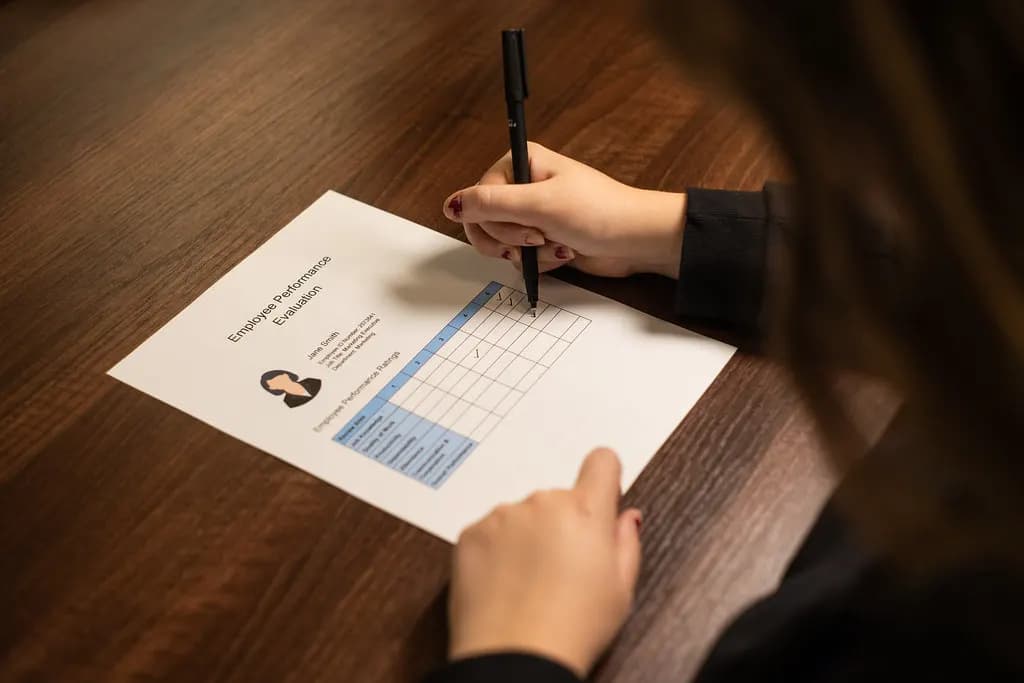
Before the minimum employment period ends, the employer doesn't need a valid reason in the unfair dismissal sense. Even so, a short, fair process is the best defence against the claim that does remain available. If an employee alleges they were sacked for a prohibited reason, the Act puts the burden on the employer to prove the real reason was something else. Notes from a review meeting saying the employee was repeatedly late, made cash-handling errors or didn't reach the skill level the role required are the evidence that wins that argument.
A sensible process looks like this: set clear expectations in the first week; hold a check-in at the halfway point and write down the feedback; raise problems as they happen rather than saving them for the end; and hold a final review before the probation date, giving the employee a chance to respond. The FWO publishes free templates, including a successful probation letter, an unsuccessful probation letter, a performance improvement plan and an underperformance meeting plan.
Extending or passing probation
Employers often want more time to decide. A contract can allow probation to be extended, or the employer and employee can agree to an extension in writing. That's lawful, and it can be useful as a management tool — it tells the employee clearly that the employer has concerns. But it doesn't change the minimum employment period. An employee of a business with 20 staff who is put on an extended nine-month probation can claim unfair dismissal from six months, and the Commission will apply the ordinary harsh, unjust or unreasonable test.
When probation ends successfully, confirm it in writing. Many disputes start with an employee who was never told whether they passed. If your contract says employment becomes "permanent" after probation, nothing about pay or entitlements changes on that date, because the employee already had full entitlements. The letter simply records that the trial is over.
In a small business, there's a further reason to be careful with long probation periods. A twelve-month minimum period means a small employer has a full year to make a decision without exposure to unfair dismissal. Once the year is up, the Small Business Fair Dismissal Code applies, and the employer needs a valid reason, a warning and a chance to improve before dismissing for performance or conduct. Use the year well: give feedback early and keep notes.
Key dates for a new employee
An employee who starts on Monday 2 February 2026
2 Feb 2026
First day — minimum employment period starts; leave and super start accruing
Late March
Halfway check-in for a 3-month probation; record feedback
1 May 2026
End of a 3-month probation — confirm the outcome in writing
1 Aug 2026 (midnight)
Six-month minimum period ends for an employer with 15 employees or more
1 Feb 2027 (midnight)
Twelve-month minimum period ends for a small business employer
2 Feb 2027
One year's service — notice rises to 2 weeks; parental leave and flexible work request tests met
Worked examples in A$
These examples use an adult full-time Retail Employee Level 1 on A$27.81 an hour, or A$1,056.80 for a 38-hour week, from 1 July 2026.
1. Dismissal at three months, large employer. Priya joined a supermarket chain with 300 staff on 2 February 2026 and is told on 28 April 2026 that she hasn't passed her three-month probation. She can't claim unfair dismissal because she hasn't completed 6 months. Her employer gives 1 week's written notice and pays it out on her last day: A$1,056.80 at her full rate (more if she'd have worked weekend penalty shifts that week). Her final pay also includes about 3 months of accrued annual leave — roughly 38 hours, or A$1,056.78, plus the 17.5% leave loading of A$184.94 that the Retail Award pays.
2. Extended probation past six months. Ben's employer, a builder with 25 staff, extends his probation from six to nine months. At eight months it dismisses him by text message with no reason. Because Ben has completed the six-month minimum period, he can apply for unfair dismissal within 21 days. The extension gives the employer no protection, and the text message doesn't meet the NES requirement for written notice of the termination date either.
3. Small business, eleven months. Jade works for a florist with six staff. At eleven months the owner ends her employment because sales have dropped and the work isn't there. She hasn't completed the 12 months minimum period for a small business, so there's no unfair dismissal claim. She's still owed notice: with less than one year's service, the NES minimum is 1 week or pay in lieu, and her award may set more. Because the florist is a small business, it's exempt from NES redundancy pay — see our redundancy pay guide.
4. Converted casual. Tom was a regular weekend casual at a café for ten months with a fixed roster, then signed a part-time contract with a "six-month probation". Two months later the café, which employs 22 people, dismisses him. His regular casual service likely counts, giving him about a year of service, so he can probably claim unfair dismissal despite being "on probation".
5. Prohibited reason. Sara tells her manager she's pregnant in week five and is dismissed in week six, with the employer saying she "wasn't the right fit". She can't claim unfair dismissal, but she can lodge a general protections dismissal application within 21 days. The employer will have to prove that pregnancy was not a reason for the decision.
| Employee | Employer size | Service when told | Unfair dismissal? | General protections? |
|---|---|---|---|---|
| Priya | 300 staff | ~3 months | No | Yes, if a prohibited reason |
| Ben | 25 staff | 8 months | Yes | Yes, if a prohibited reason |
| Jade | 6 staff | 11 months | No (needs 12) | Yes, if a prohibited reason |
| Tom | 22 staff | ~12 months incl. casual | Probably yes | Yes, if a prohibited reason |
| Sara | Any | 6 weeks | No | Yes |
Common probation mistakes
Most probation disputes come from a handful of avoidable errors. Employers who know them can end a trial cleanly; employees who know them can check whether they've been treated lawfully.
- Treating probation as a licence to skip notice. Permanent employees on probation get NES notice or pay in lieu.
- Counting from the wrong date. The period starts on the first day of work and ends when the employee is told, not when the notice runs out.
- Assuming the contract controls the minimum period. It doesn't. Three, six or nine months in the contract makes no difference to the law.
- Ignoring regular casual service. A converted casual may already be protected.
- Miscounting headcount. Regular casuals and staff of related companies count towards the 15 employees test.
- Withholding leave payouts. Accrued annual leave and any loading must be paid in final pay.
- Dismissing soon after a complaint, pregnancy announcement or sick leave. The timing alone invites a general protections claim.
- No paper trail. Without notes of feedback and a final review, it's hard to show the real reason for the decision.
Before the probation decision
0/8Official links
- ProbationFair Work Ombudsman — entitlements and probation letter templates
- Minimum period of employmentFair Work Commission benchbook — s 383
- Calculating the minimum periodFWC — calendar months and start and end dates
- Unfair dismissalFWO — eligibility and the 21-day deadline
- General protections dismissal (Form F8)FWC — dismissals for a prohibited reason
- Fair Work Act 2009Sections 23, 117, 351, 352, 383 and 384
What to do next
If you employ people, put three dates in your calendar for every new starter: the probation review, the end of probation and the end of the minimum employment period. Make the decision with a record of feedback well before the last date, and if employment ends, follow our termination of employment guide for notice, final pay and separation certificates. Small business owners should also read our unfair dismissal guide, which explains how the Small Business Fair Dismissal Code works once the twelve months are up.
This is general information, not legal or tax advice — confirm on the official source or with a professional.
Frequently asked questions
No law sets a probation length. The employer decides it, usually in the employment contract, and the Fair Work Ombudsman says it often runs 3 to 6 months from the start date. What the law does set is the minimum employment period for unfair dismissal: 6 months for most employers and 12 months for a small business with fewer than 15 employees.
An employee who hasn't completed the minimum employment period can't bring an unfair dismissal claim, so the employer doesn't have to prove a valid reason in that forum. But the dismissal still can't be for a prohibited reason such as pregnancy, a workplace complaint, union membership or a temporary illness. Those general protections apply from day one, and the employee has 21 days to apply to the Fair Work Commission.
Yes. The Fair Work Ombudsman says an employee who doesn't pass probation is still entitled to notice of termination and to have unused annual leave paid out. With less than a year's service, the NES minimum is 1 week's written notice or payment in lieu, unless the employee is casual, fixed-term or dismissed for serious misconduct. A contract or award can require more.
An employer can extend probation if the contract allows it or the employee agrees, but extending it doesn't change the law. Once the employee completes 6 months (12 months in a small business), they can claim unfair dismissal regardless of what the contract calls the period. Extending probation past that point gives the employer no extra protection.
Yes. Full-time and part-time employees on probation accrue and can take paid annual leave and paid sick and carer's leave from their first day, exactly like other employees. Annual leave builds up at 4 weeks a year for full-time staff, and unused annual leave is paid out if probation ends in a dismissal. Sick leave isn't paid out.
Only if the person was a regular casual employed on a regular and systematic basis and had a reasonable expectation of that continuing. A casual with a steady weekly roster who later converts to permanent may already have completed the minimum period on the day they convert. Occasional or irregular casual shifts don't count.
Sources & verification
Figures on this page were checked against the sources below when it was last reviewed on 13 October 2026. Each rate and limit is stored once with its own official source and review date, and official update channels are monitored daily so changes are picked up. How we verify
- 1.Probation — Fair Work Ombudsman · accessed 13 October 2026
- 2.What is the minimum period of employment? (Unfair Dismissals Benchbook) — Fair Work Commission · accessed 13 October 2026
- 3.How do you calculate the minimum period of employment? (Unfair Dismissals Benchbook) — Fair Work Commission · accessed 13 October 2026
- 4.Periods of service as a casual employee (Unfair Dismissals Benchbook) — Fair Work Commission · accessed 13 October 2026
- 5.Unfair dismissal — Fair Work Ombudsman · accessed 13 October 2026
- 6.Protections at work — Fair Work Ombudsman · accessed 13 October 2026
- 7.Apply for general protections dismissal — Form F8 — Fair Work Commission · accessed 13 October 2026
- 8.Fair Work Act 2009 — sections 23, 117, 351, 352, 383, 384 (compilation C2026C00355) — Federal Register of Legislation · accessed 13 October 2026
MSMETOOLS is an independent platform and is not affiliated with any government agency, ministry or department.
Tools for this
Salary Slip Generator
Create professional salary slips in seconds.
Freelance Hourly Rate Calculator
Work out the hourly rate you need to charge.
Related guides
 Small Business Fair Dismissal Code 2026: Rules & ChecklistRead guide
 Termination of Employment Australia 2026: Final Pay & ProcessRead guide
 Notice Period Australia 2026: NES Scale & Pay in Lieu RulesRead guide
 Redundancy Pay Australia 2026: NES Scale & Tax-Free LimitRead guide
Official links open the government site in a new tab.