 Corporate tax
UAE Tax Residency Certificate (2026): Who Qualifies, the 183- and 90-Day Tests, Documents, Fees and How to Apply
UAE tax residency certificate in 2026: 183- and 90-day tests for individuals, rules for companies, documents, FTA fees from AED 550 and the EmaraTax steps.
 Edited by Sumeet YadavFounder & editor, MSMETOOLS · fact-checked against official sources
Contents (9)
A UAE tax residency certificate (TRC) is the document that proves to a foreign tax authority, a bank or an investment platform that you or your company are resident in the UAE for tax purposes. Without it, a UAE company can see dividends or fees from abroad taxed at the paying country's full withholding rate, and an individual can be treated as resident in their old home country. This guide is for UAE residents with income from overseas, for companies claiming treaty benefits, and for the accountants who apply for them. It explains who qualifies in 2026, the 183-day, 90-day and centre-of-interests tests, the documents the Federal Tax Authority (FTA) asks for, the fees, how the EmaraTax application works, and worked examples in dirhams.
Quick answer
The FTA issues UAE tax residency certificates through EmaraTax to individuals and companies that are UAE tax residents. Individuals usually qualify with 183 days in the UAE in a 12-month period, or 90 days if they hold UAE residence and have a home or job here. Companies must be at least 12 months old. Fees are a AED 50 submission fee plus AED 500 (with a corporate tax TRN), AED 1,000 (individual) or AED 1,750 (company without a TRN).
Electronic certificate within 10 business days of a complete application
Each certificate covers one 12-month period or tax period — current or past only
Two types: for a specific double tax agreement, or for general purposes
Fees are non-refundable if the application is rejected
What a tax residency certificate is for
The UAE doesn't tax salaries and most personal income, so the country itself rarely needs to know whether you're resident. Other countries do. The certificate is the FTA's confirmation that a person met the UAE's residence tests for a stated period, and it's used in three main ways.
Claiming treaty relief. The Ministry of Finance says the UAE has concluded 137 double tax agreements with trading partners. Those treaties typically reduce or remove withholding tax on dividends, interest, royalties and service fees paid from the other country to a UAE resident, and decide which country taxes when both claim residence. The paying country will want a TRC, often for the specific treaty and year, before it applies the lower rate.
How a TRC is used in a treaty claim
Step 1
UAE company or resident earns foreign income
Step 2
Foreign payer asks for proof of residence
Step 3
Apply for TRC on EmaraTax
treaty type, right period
Step 4
Send TRC (and stamped form if required)
Step 5
Lower treaty withholding rate applied
Proving you've left your old tax home. Individuals who move to the UAE often need to show their previous country that they're now resident elsewhere, for example to stop being taxed there on worldwide income or to support a split-year claim. A TRC is strong evidence, although the other country applies its own rules too.
Answering banks and platforms. Under the Common Reporting Standard and FATCA, banks and brokers ask where you're tax resident. A TRC settles the question when a self-certification isn't enough.
The FTA offers three products: a certificate for claiming benefits under a specific double tax agreement in force, a certificate for other purposes, and the stamping of a foreign country's own residency form (the "International Form") to confirm the residence shown in a related TRC.
Who can apply
The FTA's service card opens the service to natural persons and juridical persons that are UAE tax residents under UAE tax law or under a double tax agreement, with two limits that trip people up.
Companies must be at least 12 months old. A juridical person must have been incorporated or established for at least 12 months before it can apply. A company set up in March 2026 can't get a certificate until March 2027.
Tax groups can't apply as a group. A corporate tax group isn't eligible; each member applies on its own.
For companies, residence follows the Corporate Tax Law. A juridical person is resident if it's incorporated, established or recognised under UAE law, including in a free zone, or if it's incorporated abroad but effectively managed and controlled in the UAE. In the second case, the FTA asks for proof of where management and control actually happen, such as board minutes showing meetings held in the UAE and directors who live here.
For individuals, the rules come from Cabinet Decision No. 85 of 2022, effective from 1 March 2023, and Ministerial Decision No. 27 of 2023, which explains the terms. They're set out in the next section.
The residency tests for individuals
You're a UAE tax resident if you meet any one of three tests. The FTA's service card lists them as three cases, each with its own evidence.
Three ways an individual qualifies
| Test | What you must show | Evidence the FTA asks for |
|---|---|---|
183 days days | Physically present in the UAE for 183 days days or more in a consecutive 12-month period | Emirates ID, or passport with an official entry and exit report |
90 days days | Present 90 days days or more in a 12-month period, AND a UAE or GCC national or valid UAE residence permit holder, AND a permanent place of residence or employment or business in the UAE | Emirates ID, passport and entry/exit report, plus tenancy contract or title deed, or proof of UAE employment or business |
Usual residence and centre of interests | The UAE is your usual or primary place of residence and the centre of your financial and personal interests | Emirates ID, passport and entry/exit report, proof of financial and personal interests, proof of primary residence, and source of income where relevant |
183 days days
- What you must show
Physically present in the UAE for 183 days days or more in a consecutive 12-month period
- Evidence the FTA asks for
Emirates ID, or passport with an official entry and exit report
90 days days
- What you must show
Present 90 days days or more in a 12-month period, AND a UAE or GCC national or valid UAE residence permit holder, AND a permanent place of residence or employment or business in the UAE
- Evidence the FTA asks for
Emirates ID, passport and entry/exit report, plus tenancy contract or title deed, or proof of UAE employment or business
Usual residence and centre of interests
- What you must show
The UAE is your usual or primary place of residence and the centre of your financial and personal interests
- Evidence the FTA asks for
Emirates ID, passport and entry/exit report, proof of financial and personal interests, proof of primary residence, and source of income where relevant
How days are counted
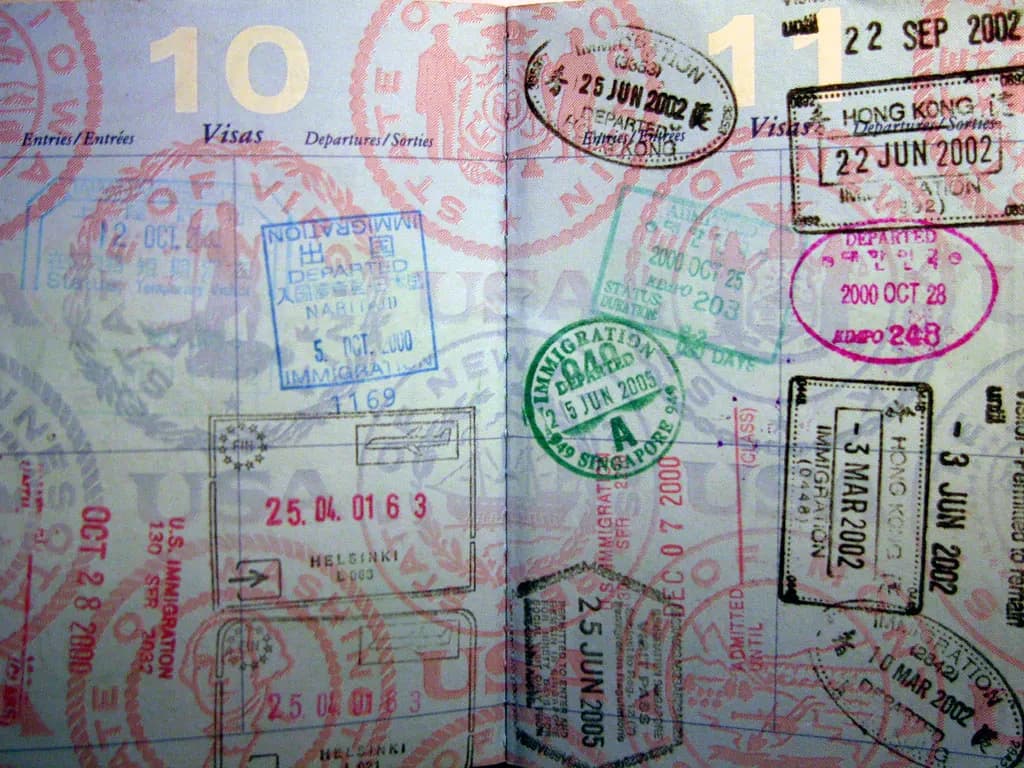
Ministerial Decision No. 27 of 2023 says any day or part of a day you're physically in the UAE counts as a full day, and the days don't need to be consecutive. So a flight that lands at 11pm adds a day, and so does a departure at 2am. Days spent here only because of exceptional circumstances beyond your control, such as a cancelled flight that stopped a planned departure, can be disregarded. The 12-month period is any consecutive 12 months, not necessarily a calendar year, which is useful for someone who arrived mid-year.
The FTA expects the count to come from an official entry and exit report rather than your own spreadsheet. You can obtain one from the federal identity and residency authority or, in Dubai, the residency directorate; ask for it before you apply, because without it the application is likely to be returned.
Here's how a typical year of travel adds up for someone checking the 183-day test over the 12 months to 30 September 2026.
| Trip pattern (12 months to 30 Sep 2026) | Days counted in the UAE |
|---|---|
| Lands in Dubai 23:40 on 1 Oct 2025, leaves 02:15 on 20 Dec 2025 | 81 (both part days count) |
| Back 5 Jan 2026, leaves 30 Apr 2026 | 116 |
| Back 1 Sep 2026, still here 30 Sep 2026 | 30 |
| Total | 227 — passes the 183 days test |
The same person would still have passed with 183 days, but with only 150 days they would need the 90-day test, and that depends on holding a residence permit and having a home or job in the UAE.
The 90-day test in practice
The shorter test is designed for people who live in the UAE but travel a lot. It has three layers, and you need all of them: at least 90 days in the UAE; UAE or GCC nationality or a valid UAE residence permit; and either a permanent place of residence here or employment or a business here. The ministerial decision describes the evidence: for residence, a title deed, a registered tenancy contract (Ejari in Dubai) or another long-term lease, supported by utility bills; for work, a salary certificate or other proof of a permanent source of income or of a UAE business.
The centre-of-interests test
The first test has no day count, but it's the hardest to prove. Your usual residence is where you habitually live as part of a settled routine. Your centre of financial and personal interests is where your occupation, family and social ties, cultural activities, place of business and the management of your property are most closely connected. Someone who owns a home in Dubai, has their family and children's schools here, runs their business from here, but spent long periods abroad in the year might rely on it. Expect to provide considerably more evidence than for the day-count tests.
Individuals and companies compared
The tests differ more than the process does. An individual proves residence with days, a home or a settled life; a company proves it with where it was incorporated or where its board actually runs it. Individuals can apply as soon as they meet a test, while companies must wait until they're 12 months old and, for a current period, three months in. Both use the same EmaraTax service, both choose between a treaty and a general certificate, and both pay the same AED 50 submission fee. The review fee is where they part: an individual without a corporate tax TRN pays AED 1,000, a company without one pays AED 1,750, and anyone with a TRN pays AED 500. You may also see it called a "tax domicile certificate"; searches and older guides use both names for the same FTA document.
Documents you'll need
The list depends on whether you're an individual or a company, and on whether you want a certificate for a specific treaty.
Documents for a TRC application
0/9Fees and processing times
The FTA's fees depend on who you are and whether you hold a Corporate Tax Registration Number. Having a TRN lowers the fee and pre-fills the application, which is one more reason companies should keep their corporate tax registration up to date. All fees are paid in full before the application is submitted, and none is refunded if the FTA rejects it.
FTA tax residency certificate fees (2026)
AED 50
Submission fee
non-refundable, every application
AED 500
Review and e-certificate
applicant with a corporate tax TRN
AED 1,000
Review and e-certificate
individual without a TRN
AED 1,750
Review and e-certificate
company without a TRN
AED 250
Each printed hard copy
Stamping a foreign country's International Form is included in the processing fee, but you pay the courier cost of getting the stamped form back. The electronic certificate is issued within 10 business days of a complete application. A hard copy follows within five business days of paying for it. Stamping an International Form takes ten business days from receiving the completed, signed form and the fee; if the form or fee isn't received within 30 business days, the FTA doesn't process the stamping and you need a new application.
How to apply on EmaraTax
Applying for a TRC
- 1
Sign in to EmaraTax
Open EmaraTaxLog in with UAE Pass, or create an account. Individuals without a corporate tax registration can still apply.
- 2
Choose the service
Go to Other services, then Tax Residency Certificate.
- 3
Select your TRN or 'No Tax Registration Number'
Choose the corporate tax TRN if you have one; it lowers the fee and pre-fills details.
- 4
Pick the certificate type and period
Choose a treaty certificate (select the other country first) or a general certificate, and the 12-month or tax period to cover.
- 5
Complete the form and upload documents
Fill in the details, upload the documents, and request hard copies or International Form stamping if you need them.
- 6
Pay and submit
Pay the submission and review fees, then submit.
- 7
Download the certificate
Once approved, download it from EmaraTax; it's also emailed to you. Hard copies are couriered to a UAE address.
Tip: Recipients can check authenticity on the FTA's verification page or by scanning the barcode.
Choosing the period
Each certificate covers a single period: either a 12-month period or a tax period, current or past. You can't certify a future period or a period longer than 12 months. Companies can apply for a current period once at least three months of it have passed, or after it ends; individuals can apply as soon as they meet the residence criteria. Match the period to the income: a foreign payer withholding tax on a dividend paid in May 2026 will usually want a certificate covering a period that includes May 2026.
Worked examples in AED
1. An employee claiming treaty relief. Anjali, an Indian national working in Dubai on a residence visa, spent 240 days in the UAE between 1 April 2025 and 31 March 2026. She meets the 183 days test and wants a certificate under the UAE–India treaty for that period, with one hard copy for her bank in India. She has no corporate tax TRN. Cost: AED 50 + AED 1,000 + AED 250 = AED 1,300.
2. A frequent traveller on the 90-day test. James, a British consultant with a UAE residence visa and an Ejari-registered flat in Dubai Marina, spent 120 days in the UAE in the 12 months to 30 June 2026 and the rest travelling to clients. He fails the 183-day test but meets the 90-day test, because he has a residence permit and a permanent home here. He applies with his Emirates ID, passport, entry and exit report, Ejari and DEWA bills. Cost: AED 1,050.
3. A company receiving foreign dividends. A Dubai holding company incorporated in 2022, with a corporate tax TRN, expects dividends from a subsidiary in a treaty country in 2026. It applies for a treaty certificate for its 2025 tax period and asks for two hard copies. Cost: AED 50 + AED 500 + 2 × AED 250 = AED 1,050. A company that hadn't registered for corporate tax would pay AED 1,750 instead of AED 500, and would also face the late-registration penalty.
4. A start-up that's too young. A free zone company incorporated on 1 February 2026 wants a TRC for a European client in October 2026. It can't apply until 1 February 2027, when it reaches 12 months. Until then, it can only provide its licence and corporate tax registration certificate, which the client's tax authority may not accept as proof of residence.
5. An application that's rejected. Ravi applies on the 183-day test but his entry and exit report shows 171 days. He has no Ejari or employment in the UAE, so the 90-day test doesn't help. The FTA rejects the application and keeps the AED 1,050 he paid. Checking the day count before applying would have saved the fee.

Common mistakes and how to avoid rejection
Applying without an entry and exit report. The FTA counts days from the official report. Passport stamps or a travel spreadsheet aren't a substitute.
Choosing the wrong period. Certificates can't cover future periods or more than 12 months, and a period that doesn't match the income date is often rejected by the foreign authority, even if the FTA issues it.
Applying for a company that's under 12 months old. The application will fail. Plan for it in contracts with foreign clients who'll need a certificate.
Skipping corporate tax registration. A company without a TRN pays AED 1,750 instead of AED 500, and an unregistered company has a bigger problem than the fee.
Relying on a general certificate for a treaty claim. If the foreign payer needs a treaty certificate, ask for that type and select the country. Some countries also require their own form; request International Form stamping in the same application.
Weak evidence for the 90-day or centre-of-interests tests. A residence visa alone isn't enough under the 90-day test; you also need a permanent home or work here. Upload the Ejari, title deed or salary certificate with the application rather than waiting to be asked.
Remember that a UAE certificate doesn't override the other country's rules. Many countries apply their own residence tests and the treaty's tie-breaker rules, so a person who also keeps a home, family and business abroad may still be treated as resident there. For complex cases, take advice in both countries.
What to do next
Work out which test you meet and pull your entry and exit report before you pay anything. Decide the period and whether you need a treaty certificate, a general one or a stamped foreign form. Companies should check their corporate tax registration is in place, since it cuts the fee and is required anyway; our UAE corporate tax guide covers the rest. If residence is part of a move to the UAE, our guides to the golden visa for business owners and the freelance visa explain the visa side.
This is general information, not legal or tax advice — confirm on the official source or with a professional.
Frequently asked questions
You pay a non-refundable AED 50 submission fee plus a review and issuance fee: AED 500 if you have a Corporate Tax Registration Number, AED 1,000 for an individual without one, and AED 1,750 for a company without one. Each printed hard copy adds AED 250. Fees aren't refunded if the application is rejected.
Either 183 days or more in a consecutive 12-month period, or 90 days or more if you're a UAE or GCC national or hold a valid UAE residence permit and also have a permanent home or a job or business in the UAE. A third route, with no day count, applies if the UAE is your usual residence and the centre of your financial and personal interests.
The FTA says it issues an electronic certificate within 10 business days of receiving a complete application. A hard copy takes a further five business days after you pay for it, and stamping a foreign country's residency form takes ten business days from receipt of the completed form.
Not straight away. The FTA requires a company to have been incorporated or established for at least 12 months before it can apply. A company can also only request a certificate for a current or past 12-month period or tax period, and for a current period it must be at least three months in.
The FTA's service card doesn't give an expiry date. Instead, each certificate covers a specific period you choose: a 12-month period or a tax period, current or past, never a future one and never more than 12 months. Most foreign tax authorities and banks expect a certificate covering the year in which the income was paid.
Only when someone asks for one. The UAE doesn't tax employment income, so residents don't file personal tax returns. A certificate is useful to claim lower tax under a double tax agreement, to prove residence to a foreign tax authority or bank, or to answer CRS and FATCA due diligence. The UAE has concluded 137 double tax agreements.
Sources & verification
Figures on this page were checked against the sources below when it was last reviewed on 12 October 2026. Each rate and limit is stored once with its own official source and review date, and official update channels are monitored daily so changes are picked up. How we verify
- 1.Issuance of Tax Certificates for Tax Residency — Federal Tax Authority (UAE) · accessed 12 October 2026
- 2.Corporate Tax Registration — Federal Tax Authority (UAE) · accessed 12 October 2026
- 3.Double Taxation Agreements (DTAs) — UAE Ministry of Finance · accessed 12 October 2026
- 4.Federal Decree-Law No. 47 of 2022 on the Taxation of Corporations and Businesses — UAE Ministry of Finance · accessed 12 October 2026
- 5.UAE issues additional guidance on determination of tax residency — EY · accessed 12 October 2026
- 6.United Arab Emirates — Individual: Residence — PwC Worldwide Tax Summaries · accessed 12 October 2026
MSMETOOLS is an independent platform and is not affiliated with any government agency, ministry or department.
Tools for this
Corporate Tax Calculator (UAE)
Calculate 9% UAE corporate tax above AED 375,000.
UAE VAT Calculator (UAE)
Calculate 5% UAE VAT on sales and purchases.
Related guides
 Corporate Tax Registration UAE 2026: Deadlines & StepsRead guide
 UAE Corporate Tax Return Filing 2026: Deadline & StepsRead guide
 UAE Corporate Tax 2026: 9% Rate, Deadlines & ReliefRead guide
 UAE Golden Visa for Entrepreneurs 2026: Routes & FeesRead guide
Official links open the government site in a new tab.